Thursday, July 13, 2006

Farmers' Association NSW give us a hearing

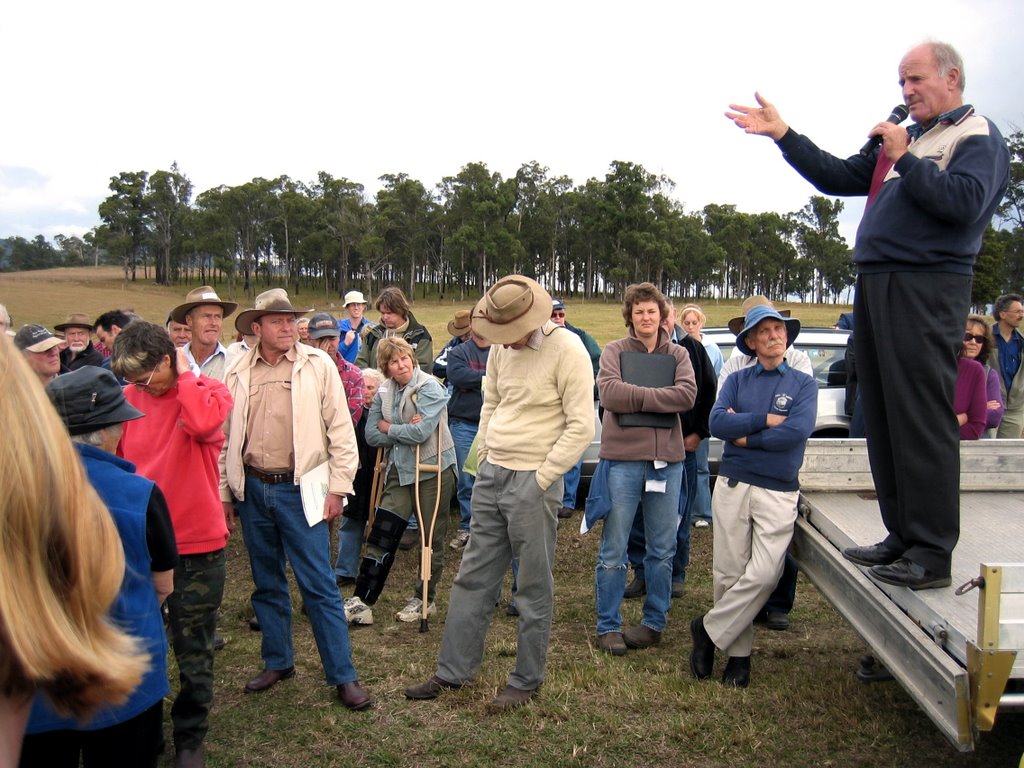
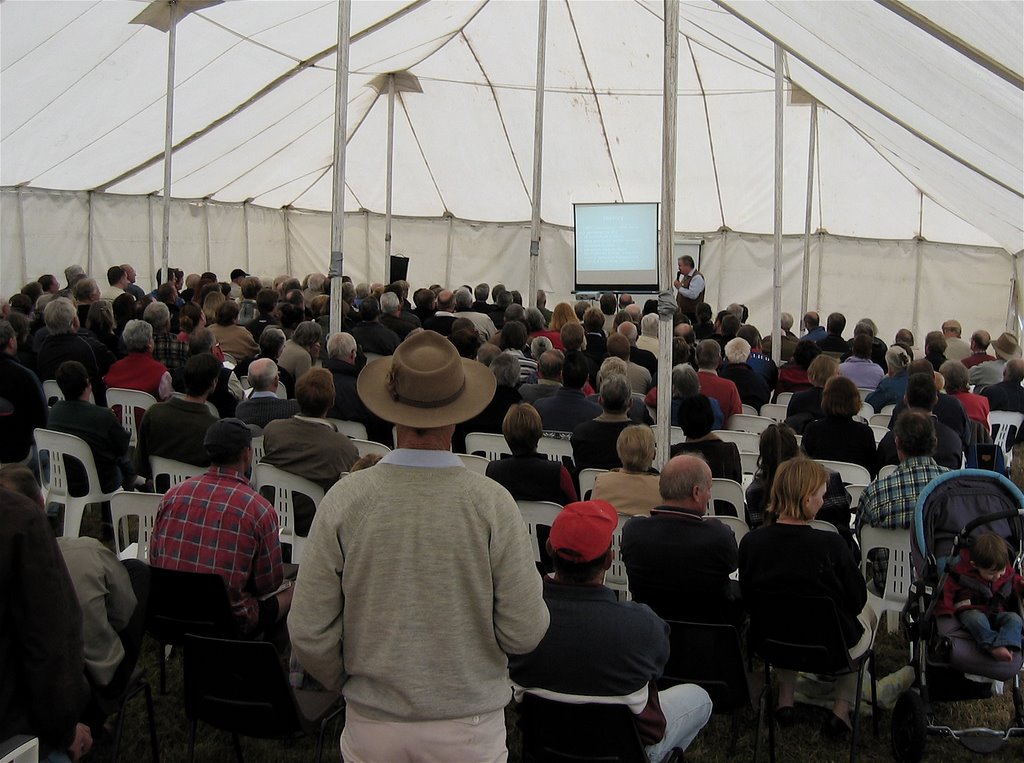
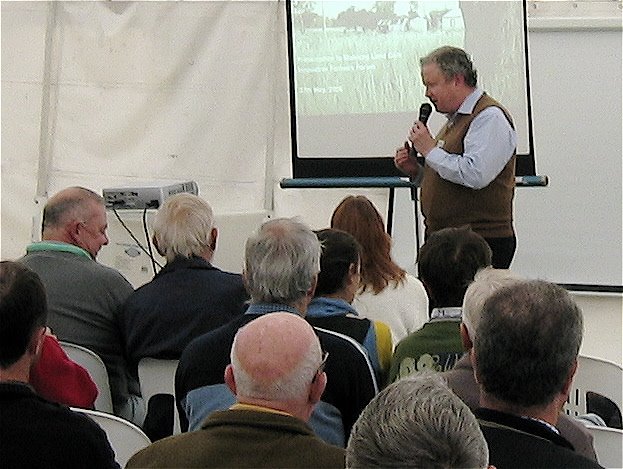
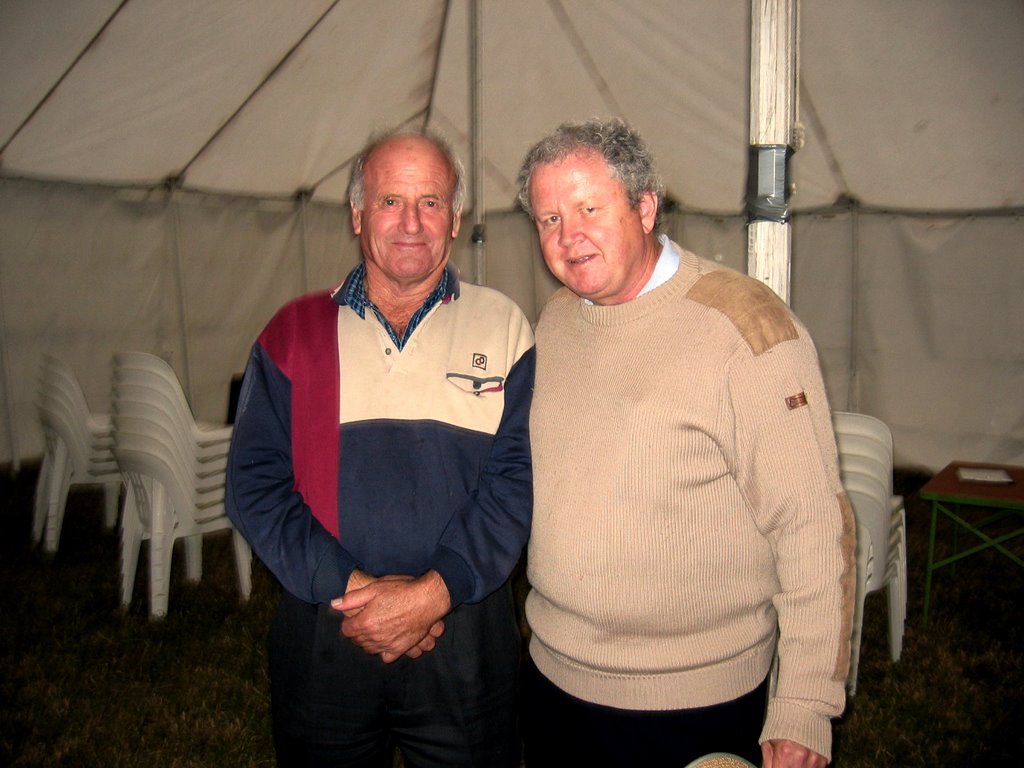
NSW Farmers are right behind us - Jock Laurie gave us his support for the motion going before their conference this month. He is very enlightened about natural resource management. If it gets up we'll go to the NFF, MLA, AWI, etc and see if we can't line up solid support from industry bodies for something that is in their members' best interests. If they get behind it, we'll have the best agripoliticians on our side. CC Member and CMA Farming Systems classmate Mark Pickford pushed the motion through Wellington Branch and arranged a presentation to about 25 members last week, facilitated by Hamish Munro of Cumnock.


Deborah Willis, a dynamic personality (and don't we need more of them in agriculture?) got us in to see Jock within a week! She's one of the progressive people we met at the Gloucester Manning Landcare Pater Andrews seminar.

It is people like Mark, Hamish, Deborah and Jock who will make this vision become reality.

Monday, July 10, 2006

Christine Jones 'Managing the Carbon Cycle' Forum @ HORSHAM 26-27th July 2006


'Managing the Carbon Cycle'
HORSHAM 26-27th July 2006
http://www.amazingcarbon.com/


PAPER SUMMARIES


Ray O'Grady   Importance of Soil Carbon
This paper reviews the historic loss of 50-60% of soil carbon, and its effects on crop yields, the physical, chemical and biological aspects of soil health and the health and wellbeing of the farming family. Farming practices that influence these soil carbon losses and the methods and principles of increasing the carbon sink in the soil are discussed.
……………………………………………………………………………
Ray O'Grady and Rod Rush  The Terra Preta phenomenon
The greatest legacy the Amazonians left to the World was not the famed 'City of Gold' but the Terra Preta. These man-made 'Indian black earths' cover an area the size of France. They hold a secret to carbon sequestration that could reduce carbon dioxide emissions and global warming. We require only 10% of our productive, degraded lands to absorb the estimated 6.1 gigatons of carbon dioxide of emissions to make a carbon negative world possible in our life time. The question must be then asked 'Do we need nuclear power to reduce Global Warming?
……………………………………………………………………………….
Andre Leu  Organics and Soil Carbon:
Increasing soil carbon, crop productivity and farm profitability
This paper explains how atmospheric carbon is introduced into the soil and how it stored in stable forms. It identifies the farming techniques that are responsible for the decline in soil carbon and gives alternative practices that do not damage carbon. Increasing soil carbon can reduce the 25% of Australia's greenhouse gases created by agriculture and assist in ameliorating climate change. Increasing soil carbon will ensure good production outcomes and farm profitability. Soil carbon, particularly the stable forms such as humus and glomalin, increases farm profitability by increasing yields, soil fertility, soil moisture retention, aeration, nitrogen fixation, mineral availability, disease suppression, soil tilth and general structure. It is the basis of healthy soil.
……………………………………………………………………………….
Rod Rush Understanding mycorrhizal fungi
Mycorrhizal fungi form symbiotic associations with the  roots of many plant species. Mycorrhizae supply their hosts with mineral nutrients (notably phosphorus) in exchange for energy compounds. However, there are many land management practices that can severely deplete and sometimes extinguish mycorrhizal populations. This paper focuses on a discussion of these management practices and their consequences for ecosystem health and farm productivity.
……………………………………………………………………………….
Tony Scherer Back to Basics
Returning to a biologically based farming system
How we moved away from the importance of soil structure, humus and water holding capacity to an NPK mentality Should we treat agriculture as a biological or industrial system? Do consumers know what they are eating? Effect of government policy on alternative agriculture. Effect of agricultural research on alternative agriculture. How do we retrieve a sane and sensible farming system?
……………………………………………………………………………….
Andrew Helps  Climate change and dryland farming
Soil carbon levels - overview of the National and Regional inventories such that they are. Does the farming sector have any understanding of albedo-related feedback mechanisms and the impact of these mechanisms on farm scale - and on regional and national productivity? Is big still beautiful? Was it ever really beautiful? Is there a role for a small intensive dryland model?
……………………………………………………………………………
Michael and Louisa Kiely  Carbon Credits from Soil
The Carbon Coalition Against Global Warming was launched to promote carbon in agricultural soils as a natural carbon sink for the purpose of trading on the global emission credits market.  Global Warming presents farmers and graziers with an opportunity to sell carbon credits worth thousands of dollars per hectare. Soil carbon levels can be increased by replacing soil management practices such as stubble burning, ploughing and inappropriate grazing with minimum tillage, regenerative grazing and revegetation with perennial grasses. Baselining is essential for registration in possible future trading programs. Landholders need to take action now to be ready for the anticipated first day of trading.
……………………………………………………………………………
Bob Mackley  Sacred cows with zebra stripes
Agricultural practice and the shape of farming communities have changed enormously over the last four decades. There have been obvious benefits in gross production but whether we are accounting for the full cost is in considerable doubt. Whenever the environmental cost of farming is brought up in discussion there is usually a heavy silence and people trying to find the door marked EXIT. The enthusiastic adoption of herbicide, pesticide and fungicide products may be masking a greater danger to sustainable agriculture than the current generation of 'pests'. Resistance (selection pressure) has become the new fear phrase in farming circles with the common response being to apply more, stronger, earlier or differing mode of action chemical. This more-on farming method has caused many farmers to look elsewhere for answers and the soil may hold many of them.
……………………………………………………………………………
John and Val Hanley Organic grain and fodder production
We farm 2000 acres in Central Victoria. We grow BFA certified grains for milling and fodder (oats, oaten hay and pasture hay), as well as silage for organic dairy farmers. This presentation will cover our experiences within the organics industry; human health issues; weed control in broadacre farming, especially grass 'problems'; green manures; the use of aerators and rollers; crop rotations; livestock management; weevil control in silos. No matter what you are growing, you are a microbe farmer. Microbes are what make your living for you. For everything you do, always ask 'is this going to be beneficial for microbial life on my farm?'
……………………………………………………………………………
David Marsh A different decision-making process can produce profits, increase carbon sequestration in soils and regenerate landscapes
With different grazing management, there is huge potential for carbon sequestration in soil. The effect of higher soil carbon levels on landscape function and possible solutions to other land degradation issues are discussed. Drought performance of a farm where decisions are made using the Holistic Management model are examined.
…………………………………………………………………………
Colin Seis Carbon farming through Pasture Cropping
Concerns about declining profitability, poor soil structure, dryland salinity, soil acidification and increasing numbers of herbicide resistant weeds have prompted over 1000 farmers throughout eastern, southern and Western Australia to trial Pasture Cropping.  The year-round groundcover results in reduced wind and water erosion, improved tilth, reduced weed numbers, increased nutrient availability and increased levels of soil organic carbon. The soil health benefits from plant root exudates derived from a mix of shallow rooted crops and deep-rooted perennial pasture are numerous. In an era when dryland salinity, soil acidification and loss of soil carbon are having increasing impacts on the productivity and profitability of farming enterprises, Pasture Cropping may provide one option for addressing these issues.
……………………………………………………………………………
Liz Clay Positioning soil in the carbon market - a Victorian perspective
There is now a scientific and political consensus on the reality of climate change. It is happening and it has serious implications - for our ecosystems, our health, our economy and our future. This paper reviews the risks and opportunities associated with positioning soil carbon in the emissions trading market.
……………………………………………………………………………
Andrew Helps  Carbon, energy and water
Making the case for high carbon fertiliser
Can Australian farmers remain profitable under their current dry land model? Will selling grain for export continue to be the best use of farm production? Manufactured fertiliser is hooked to the price of oil and gas. It takes .65 of a tonne of natural gas to make a tonne of urea, a tonne of natural gas to make a tonne of ammonia and the equivalent of a tonne of gas and up to 20,000 litres of water to make a tonne of phosphorus. It is reasonable to expect that farm gate prices for diesel could well rise to the $1.50-$1.60 region after excise claw back in the next 18 months. At this level most farmers will want to explore alternative fuel options - what are these options?


REGISTRATION: Places for this information packed two day forum are limited. Registration deadline 14 July 2006. Visit http://www.amazingcarbon.com/
or contact UNE Conference Company (02) 6773 2154

An Open Letter To Soil Scientists About Carbon

Dear Soil Scientist,

Scientists have rarely had the opportunity to change the course of history that you have today. Global warming is now widely considered inevitable. The race is on to find ways to avert the worst case scenario.

While millions of trees are being planted and various solutions are being investigated, including pumping C02 into oceans, empty coal seams and oil wells, none has the capacity to sequester sufficient CO2 in the next 50 years. Only soils can do it. "Results from integrated assessment analyses indicate that soil carbon sequestration may have an important strategic role – due to potential for early deployment and low costs – within a technology portfolio to mitigate climate change," says US climate change economist Professor Bruce A. McCarl of Texas A&M University. "Unlike many other technologies to offset fossil fuel emissions (e.g. geologic carbon sequestration, carbon capture), land management for soil C sequestration can be implemented immediately, provided there are economic and other incentives to do so."

Soils can sequester large amounts of carbon*. "Soil organic carbon is the largest reservoir in interaction with the atmosphere," reports the United Nations Food & Agriculture Organisation. (Vegetation 650 gigatons, Atmosphere 750 gigatons, Soil 1500 gigatons). Poor management of the world's soils in the past 200 years has seen soil carbon levels severely depleted in many regions. Grazing land alone comprises more than half the total land surface of the world. Any incremental change in carbon levels through improved soil management on such a scale could have a massive impact on atmospheric CO2 stocks.

Soils used for C sequestration would reach their carbon saturation point within that 50-year window of opportunity. But they will have done the job until alternatives come on stream.

There are two more links in the chain between you and saving the world from the worst of Global Warming. Link #1 is the motivation to get conservative farmers to make radical changes to their farm practices. The income derived from selling carbon credits would be sufficient incentive to change for most farmers if prices were in the range currently being achieved under the Kyoto Agreement.

Link #2 is the mechanism which can make such trade possible - the measurement, monitoring and verification of amounts of carbon sequestered in soils. Here the spotlight falls upon you. The world needs a reliable, bankable methodology that will be acceptable to markets. Currently the ruling paradigm states that it can't be done: soil carbon levels are in such flux that they can swing wildly from one side of a field to another, from furrow to furrow, from day to day.

Consider this: Before Columbus, educated Europeans thought the earth was flat. Before Copernicus, educated Europeans thought the Sun revolved around the Earth. These old paradigms were fiercely defended by the establishment. There will come a day when soil carbon measurement will be a problem solved and the world will reap the benefits.

These benefits are not just greenhouse-related. The soil management techniques required for carbon sequestration - constant groundcover, deep-rooted perennials, minimum- or no-tillage cropping, and the like - will have the positive effect of restoring soil structure, rebuilding biomass and microfauna communities, increasing the soil's water-holding capacity, reducing the incidence of salination, and improving soil fertility and productivity. Add to these the protection of topsoil from wind and water erosion and you can see how powerful is your opportunity.
The carrot of carbon credits will motivate an entire generation of farmers to learn the benefits of husbanding the soil.

There are profound social benefits, as well. Increased farm incomes would help farm families stay together on the land. Increased farm values would give farm families financial flexibility and confidence in the future. Soil carbon credits would also foster new growth in farm communities, providing employment opportunities and protecting social infrastructure that is crumbling as you read this.

Given the benefits for the environment and society, the search for a methodology should be pursued with the same passion as the search for a cure for cancer. The scientist who discovers the solution will not only enter the history books. You will have made a real contribution to the lives of everyone on the planet, an opportunity few people are given.

Yours in hope for the future,

The Carbon Coalition Against Global Warming**


PS. Shakespeare said it all:

"There is a tide in the affairs of men,
Which, taken at the flood, leads on to fortune;
Omitted, all the voyage of their life
Is bound in shallows and in miseries."

PPS. *Soil carbon sinks can play a key role in the global strategy to mitigate against greenhouse emissions, says Prof. Bruce A. McCarl. "With focused effort, the amount of carbon sequestered in soil by land management could be significantly increased. Various studies estimate that the soil C sequestration rate may be increased to 0.44-0.88 Pg C y-1 and sustained over a 50-year time frame."

**The Carbon Coalition Against Global Warming is a farmers' and citizens' movement which seeks to have agricultural soils recognised as an effective carbon sink for the purposes of trading on the global greenhouse emissions offset market. Visit www.carboncoalition.com.au for more details and to join.

Sunday, July 09, 2006

Persistence

Nothing in this world can take the place of persistence. Talent will not; nothing is more common than unsuccessful people with talent. Genius will not; unrewarded genius is almost a proverb. Education will not; the world is full of educated derelicts. Persistence and determination alone are omnipotent. The slogan "press on" has solved and always will solve the problems of the human race.
[info][add][mail]
Calvin Coolidge (1872 - 1933)

There is a tide in the affairs of men...

There is a tide in the affairs of men,
Which, taken at the flood, leads on to fortune;
Omitted, all the voyage of their life
Is bound in shallows and in miseries.

Saturday, July 08, 2006

AP6 locks world in to four degrees global warming

AP6 locks world in to four degrees global warming

12 Jan 2006

WWF, the global conservation organisation, has grave concerns following today's announcements at the AP6 meeting in Sydney that the Howard Government is willing to accept runaway climate change.

The Prime Minister's office today stated that the Asia Pacific Partnership on Clean Development and Climate would lead to 20% less greenhouse gas emissions than would otherwise be the case by 2050, based on analysis by the Australian Bureau of Agriculture and Resource Economics (ABARE).

What is not being said is that the ABARE report (PDF 1.2 MB) shows global emissions will in fact increase by 100 per cent by 2050 under the Partnership plan, when climate scientists are calling for emissions to halve.

A 100 per cent increase in global greenhouse gas emissions, as allowed under the new Partnership plan, would lock the world into a four-degree rise in average global surface temperatures.

A four-degree rise in temperatures would wreak havoc on infrastructure and the natural environment.

In Australia this would result in the destruction of our natural icons, including World Heritage sites such as Kakadu, the Great Barrier Reef and the Daintree rainforest. Global warming of this magnitude would also place untenable pressure on the country's healthcare and emergency response systems as more people are affected by heat-related diseases, cyclones, bushfires and other freak weather patterns.

The Australian Medical Association yesterday said that by the year 2100 up to 15,000 Australians could die every year from heat related illnesses and the dengue transmission zone could reach as far south as Brisbane and Sydney if emissions continue to increase.

"In my whole business career, I have never seen a more misleading public statement as that made by Prime Minister John Howard today," said WWF-Australia CEO Greg Bourne.

"If the statements made today become a reality, this will lock us in to a four-degree rise in global average temperatures, when two-degrees is considered extremely dangerous," he said.

"There couldn't be anything more irresponsible than to knowingly embark on a path towards massive increases in emissions and runaway global warming."

The only way to avoid dangerous climate change is for the world to agree on a plan to reduce emissions. The Kyoto Protocol is the only global treaty to do this.

WWF urges the United States and Australia to join the 148 countries that are working on effective emissions reductions under the Kyoto Protocol.
For more information

Charlie Stevens, Press Officer, WWF-Australia
Phone: 02 8202 1274
Mobile: 0424 649 689
Email: cstevens@wwf.org.au
Notes

* Last month, a WWF report entitled Are we putting our fish in hot water? (PDF 1.03 MB) reveals that fish are increasingly threatened by the effects of climate change as temperatures rise in rivers, lakes and oceans. For a copy of the report and for the full scientific reports on climate change and freshwater and marine fish, see Hot, hungry and gasping for air - climate change puts fish at risk, warns WWF.
* Studies by WWF show at least 90 Australian species are at risk from climate change - including koalas, wombats, birds, reptiles, frogs and fish. According to the Australian Government's Department of Environment and Heritage most highland faunal species will disappear if average temperatures increase by 1-5°C.
* Science journal Nature has revealed that between 15 and 37 per cent of terrestrial species worldwide could become extinct by 2050 if estimated levels of climate change are not reduced.
* In the Arctic, an expected temperature increase of 2°C could result in the extinction of such iconic species as polar bears, seals and walruses.

For more information

Contact the WWF-Australia Press Office by email or phone on 1800 032 551, or 0410 220 608 after hours.
Our Work

* Climate Change
* Oceans
* Water
* Weeds & Pests
* Land & Forests
* Species
* Industry
* Business

Act

* Donate
* Animal adoptions
* Take action
* Volunteer
* What's on
* Travel Tours
* Shop

About us

* Contact us
* How we work
* Jobs
* FAQs

© WWF-Australia | Home | Site map | Privacy policy | Copyright |

Friday, July 07, 2006

Senate pleads with Bush: "Be a leader. Cap and Trade!"

CAPTION: The US Senate says President George W. Bush is not a visionary when it comes to his country's future in a carbon-conscious world.

.................

On 29 June, 40 US senators, including prominent Republican leaders, sent an urgent letter to President Bush. "Provide leadership on climate change," they said or the US could lose its competitive edge in a "carbon conscious" world. They want a mandatory cap and trade system whereby companies will have to buy carbon credits to offset the CO2 and other gases they are emitting into the atmosphere.

A year ago, the Senate passed a resolution calling for a mandatory federal programme to reverse global warming.
In other words, they wanted a cap and trade system. Nothing happened, so they are pleading with him again. Bush is a global warming skeptic. He has only recently agreed it is real. He doesn't accept its man made. (He career in the oil industry, one of the biggest polluters that would be forced to buy offsetting credits, has been offered as an explanation for his reluctance.) The Bush Administration's own scientists have proven climate change is linked to human influences.

The 40 Senators make an appeal on economic grounds: "It is important to keep US businesses competitive in a carbon-conscious global marketplace. Since we have not given them a clear signal to reduce global warming pollution, American businesses continue to make long-term capital investments that commit us to ever-increasing global warming emissions. Our inaction has discouraged the deployment of existing technologies and development of new technologies."
America will be a backwater, they warn, as "foreign companies are advancing innovative designs and patents in photovoltaics, auto technology, wind and efficient buildings".

"We urge you to provide leadership on this critical issue..."

Several bills are before Congress, including the Strong Economy & Climate Protection Act, which would cap emissions from large polluters. Republican Sen. John McCain says he will re-introduce the Climate Stewardship Act, which would cap greenhouse gas emissions.

Australian farmers are blocked from receiving full value for the carbon they sequester by the refusal of President Bush to mandate cap and trade and the way the Commonwealth Government in Australia takes its cues from the US.

Tuesday, July 04, 2006

CRC for Greenhouse Accounting closed

The Cooperative Research Centre for Greenhouse Accounting, opened in 1999, has been closed. The Centre has not been re-funded. The Centre's website will be maintained. The CRC announced the closure with this statement: "Tasked with a vision to develop world-class capability in greenhouse accounting that would support Australia in meeting the greenhouse challenge on the land, the CRC has achieved that and much more Through the seven-year life of the CRC its members have produced about 400 first class journal papers. Of 15 Centre papers examined, six are in the top 1 per cent in their field for citations, and all are in the top 10 per cent. The citations will only get better in coming years. The Centre's website currently serves about 46,000 sessions a month and eCarbon News reaches nearly 2000 people. More than 30 PhD students have been an integral part of the CRC, and four CRC Members became Professors during the life of the CRC. The Centre has held more than 30 CRC workshops and briefings that have delivered our messages to at least a couple of thousand of people from all sectors of the community. Members attended and contributed to conferences, seminars and briefings all over the world - in this financial year alone members made an average of about four presentations a week. CRC for Greenhouse Accounting research has contributed to Intergovernmental Panel on Climate Change Guidelines and greenhouse gas inventory methods, to the development and implementation the New South Wales Greenhouse Gas Abatement Scheme, the National Carbon Accounting System, the proposed (Australian) National Emissions Trading Scheme, to international and national standards, to individual firms through consultancies, and to the development of local, state, federal and industry policy. The CRC is proud of its contribution to greenhouse science, and its members look forward to continuing their contributions through other avenues."

Thursday, June 22, 2006

Get set for a "Carbon Windfall"

The farm sector is poised for a "carbon windfall", according to ma report in Stock & Land, June 22, 2006

"A NATIONAL emissions trading scheme has the potential to pour more than $600 million into Australian farm coffers over five years," says Farm Online. "A new report on the implications of a trading scheme for the farm sector found that even at conservative prices of $6-$10 per tonne of CO2 equivalent (tCO2e), the ability to trade emissions offsets created from improved farm practices could deliver between $360 and $600m in revenue over five years."

At prices around the level of the spot market operating under the NSW Greenhouse Gas Abatement Scheme, the potential revenue windfall would be double that.

Tuesday, June 13, 2006

Carbon credits for cow s---!


US dairy farmers are now being paid carbon credits. Darryl Vander Haak, a dairy farmer in Lynden, Washington State, and Dennis Haubenschild, from Princeton, Minnesota, were the first to be paid for capturing methane, a greenhouse gas, from manure on their farms using anaerobic digesters. “It’s one more revenue stream that helps us keep producing milk for our customers,” said Mr Vander Haak. The two dairy farmers were credited with preventing the release of over 720 tons of methane - equivalent to more than 13,000 metric tons of carbon dioxide. At current prices of $2/ton, the “carbon credits” produced by these two projects are worth more than $26,000. They will generate additional credits each year.
"American farmers deserve to be recognized for the actions they take to reduce global warming. Cash for carbon credits is a great place to start,” says Jim Jensen, of Environmental Credit Corp. (ECC), a leading supplier of environmental credits to global financial markets. ECC, a part of the Chicago Climate Exchange (CCX), worked with the farmers to certify their methane emission reductions. The CCX is the world’s first (and North America’s only) voluntary, legally binding rules-based greenhouse gas emissions allowance trading system. Manure accounts for 6.6% of total U.S. greenhouse gas emissions. Anaerobic digester technology is used to control odors, produce renewable power and organic soil treatments.
Pictured:Dairy farmer Darryl Vander Haak receives his first cheque for carbon credits from Jim Jensen of Environmental Credit Corp. (Photo: ECC)

Saturday, June 10, 2006

Congress rebuffs Bush 3 times on Climate


America's alternative to the Kyoto Protocol, the Asia Pacific Climate Partnership (AP6), recently took a hit when the Bush Administration's request for funding to kick it off was rejected by the House of Representatives. Both Republicans and Democrats in Congress support more substantial measures to reduce greenhouse emissions along the lines of the Kyoto Protocol.
AP6 rejects mandatory cap and trade regimes, believing there is time to develop technology solutions to the climate crisis. President Bush promised $250m to fund AP6. But Congress holds the purse strings, and the House Appropriations Committee rejected it. This defeat marks the third time the Bush administration attempted and failed to obtain funding for its climate plan.
The Partnership - whose members include non-Kyoto countries America and Australia, plus signatories China, India, Japan and South Korea - rejects emission reduction targets. The US and Australia are the only members to commit funds so far.

"I'm no longer sceptical" - David Attenborough


"I was sceptical about climate change. I was cautious about crying wolf. . . . But I'm no longer sceptical," said David Attenborough in an article in British newspaper The Independent. "Now I do not have any doubt at all. I think climate change is the major challenge facing the world. I have waited until the proof was conclusive that it was humanity changing the climate. The thing that really convinced me was the graphs connecting the increase of carbon dioxide in the environment and the rise in temperature, with the growth of human population and industrialisation. The coincidence of the curves made it perfectly clear we have left the period of natural climatic oscillation behind and have begun on a steep curve, in terms of temperature rise, beyond anything in terms of increases that we have seen over many thousands of years."

Tuesday, June 06, 2006

Makin' Carbon

This is what 2000 sheep can do to 10 acres in 24 hours. This is called animal impact. We let this lot dry off – the first shot taken in December.


Then we let them in mid March to eat what they can find and stomp the rest in to the ground, along with their poop and piddle. It is a natural tilling and fertilising effect.


Long periods of rest followed by high intensity grazing and disturbance is the white man’s way of encourag-ing the perennial pastures.


The perennials are deep-rooted and they aerate and fertilise soil and make it porous and spongey and more likely to hold water longer. The biomass beneath the soil is the secret carbon storage facility that out-performs forests.


And this is what it looks like 6 weeks later in late April (a non-growing season). Fresh grass growing green with no rain.

Monday, June 05, 2006

Meet Coalition Members Online

Great News!

Now you can 'meet' members of the Carbon Coalition online and share ideas and opinions when you sign up as a member of the Coalition discussion group at http://groups.yahoo.com/group/carboncoalition.

You can use it to read and reply to group messages.
You can start a new discussion.
We can use it to share photos with group members.
We can use it to coordinate events via a shared calendar.
We can conduct polls to ask members how they feel about any topic.

I will be checking it regularly as a guide to what you would like to see posted on the web and blog sites.

You are our greatest resource in our quest for carbon credit justice. The combined brainpower of the group is our edge.

Please go to http://groups.yahoo.com/group/carboncoalition and sign up. I'll see you there.

Monday, May 29, 2006

Peter Andrews endorses Carbon Coalition


Peter Andrews, whose Natural Sequence Farming approach to water management was made famous on ABC TV's "Australian Story" endorsed the objectives of the Carbon Coalition and urged cooperation between the Coalition and his organisation.
"We have to cooperate if we are to succeed," he said.


Peter and Coalition Convenor Michael Kiely addressed 250 farmers from the Manning District in Gloucester, NSW at a LandCare Innovative Farmers’ Forum on Saturday. "The processes for achieving high carbon levels will in many cases be the same as those needed for restoring balance in landscape hydrology," he said. His beliefs are based on the bedrock principle that we should be managing the landscape to mimic Mother Nature. “This country ran itself and ran its water and it costed nothing. So if we start to plan these things and it costs a lot of money, then we’ve probably got it wrong,” he told the gathering.
Michael's presentation - “Uamby: A Carbon Farm” – was based on soil management trials run by his wife Louisa at their Mudgee district property Uamby over five years and naturally led into a presentation about the Carbon Coalition. The Uamby case study was chosen for the event because so many different techniques for building soil carbon had been tried, according to organiser Col Freeman of Manning Landcare.
Many present expressed interest in the Coalition and a special Q&A session was held at the close of the seminar focussing on the Coalition and how people can get involved.

Tuesday, May 23, 2006

Carbon rises to US$23.50/t


The price quoted on European carbon trading markets for a ton of carbon rose to US$23.50 yesterday. (Prices shown in Euros on chart.)

Wednesday, May 17, 2006

Carbon price bounces back


The price quoted on European carbon trading markets for a ton of carbon bouncedd back to US$20.50 yesterday. (Prices shown in Euros on chart.)

Saturday, May 13, 2006

More Republicans break ranks with Bush on Carbon

The US House Appropriations Committee this week amended the 2007 Interior, Environment, and Related Agencies Appropriations bill to call on Congress to enact a mandatory greenhouse gas cap-and-trade system. The amendment was sponsored by Representative Norm Dicks (D-WA), was passed by voice vote on May 10, 2006. Committee Chair Jerry Lewis (R-CA) voiced support for the amendment and refused a request from some Republicans to hold a roll-call vote. Dicks called the amendment's passage a "first step." House Minority Whip Steny Hoyer (D-MD) told E&E Daily,"Global warming is now accepted by almost all."
The appropriations bill is now headed to the House floor, where the amendment could be removed before the bill is passed.
The language of the amendment is as follows:

"The Congress finds that (1) greenhouse gases accumulating in the atmosphere are causing average temperatures to rise at a rate outside the range of natural variability and are posing a substantial risk of rising sea-levels, altered patterns of atmospheric and oceanic circulation, and increased frequency and severity of floods and droughts; (2) there is a growing scientific consensus that human activity is a substantial cause of greenhouse gas accumulation in the atmosphere; and (3) mandatory steps will be required to slow or stop the growth of greenhouse gas emissions into the atmosphere.

"It is the sense of the Congress that there should be enacted a comprehensive and effective national program of mandatory, market-based limits and incentives on emissions of greenhouse gases that slow, stop, and reverse the growth of such emissions at a rate and in a manner that (1) will not significantly harm the United States economy ; and (2) will encourage comparable action by other nations that are major trading partners and key contributors to global emissions." (5/11/06)

On March 29, 2006 Representatives Tom Udall (D-NM) and Tom Petri (R-WI) introduced the "Keep America Competitive Global Warming Policy Act of 2006”. "The continuing absence of a meaningful, mandatory policy in the United States is a significant impediment to a global consensus to slow the growth of greenhouse gas emissions," they stated in a press release. "By introducing this bill, we are working to fill that void and encourage lawmakers to take the first step toward responding to the increasingly urgent signs of global warming."

The bill creates a mandatory cap for greenhouse gas emissions, set prospectively at emissions levels three years after the enactment of the legislation, rather than at today's levels. It also includes a "safety valve" that initally limits the price of an emission allowance to $25 per ton of carbon (equivalent to roughly $7 per ton of carbon dioxide) in order to prevent a price run-up. The price of the safety valve can increase beyond inflation only after the President and Secretary of State determine that developing countries are taking comparable actions to reduce greenhouse gas emissions. Finally, the bill is revenue neutral to the Treasury and includes free allocation of allowances to promote the development and implementation of carbon-reducing technologies.

(Report from the AMerican Geological Institute)

Friday, May 12, 2006

Carbon market volumes booming

The global carbon market could be worth US$30 billion in 2006, according to the World Bank. Carbon contracts worth US$7.5 billion changed hands to the end of April, compared with a total of almost $11 billion in 2005.
This follows a 40-times increase in volumes of carbon dioxide (CO2) allowances traded in 2005 compared to 2004.
"We have a working market that has grown faster than expected," said Andrei Marcu, president of the International Emissions Trading Association.

Wednesday, May 10, 2006

Don't plant that tree! Grow grass instead


Trees are not always good carbon sinks! Nature magazine let the cat out of the bag in 2002: planting trees is not the best way to fight global warming. Growing grass is.
Nature reported Duke University scientists saying that trees and shrubs growing in areas of good rainfall are less effective storehouses for carbon than native grasslands. Studies that found for trees ignored what was going on below ground, said Robert Jackson, associate professor of biology at Duke University. Under wet conditions, trees and shrubs can cause soil to lose carbon, effectively negating any sequesteringof carbon in the trees themselves.
``The study suggests that we need to look very closely at what's below ground before we add up just what's stored above ground in tree trunks,'' he said.

Six pairs of adjacent western grasslands were studied in the US. In one of each pair, trees and shrubs had invaded sometime in the last 100 years. In the drier locations, the "regrowth" led to an increase in the amount of carbon locked up in the soil. In wetter areas, however, the opposite happened.
Professor Jackson believes, "Grasses are deceptively productive. You don't see where all the carbon goes so there is a misconception that woody species store more carbon. That's just not always the case.''
The study helps dispel the notion that humans can plant their way out of global warming, said Daniel Becker, director of the Sierra Club global warming and energy program. ``We are going to need to tackle the industrial sources of emissions head-on rather than just plant a bunch of trees,'' Becker said.

"Fantastic news," says Tim Flannery

Tim Flannery greeted new of the Carbon Coalition as 'fantastic'.

"Thank you for this fantastic news. I really think that once farmers realize the enormous financial potential of biofuels and sedquestration we will see a swift government turn around on this issue. The job at the moment is a political one - getting polluters to pay for their right to pollute. With that great opportunities will arise.

Best wishes,

Tim"

Mr Flannery's books The Future Eaters and The Weather Makers have raised the soil depletion and Global Warming issues to prominence on the national agenda.

While there is a considerable body of evidence put forward by sceptics seeking to debunk Global Warming as a myth perpetrated by environmentalists in order to win political control of natural resource management, the weight of scientific opinion in the world is so uniformly behind the predictions of warming that the community now seems to accept it as a fact. The Carbon Coalition does not agree with everything put forward by green activists, but accepts that Global Warming is a real issue, that emission caps should be imposed on greenhouse gas emitters, and that an offset market for trading carbon credits should be instigated in Australia. Moreover, barriers to Australian farmers trading their carbon credits on the European market should be removed by Australia ratifying the Kyoto Protocol.

Sunday, May 07, 2006

Sackett attacks Carbon Farming

It had to happen. The vested interests of traditional agriculture are fighting back. In a letter to the editor of The AUSTRALIAN FARM JOURNAL, a leading rural business consultant David Sackett attacked Carbon Coalition Councillor David Marsh for being a "carbon farmer", accusing him of running a 'subsistence farming' operation because he wasn't driving the soil to maximise short term profitability. He complained that the article in the Journal which featured David's extraordinary performance over the three years of drought did not provide enough financial data. He claimed David was understocked when David was stocking to the capacity of the landscape. In other words, Sackett complained that David did not destroy and deplete the soil by running his property hard, spreading artificial fertilisers which increase the acidity of the soil, lead to algal blooms in waterways, and kill the natural microbial life in the soil that builds carbon.
As David is too much a gentleman to engage in a spat, and as it is an attack on carbon farming concept, the Coalition wrote a letter in reply:


Dear Sir,

David Sackett’s contribution to Australian agriculture is well known, but his dismissal of David Marsh’s approach to farming is unworthy of him.
David made a profit in the three worst drought years in living memory. (How many farmers can say that?) He did not have to handfeed at all. He did not lose groundcover in that period. He therefore did not have to resow pastures after the drought, a considerable saving in capital expenditure.
He did it by “matching livestock carrying numbers to the carrying capacity of the landscape” and by keeping input costs down. Gross turnover is irrelevant. Profit is what counts.
Input costs have rocketed ahead of prices that farmers can get for their produce. At the same time the natural resource base on which they depend for future profits is rapidly declining.
Environmental entrepreneurs like David are interested in tomorrow’s profits as well as today’s. If businesses benchmarking in the top 5% of production economic performance were forced to account for the real cost of their operations (deferred cost of depeleted resource base), their balance sheets would look very different.
This is not an ideological divide. It is a paradigm shift. There can be little understanding between people operating under different paradigms because the past cannot understand the future and the future cannot talk to the past in terms it will understand. Farmers like David are simply getting on with learning how to increase profits while improving their resource base. They are not insisting that others be like them.
David is a member of the Council of the Carbon Coalition Against Global Warming, a new farmers’ movement which aims to enable farmers to sell carbon credits on the global greenhouse emissions market, based on the carbon sequestered in agricultural soils. This development will significantly alter the economics of farming as well as attitudes to the natural resource base.

Michael Kiely
Convenor
Carbon Coalition Against Global Warming
“Uamby”
Goolma NSW

Saturday, May 06, 2006

What is it about Conservatives and Climate Change?

163 countries have signed the Kyoto protocol on greenhouse gas emissions and two governments have refused: conservative governments in America and Australia. Now the new Canadian Conservative government wants to join them.
It has slashed spending on the country's climate change program. Canada's Liberal government had committed C$10 billion up to 2012 for climate change, but that has been cut to C$2 billion.
Although Canada has ratified the Kyoto Protocol and has a target to reduce its greenhouse gas (GHG) emissions to 6% below 1990 levels by 2012, it would like to skip out and join the Asia-Pacific Partnership on Clean Development and Climate (AP6). This arrangement was set up by the US to counter the damage done to its environmental credentials, both at home and abroad, when it refused to ratify Kyoto Protocol which it had helped to develop. Joining it in the "Coalition of the Unwilling" - countries unwilling to force companies emitting greenhouse gases to buy carbon credits - was one country: Australia. China, India, Japan, and South Korea are members but also signatories to the Kyoto Protocol. AP6 is a voluntary agreement that focuses on developing clean technologies but, unlike the Kyoto Protocol, does not impose binding targets for reducing emissions. AP6 represents more than 50% of world carbon emissions while Kyoto covers only 35%.
Canada's desire for joining AP6 was criticised by Prof. Gordon McBean of the Institute of Catastrophic Loss Reduction at the University of Western Ontario. Voluntary programmes mostly measure actions that companies would have taken anyway, he says. While Canada emits only 2% of world emissions, it is very vulnerable to climate change.
PM Stephen Harper said Conservative "ideologues" in his government were urging withdrawal from Kyoto, even though the majority of Canadians support the Protocol. Slashing the budget was the next best thing.

Wednesday, May 03, 2006

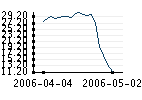
Carbon market hits record low!

These prices - from Point Carbon - are in Euros:

Just weeks after hitting a record high of US$37/ton, the price of Carbon crashed to around US$10/ton on the European market. The reason?
Emission reports from the Netherlands, Czech Republic, France and Walloon region of Belgium came in at lower than expected rates for 2005. The demand for carbon credits depends on the actual levels of GHG emissions of various countries compared to their targets. If the countries achieve higher level of emission reductions than their targets, then the companies in those countries need not buy additional carbon credits. If they emit higher levels they have to buy additional carbon credits in their own country and in developing countries to meet their reduction targets.
Greater awareness of emission targets and the heavy cost for non-compliance may dampen demand for carbon credits.
Still, at US10/ton, farmers stand to make a hefty margin on carbon farming and sequestration.

Wednesday, April 26, 2006

We welcome Woody Deryckx, soil health pioneer


Prominent US organic farmer and alternative agriculture advocate Woody Deryckx has joined the Carbon Coalition! Woody been devoted to advocating and developing organic agriculture since Earth Day 1971. Farmer, educator, consultant and advocate, he co-founded the Tilth Movement in 1974, planning and hosting the Northwest Conference on Alternative Agriculture in Ellensburg that year. He has been president of the Organic Farming Research Foundation . In the 1970s, he developed the curricula and taught Ecological Agriculture at Evergreen State College for many years. He has been active in playing a catalytic role in the organic food industry in the US, serving on the boards of many organizations to promote organic practices.

He is a soil man. As head of the Field Department of Willow Wind Organic Farms, he wrote this in response to an enquirer's question about composting: "Organic farming is a management intensive, complex biological undertaking. We need high levels of soil fertility to produce processing vegetables and all the nutrient that supports our crops comes to the plants by complex biological pathways in the incredibly complex community of soil organisms in the organic matter of the soil. Since every pound of nitrogen that goes to support our abundant and healthy crops passes through perhaps thousands of microbial hands in the soil food web, the soil is maintained as a vibrantly healthy and robust ecosystem. This is one of the benefits of organic farming - we feed the soil first - then the soil feeds the crop which in turn feeds us.__As I hope you can see, our organic farmers don't treat the soil like dirt."

Upon registering with the Carbon Coalition, Woody had this to say: "Certainly soil carbon is a huge component in the system and soil carbon has declined from intensive cultivation and soluble salt fertilizer use. Organic farming - grass farming - agroforestry - no till and limited till farming - and other bioinnovation alternatives can help restore balance in the carbon cycle and offer hope for sustainability."

We welcome Woody from Washington State.

Friday, April 21, 2006

Carbon market hits record high!

Prices for carbon dioxide (CO2) allowances in the EU Emissions Trading Scheme (ETS) have jumped to record levels.

On 12 April, Germany became the first major EU member state to publish hard numbers for its Phase II national allocation plan. The news helped push EU Allowance prices above €30 ($37)/tonne of CO2.

The calculations below of the value of sequestered carbon in agricultural soils were made on the basis of $15/tonne CO2. Dr Christine Jones announced in an earlier paper, based on this figure, that 100 hectares could sequester $400,000 worth of carbon for credits. At this new market level, the potential return to a 'carbon farmer' reaches the unimaginable $1m mark.

"If organic carbon concentrations were increased by 2% to a depth of 30 cm in the same example [given in Table 1 below], this would represent $3,960/ha, that is, almost $400,000 in ‘carbon credits’ per 100 ha of regenerated land. These levels of increase in soil carbon are achievable, and have already been achieved, by landholders practicing regenerative cropping and grazing practices."
For readers whom missed the earlier post on calcuating the volume and value of carbon in soils, this is an excerpt from a paper by Dr Christine Jones*, produced for the Living Soils seminars held in NSW recently.

..............
Calculating volume and value of soil carbon

Soil carbon content is usually expressed as either a concentration (%) or a stock (t/ha). Unless the depth of measurement and soil bulk density parameters are known, it is not possible to accurately convert from one unit of measurement to the other.

For the sake of illustration however, some simple assumptions can be made. Changes in the stock of soil carbon (t/ha) for each 1% change in measured organic carbon (OC) status for a range of soil bulk densities and measurement depths are shown in Table 1. Numbers in brackets represent tCO2 equivalent. An explanation of these terms follows.

Soil bulk density (g/cm3) is the dry weight (g) of one cubic centimetre (cm3) of soil. The higher the bulk density the more compact the soil. Generally, soils of low bulk density are well structured and have ‘more space than stuff’. The lower the bulk density the more room for air and water and the better the conditions for soil life and nutrient cycling. Bulk density usually increases with soil depth. To simplify the table it was assumed that soil bulk density did not change with depth

CO2 equivalent. Every tonne of carbon lost from soil adds 3.67 tonnes of carbon dioxide (CO2) gas to the atmosphere. Conversely, every 1 t/ha increase in soil organic carbon represents 3.67 tonnes of CO2 sequestered from the atmosphere and removed from the greenhouse gas equation.

For example, from TABLE 1 we can see that a 1% increase in organic carbon in the top 20 cm of soil with a bulk density of 1.2 g/cm3 represents a 24 t/ha increase in soil OC which equates to 88 t/ha of CO2 sequestered.

..............................
TABLE 1. Changes in the stock of soil carbon (tC/ha) for each 1% change in measured organic carbon (OC) status for a range of soil bulk densities and measurement depths. Numbers in brackets represent tCO2 equivalent.


.....................Value of soil carbon.................

Sequestered carbon is a tradeable commodity. It has different values in different markets and the price is subject to market fluctuation. If the CO2 equivalent in the above example was worth $15/t, the value of sequestered soil carbon in ‘carbon credits’ would be $1,056/ha. If the soil carbon concentration was increased by 1% to a depth of 30cm rather than to 20 cm, this would represent 132 t/ha sequestered CO2 at a value of $1,980/ha.

If organic carbon concentrations were increased by 2% to a depth of 30 cm in the same example, this would represent $3,960/ha, that is, almost $400,000 in ‘carbon credits’ per 100 ha of regenerated land. These levels of increase in soil carbon are achievable, and have already been achieved, by landholders practicing regenerative cropping and grazing practices.

Even if organic carbon levels were only increased by 0.5% in the top 10 cm of soil this would represent 22 t/ha sequestered CO2 valued at $33,000 per 100 ha regenerated land (assuming a soil bulk density of 1.2 g/cm3 and a price of $15/t CO2 equivalent).

Carbon credits for sequestered carbon are not an annual payment. In order to receive further credits, the level of soil carbon would need to be further increased. It is also important that the OC level for which payment was received is maintained.

This is not difficult with regenerative regimes in which new topsoil is being formed. Biological activity is concentrated in the top 10cm of most agricultural soils, but regenerative practices rapidly expand this activity zone to 30 cm and deeper. Many benefits in addition to potential carbon credits accrue to increased root biomass and increased levels of biological activity in soil.

The majority of Australian soils have lost enormous quantities of organic carbon and this process needs to be reversed. What has gone up must come down. Soils, plants, animals and people will benefit when we take ‘recycle and re-use’ to the next logical step and recycle the excess carbon currently in the atmosphere.

Carbon and nitrogen

Nitrogen moves between the atmosphere and the topsoil in similar ways to carbon. The main difference is that the ‘way in’ for atmospheric carbon is via green plants whereas the ‘way in’ for atmospheric nitrogen is soil microbes. Soils acting as net sinks for carbon are usually also acting as net sinks for nitrogen. The flip side is that soils losing carbon are usually losing nitrogen too. In poorly aerated soils, some of this loss is in the form of nitrous oxide (N2O), a greenhouse gas up to 300 times more potent than carbon dioxide, while other losses include easily leached nitrate (NO3-) which often takes calcium, magnesium and potassium with it, leaving the soil more acidic (lower pH).

Rewarding landholders for farming in ways that build new topsoil and raise levels of soil carbon and nitrogen would have a significant impact on the vitality and productivity of Australia’s rural industries, reduce the incidence of dryland salinity and soil acidity – and reduce levels of greenhouse gases.

As a bonus, regenerative farming practices result in the production of food much higher in vitamin and mineral content and lower in herbicide and pesticide residues than conventionally produced foods.

A new era

If landholders were rewarded for regenerative practices that aggregate rather than aggravate soil structure, it would move us a long way towards solving the greenhouse gas ‘problem’, without the need to measure soil carbon levels at all. Any farming practice that improves soil structure is building soil carbon. When soils become light, soft and springy, easier to dig or till and less prone to erosion, waterlogging or dryland salinity - then organic carbon levels are increasing. If soils are becoming more compact, eroded or saline – organic carbon levels are falling.

Water, energy, life, nutrients and profit will increase on-farm as soil organic carbon levels rise. The alternative is evaporation of water, energy, life, nutrients and profit if carbon is mismanaged and goes into the air.

It’s about turning carbon loss into carbon gain.

............

*Christine Jones is a grassland ecologist with more than 30 years experience studying plant species. She has a PhD in agronomy and botany.

‘Managing the Carbon Cycle’ Forums will be held in Horsham, VIC, 26-27 July 2006; Katanning, WA, 2-3 August 2006 and Kingaroy, QLD, 25-26 October 2006. See www.amazingcarbon.com or contact Christine@amazingcarbon.com

Wednesday, April 19, 2006

Business leaders predict catastrophe if trading doesn't start soon

There is an urgent need for fast carbon sequestering, such as soils are perfectly constructed to do, and the world's isnurance companies are worried the help won't come fast enough. The number and frequency of catastrophic weather events is rapidly impacting on their liabilities. CEO of Australian insurance giant IAG, Mr Michael Hawker, said recently,"We have done a huge amount of modelling on catastrophic damage, and a slight rise in temperatures would cause longer droughts, would increase one-in-100-year storms to one in 50 years or one in 25 years." Such events would make insurance impossible to get.Michael Hawker, IAG CEO.
Mr Hawker is a member of the Australian Business Roundtable on Climate Change - launched 2 weeks ago - wants Australia to have its own carbon pricing regime by this time next year. The members of the Roundtable are Gerry Hueston (president of BP Australia), Michael Hawker (CEO of Insurance Australia Group), Grant King (managing director of Origin Energy), Keith Scott ( chief of Swiss Re), Harry Debney (CEO of Visy Industries) and David Morgan (CEO of Westpac). The Australian Conservation Foundation's executive director, Don Henry, is a cheerleader.
Modelling by the Allen Consulting Group revealed the cost of doing nothing (compared with taking early action) would be a cost impact on business after year 2020, slowing GDP to 1.9% through to 2050. But if early action is taken, growth of 2.1% could be sustained through 2050, electricity would be cheaper and jobs created.
Australia has more to lose from the early stages of global warming than other nations. The CSIRO predicts that a 2°C rise in average temperatures could destroy 100% of the Great Barrier Reef, 80% of Kakadu's wetlands, reduce Melbourne's water supplies by 33%, send fruit flies south of Queensland and cause longer, more severe droughts.
That would all but destroy a number of industries, including tourism ($32 billion) and livestock exports ($17 billion).

Tuesday, April 18, 2006

US Department of Energy gearing up for credits

The last two lines of a recent US Department of Energy press release about carbon measurement make interesting reading in light of official government policy on carbon trading:

"Pursuant to the Kyoto Treaty on reducing greenhouse gas emissions, "carbon credits" will be available to farmers whose soil contains large amounts of sequestered carbon.Polluting industries are allowed fixed amounts of carbon dioxide emissions, after which they will have to buy carbon credits, now being actively traded on stock exchanges from Europe to Chicago."

Does the DOE know something we don't know? They know about soil carbon:

"Photosynthesis sequesters carbon in the root systems of plants and finally in the soil. Switching from till to no-till agriculture increases carbon sequestration and farmers will want to be able to verify the amount of carbon stored.
Since carbon sequestration removes carbon from the atmosphere, thus mitigating the global warming, this will allow the farmers to receive carbon credits."

New on-site carbon measurement device

The US Department of Energy recently announced that its scientists have developed "a device that can measure carbon and other elements in soils non-destructively and in situ." The device is mounted on a cart and is "field-deployable".
This instrument uses neutron activation to determine how much carbon is sequestered in soils. It has been undergoing modifications and field tests for a year.
In the past, soil carbon measurement was done by taking samples from small cores or large excavations to a laboratory.
With this device, operators can sample a large volume at the site so that normal lateral fluctuations are smoothed out.
Unlike other soil carbon measurement technologies, which are destructive, this device allows for multi-elemental soil analysis. It can also be used in a scanning mode, allowing scientists to obtain average values of a large area.
"The device may be of particular interest to farmers worldwide, who have been switching in increasing numbers from conventional agriculture methods that turn the soil to what is called "no-till" farming. Since carbon generally improves soil fertility, it will allow farmers to determine when soil conditions are ideal.
There is another reason the farmers may want to keep track of how much carbon is present in their soils, says the DOE press release. "Photosynthesis sequesters carbon in the root systems of plants and finally in the soil. Switching from till to no-till agriculture increases carbon sequestration and farmers will want to be able to verify the amount of carbon stored.
Since carbon sequestration removes carbon from the atmosphere, thus mitigating the global warming, this will allow the farmers to receive carbon credits."

Friday, April 14, 2006

STOP PRESS: "Green Farmers" to be paid for being Green

They're talking billions of dollars to be placed in the hands of Green Farmers to help protect and recover degraded landscapes in the 60% of Australia's land mass managed by farmers. If only they understood the soil carbon sequestration story, the government would know they can get industrial polluters to pay for conserving natural resources in the bush.

The Australian reports this week that even more money is needed to deal with intractable land degradation than the $4.4billion already spent by the Howard Government, according to a report into the Natural Heritage Trust and the National Action Plan on Salinity. The report found the programs fell short in dealing with farm areas needing structural adjustment.
The sustainable use of natural resources by agriculture is a key objective of both programs.
The report said areas with intractable problems, such as severe degradation from past land management policies, would need ``significant investment in innovative approaches and cost-sharing arrangements beyond current levels of investment''.

At the same time this week the Financal Review reports that the federal government is launching a scheme to provide taxpayer assistance to farmers who make environmental improvements to their land. "The incentives - which may be in the order of hundreds of millions of dollars - are an attempt to allay growing anger in the bush about the burden of environmental regulations," said the report. Agriculture Minister Peter McGauran said they would result in an increase in long-term productivity. "The environmental aim might be to revegetate a waterway, repair some gully erosion, protect a wetland, or maintain some remnant native vegetation. It could be a lot of things, but the aim would certainly be to use our money in a way that helped farmers maintain or improve productivity for the long term, in return for long-term environmental protection."
To start the ball rolling, $2 million was announced for a number of pilot projects. "I want to see a broader use of incentives come into play in the next phase of the government's natural resource management programs, from 2008 at the latest", Mr McGauran said.

(SEE THE DIARY OF A CARBON FARMER for the Green Farmers Manifesto - http://envirofarming.blogspot.com)

Tuesday, April 11, 2006

Australian business leaders call for credits trading


The CEOs of 6 leading corporations are defying the Federal Government and calling for a carbon credits trading scheme for Australia. They have formed the Australian Business Roundtable on Climate Change, described by the Sydney Morning Herald as "a powerful new voice which wants business and government to respond more rapidly to inexorably rising world temperatures."
Founding members of the Roundtable are Westpac, Swiss Re, Insurance Australia Group (which includes NRMA Insurance),BP Australasia, Origin Energy, and Visy Industries. The Australian Conservation Foundation is also a member.

The position taken by the US and Australian Governments in refusing to ratify the international Kyoto Agreement - which forced heavy emitters of greenhouse gases to buy carbon credits - is rapidly becoming uncomfortable for the two leaders who took the decision to stay out. In the US, business and political circles are merely biding the time for George Bush's term to end. The Congress is known to have legislation drafted and ready. Major corporations such as General Electric are counting on the change.


Westpac CEO David Morgan said GE's CEO Jeff Immelt told him "he was virtually certain that the first action of the next President of the United States, be it Republican or Democrat, would be to initiate urgent action on climate change." Mr Morgan said GE "is allocating billions of dollars worth of investment in the confidence of that development."

Sunday, April 09, 2006

First Coalition scan underway!

It's started! We have fired the first shot in our campaign to have soil carbon sequestration recognised as tradable carbon credits. We won't know for 3 years what degree of carbon sampling will be acceptable to the market, we are taking a conservative approach and measuring deep and measuring often. One metre deep and a core sample per acre.
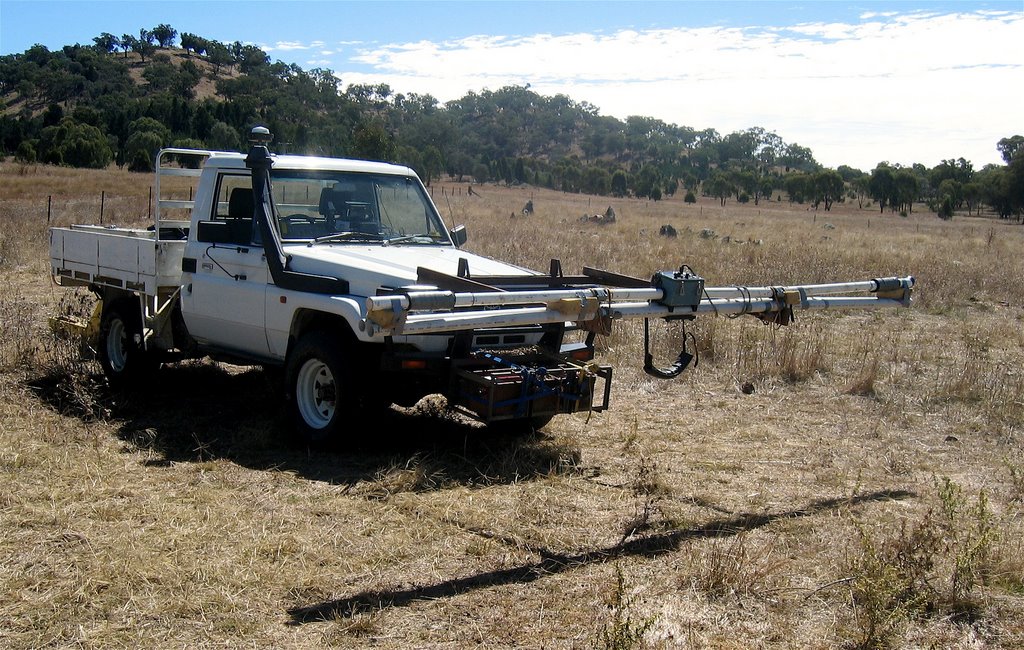
To map the carbon in the topsoil at Uamby, we have commissioned The Center for Precision Agriculture, an august body of soil scientists from Sydney University, to do a pretty standard mapping exercise, using both an EM31 and an EM38 device and a Gamma machine which measures the various radioactive signatures to a depth.

The EM is a standard soil mapping instrument that can give us a guide as to where we should drill for core samples. The Gamma is still experimental but we are told that it has achieved good results in estimating carbon. (I will blog these devices later once I've done my homework.)

Why sample 100cm deep when 30cm is advised?
The 1m of core sample that we have proposed is insurance. 1cm to 30cm was to be sampled in 10 increments to get the data that DR Christine Jones said would be useful i.e the three horizons to see the relative activities of each level. The 30 to 100 cm horizon was taken purely to complete the data set.

Our largest problem at the moment is finding someone to test the soil. It seems the cheapest we can find is $36 per sample, making it unrealistic for the 3 horizons to be tested. We are not giving up on this though as it is very worth while having the top 30 cm separately tested.

From our research, the approach to carbon "Measurement, Monitoring and Verification" adopted across the world varies from a mere estimation based on computer modelling aall the way to our over-cautious approach. We are adopting our approach because we have got to convince the marketplace of our bona fides.
We'll keep you informed.
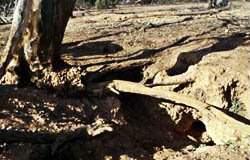
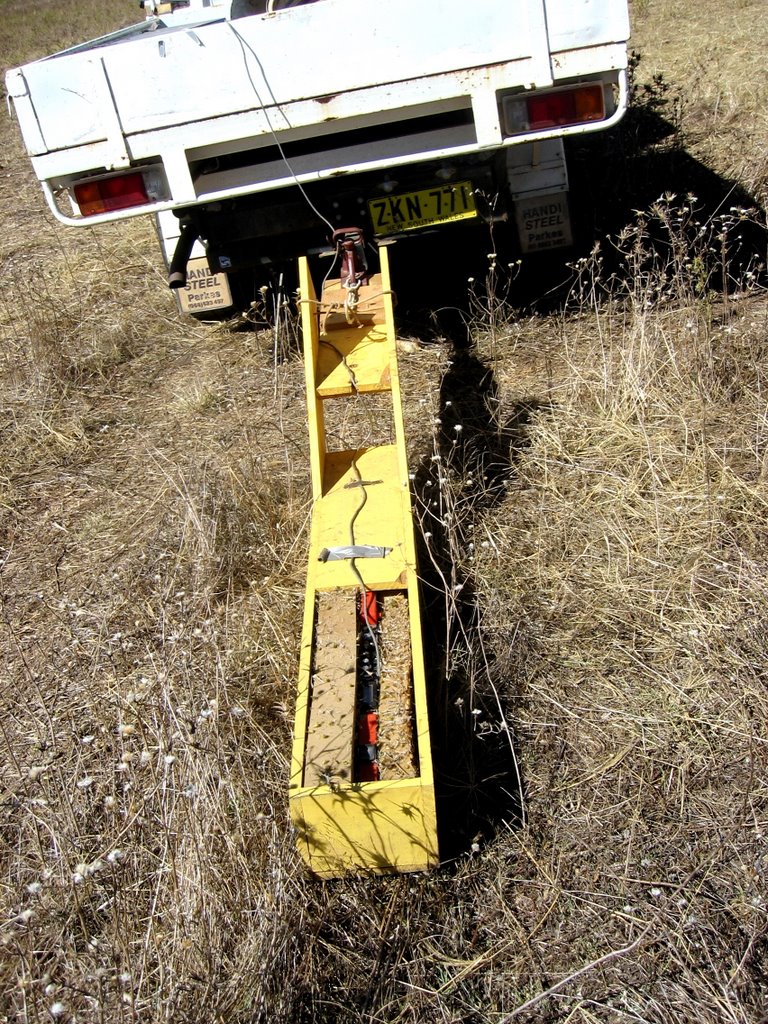
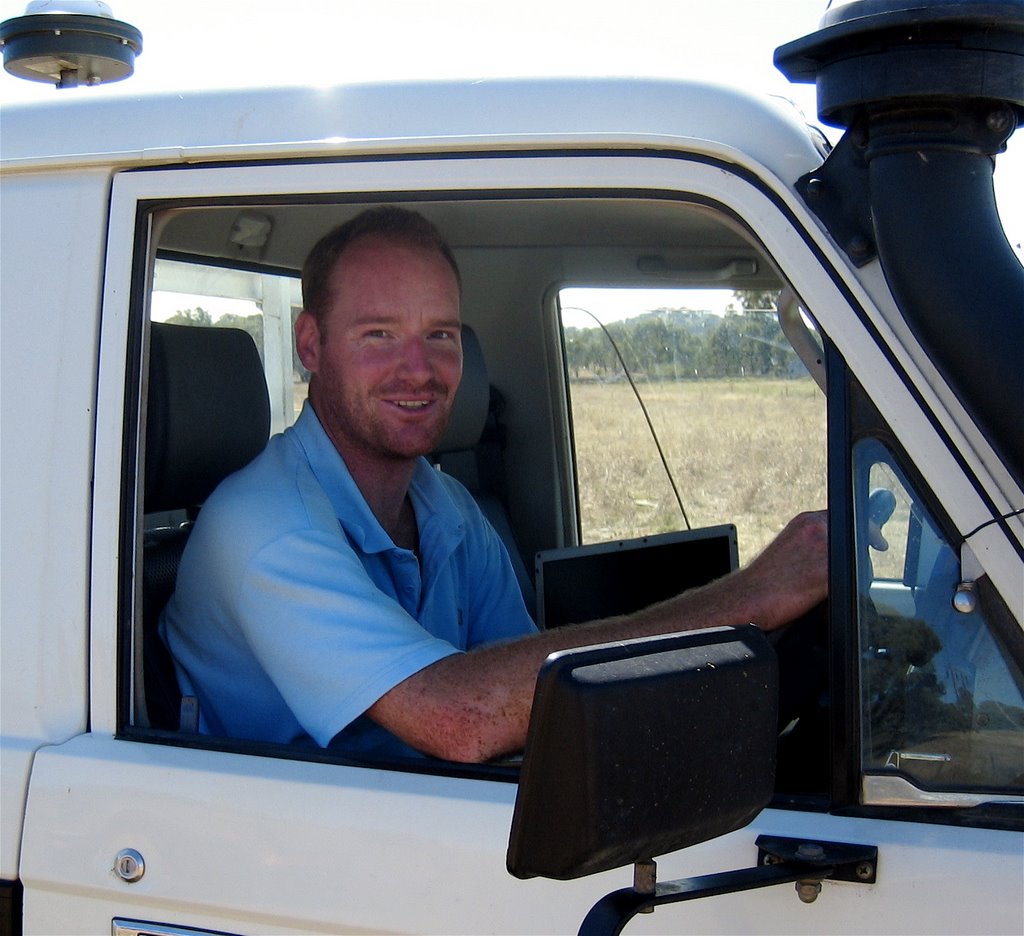
Driving the scanning rig is Michael Short from The Center for Precision Agriculture. Michael stayed with us for several days and had several adventures along the way. For instance, he drove across a rabbit warren which collapsed under him!

Thursday, April 06, 2006

More papers posted in our "Library"

Two more papers are available in our "Library":

"Carbon Stops Salt" by Dr Christine Jones

"ORGANIC MATTER, HUMUS, HUMATE, HUMIC ACID, FULVIC ACID, AND HUMIN" by Dr. Robert E. Pettit, Emeritus Associate Professor, Texas A&M University

Here is Dr Jones's introduction:

"Since the time of European settlement there have been significant losses of humic materials and other forms of organic carbon from Australian soils. This has had a dramatic impact on landscape health in many ways, not the least of which is an increased incidence of dryland salinity.
"Humic substances play three vital roles in reversing dryland salinity:
i) increased soil water storage potential
ii) stimulation of biological activity
iii) chelation and inactivation of salts
"The influence of soil humus on the storage and subsequent movement of water in the landscape is the most important of these roles."

Here is Dr Pettit's introduction:

"Humic substances, such as those listed in the above title, play a vital role in soil fertility and plant nutrition. Plants grown on soils which contain adequate humin, humic acids (Has), and fulvic acids (Fas) are less subject to stress, are healthier, produce higher yields; and the nutritional quality of harvested foods and feeds are superior. The value of humic substances in soil fertility and plant nutrition relates to the many functions these complex organic compounds perform as a part of the life cycle on earth. The life-death cycle involves a recycling of the carbon containing structural components of plants and animals - through the soil and air - and back into the living plant
"Man became distracted from the importance of organic compound cycling when it was discovered that soluble acidic based N-P-K “fertilizers” could stimulate plant growth. Large industrial concerns took advantage of the N-P-K discovery to market industrially processed “fertilizers” from mineral deposit. Continued use of these acidic fertilizers in the absence of adequate humic substance (in the soil) has caused many serious sociological and ecological problems. Man needs to reconsider his approach to fertilization techniques by giving higher priority to soil humus.
"The urgency to emphasize the importance of humic substances and their value as fertilizer ingredients has never been more important than it is today. All those concerned about the ability of soils to support plant growth need to assist in educating the public. Humic substances are recognized by most soil scientists and agronomists as the most important component of a healthy fertile soil. To illustrate how humic substances function, the following summary, based on published scientific data, has been prepared as a guide for an educational program. In addition, by understanding how these carbon containing substances function, professionals will have a solid foundation on which to design environmentally acceptable sustainable agriculture programs."

Wednesday, April 05, 2006

Biodiesel: Enviro-Enemy Number One?

The only place you'll see orantugangs like this is in a zoo because environmentalists are causing his forest home to be devastated.


Environmentalists and governments are "creating a market for the most destructive crop on earth", according to green activist George Monbiot in an article in the Guardian (6/12/05).
Palm oil is the cheapest source of biodiesel and the rush to meet demand from the EU has resulted in the clearing of millions of hectares of rainforest in Malaysia, Indonesia and Borneo. Biodiesel plants are popping up all over South East Asia to consume the crop that is replacing native forestlands.
Recently Friends of the Earth reported that between 1985 and 2000, the development of oil-palm plantations was responsible for an estimated 87% of deforestation in Malaysia. In Sumatra and Borneo, some 4 million hectares of forest have been converted to palm farms. Now a further 6 million hectares are scheduled for clearance in Malaysia, and 16.5 million in Indonesia.
"Almost all the remaining forest is at risk. Even the famous Tanjung Puting national park in Kalimantan is being ripped apart by oil planters," says Mr Monbiot. "The orangutan is likely to become extinct in the wild. Sumatran rhinos, tigers, gibbons, tapirs, proboscis monkeys and thousands of other species could go the same way. Thousands of indigenous people have been evicted from their lands, and some 500 Indonesians have been tortured when they tried to resist. The forest fires which every so often smother the region in smog are mostly started by the palm growers. The entire region is being turned into a gigantic vegetable oil field." Emotive language. Oh, the irony of it all!

Sunday, April 02, 2006

Agricultural soil carbon sinks cheapest and fastest, says Professor

Soil carbon sinks can play a key role in the global strategy to mitigate against greenhouse emissions, says US climate change economist Professor Bruce A. McCarl of Texas A&M University. In a paper called "Enhancement of Carbon Sequestration in U.S. Soils" he wrote: "With focused effort, the amount of carbon sequestered in soil by land management could be significantly increased. Various studies estimate that the soil C sequestration rate may be increased to 0.44-0.88 Pg C y-1 and sustained over a 50-year time frame," says Prof. McCarl. "Results from integrated assessment analyses indicate that soil carbon sequestration may have an important strategic role – due to potential for early deployment and low costs – within a technology portfolio to mitigate climate change.
"The important aspect of land management for soil C sequestration is that, unlike many other technologies to offset fossil fuel emissions (e.g. geologic carbon sequestration, carbon capture), it can be implemented immediately, provided there are economic and other incentives to do so.
"Due to the cumulative effect of CO2 on climate, an immediate offset of CO2 emissions provides a significant delay in the rise of atmospheric CO2 concentration. In addition, by the time that land management C sequestration begins to saturate the soil’s capacity to store additional C, other methods of reducing emissions or sequestering carbon may be available or already in use."

Prof. Bruce A. McCarl is Regents Professor of Agricultural Economics at Texas A&M University. He specialises in policy analysis (mainly in climate change, climate change mitigation, among other things).

Thursday, March 30, 2006

Kansas soil carbon measurement easy system

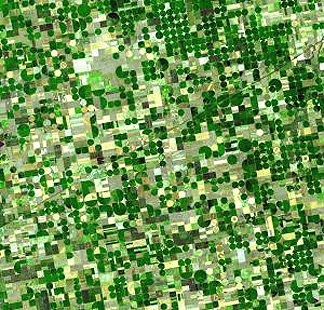
These are real crop circles in Kansas, photographed from satellite. This extract from a brochure from the Iowa Farm Bureau reveals that carbon measurement is not an issue is selling soil carbon credits in Kansas. Just grow certain crops or maintain 100% groundcover with grassland:

"Exchange Soil Offsets (XSOs): To be eligible, the land enrolled in the XSO certification program must be capable of being cropped – that is, the land could be utilized for row crop or small grain production even though it may currently be in a harvested grass or forage crop. If such lands are farmed with row crops during the project period, such crops need to be produced in a compliant no-till manner.
Cropland that was put into CRP prior to Jan 1, 1999 will NOT be eligible for XSOs. Cropland that is in a harvested hay crop as
part of a crop rotation is eligible.
XSOs will be issued at the rate of 0.5 metric tons CO2 equivalent per acre per year to farmers (in CCX Zone A) who commit to
continuous conservation tillage (defined as continuous no-till, strip till or ridge till) on the enrolled land from 2006 through 2010. Enrolled acres may be planted in soybeans no more than three of the five years (2006-2010). XSOs will also be issued to farmers who commit to maintain soil carbon storage realized as a result of establishment of grass cover plantings on eligible land (land that is capable of being cropped) that were undertaken on or after January 1, 1999. The land must remain in permanent grass cover through 2010. XSOs for these recent grass cover plantings will be issued at a rate of 0.75 metric tons CO2 equivalent per acre per year.
In the event that the land fails to meet these requirements, all XSOs from such land shall be null and void and any payments for XSOs delivered prior to January 1, 2011 shall be repaid subject to interest and penalties as provided in the sales agreement.

Definition of Conservation Tillage: For CCX purposes, these practices are as defined in the Natural Resources Conservation Service National Handbook of Conservation Practices. These definitions are:
• No-till/Strip-till - Managing the amount, orientation, and distribution of crop and other plant residue on the surface year-round while growing crops in narrow slots or tilled or residue-free strips in soil previously untilled by full width inversion implements;
• Ridge-till - Managing the amount, orientation, and distribution of crop and other plant residue on the soil surface year-round while growing crops on preformed ridges alternated with furrows protected by crop residue."

Kansas farmers paid soil credits

Thanks to Coalition Member Dennis Hilder for picking this story up on the Kansas State U. website:

Kansas farmers are being paid to sequester carbon in their soils. Not a lot, but still they're being paid. Lat year 72 producers were paid credits for carbon locked up in more than 75,000 acres. They were mainly primarily no-till producers in the eastern half of the state. The carbon credit pilot project was offered by the Chicago Climate Exchange (CCX) and administered by the Iowa Farm Bureau. This year there are 330,000 acres under contract.


Eligibility requirements for the new phase of the program are established by the CCX. "In the eastern half of Kansas, land in continuous no-till (or strip-till or ridge-till) and new grass plantings is eligible... In western Kansas (except for a few counties in southern areas), only land in new grass plantings is eligible at this time," says the report.

The Iowa Farm Bureau aggregates the credits from individual producers into a large pool of credits and sells the credits on a commodity exchange operated by the Chicago Climate Exchange. So far, buyers have been mainly CCX members, such as Ford Motor Company, DuPont, International Paper, the University of Oklahoma, and the City of Chicago.

"When the aggregator (Iowa Farm Bureau) who has the credits under contract believes the bid price is high enough, the credits are sold. The buyers pay the aggregator, and the money is then dispersed to the producers who enrolled in the project by signing a contract. The aggregator keeps 10 percent of the proceeds for administrative costs" says the report.

In December 2005, 15 percent of the carbon credits were sold for about $2 per ton (about $1 per acre for land in no-till, and $1.50 per acre for land in new grass plantings).

"Soil carbon sequestration is basically the process of storing carbon in the soil, usually through increased levels of soil organic matter. There are several recognized management practices producers can use to sequester carbon, including no-till, grass plantings, increased cropping intensity, tree plantings, erosion control and others," said Kansas State University professor of agronomy Chuck Rice.

Tuesday, March 28, 2006

Carbon credit market grows 2500% in a year

Significant increases in traded carbon volumes and values took place in 2005 and big increases are expected in 2006, reports analyst Point Carbon. The global carbon market saw transactions totalling around A$15 billion, 25 times more than the year before. A great number were negotiated directly between companies.

Australian farmers paid for native vegetation


The precedent has now been set! The land reports that two trials are underway in NSW paying farmers for protecting the environment. 37landholders in the Liverpool Plains Land Management Committee's area have been invited to set a price for their services to the community for work they want to do to reduce salinity, improve water usage and increase biodiversity. The farmers are putting up $3 for every $1 funding they receive.
Naturally "native vegetation" means trees in the language of the herd. It's a short distance to the point where grasses are included in the definition for funding purposes.

Monday, March 27, 2006

Farmers are big polluters


Agriculture contributes 19.2% of Australia’s greenhouse gas emissions, more than all the emissions of motor vehicles and other forms of transport (14.4%), according to a report by the Australian Greenhouse Office in 2002. Ploughing releases large amounts of CO2 as does burning stubble. Both activities deplete carbon in the soil. If the Government rewarded farmers for adopting minimum till or no till approaches, it would reduce greenhouse emissions and make a positive contribution to the global warming effort. That would be additional to the carbon sequestered in the undisturbed soil. just one more good reason to mandate emissions trading so energy users pay the true cost of the energy they use.

Federal Government against carbon credits (for now)


The Commonwealth Government's is against trading in carbon credits, for the time being, according to a 2004 policy document called "Securing Australia’s Energy Future".

"Australia will not impose significant new economy-wide costs, such as emissions trading, in its greenhouse response at this stage," says the report. But it doesn't rule trading schemes out in future: " Such action is premature, in the absence of effective longer-term global action on climate change..."

Australia is holding out for a better deal, especially from fast-growing economies: "Expected economic growth in less developed countries, such as China and India, will result in emissions from these nations increasing substantially over the next 20 to 30 years. Total emissions from less developed countries, which have no quantitative targets under the Kyoto Protocol, are expected to soon overtake those from industrialised countries. It is clear that, to be effective, any global response must encompass the world’s major emitters."

If the international community plays ball, Australia will get a trading system: "Should such an effective global response be in prospect, the government will consider least-cost approaches to constraining emissions. This consideration would encompass the possible introduction of market-based measures (such as an emissions trading scheme) in the longer term, noting the potential for these to lead a better resource allocation and provide industry and individuals with the greatest flexibility in determining how best to respond."

Wednesday, March 22, 2006

US farmers paid for carbon in soil!


Farmers in Montana may soon be paid for sequester-ing carbon in agricultural soils, reports the Great Falls Tribune.
A National Carbon Offset Coalition pilot project is linking industries that produce greenhouse gas with landowners who store carbon in the ground through conservation practices to enable them to earn credits.
Montana University researchers are measuring carbon stored in soil and how land use affects storage. The study involved 20-acre plots. “Some are planted with rotations of grain crops, such as wheat, and then pulse crops, such as peas. Others are planted with grain, then plowed and left idle the next season. No-till farming is practiced on others,” says the report.
“The market for carbon offsets is voluntary in the United States. A metric ton, the amount saved in about 10 acres of no-till cropland, trades for $1.50 to $3.”
But carbon credits are traded in established markets where greenhouse emissions have been capped, like Europe where just over a month ago carbon was trading for $30 per metric ton.
President Bush has refused to set caps for greenhouse gases, but the industry is waiting for the next Administration when Congress is expected to do so.
“The carbon sequestered during the pilot will be traded with the National Carbon Offset Coalition acting as the broker. A power plant in California has the option to buy the first 25,000 metric tons of carbon credits that the coalition secures,” says the Great Falls Tribune.

Sunday, March 19, 2006

The Great Green Lie

This is a painting made by John Lewin in 1812 of the Coxes River in the Blue Mountains. Where's the forest?
Greenie scientists claim Australia was heavily forested when white man arrived and so we should turn it back to forest. But explorers describe grassy plains and lightly timbered woodlands. Here is more support for George Evans description of central western NSW as not being forested when white men arrived. Judge Baron Field visited Bathurst in 1822 writes,"The scarcity of wood takes away the log appearance of the cottages; they build of turf here and roof with straw or reeds, instead of wooden shingles.”
Many people observed the lack of tree cover on the Bathurst Plains and the lack of weatherboard buildings in Bathurst as a result. In fact anyone who has been to Bathurst will see hundreds of red brick houses. I taught local history at Charles Sturt University in Bathurst and made a special study of the brickmaking industry. In the 1860s the municipal council had more than 600 brickmakers registered. The variety of ‘frogs’ or makers’ mark depressions in local historic sandstock bricks have led many locals to collect them. I had my own collection. Why so many? Because, as far as my research could take me, bricks were fired on every building site, made from the clay dug from the site.
As with so many necessities of life, the colonists used whatever was at hand. And on the Bathurst Plains there was not much timber.

References:
"The Australian Landscape - observations of Explorers and Early Settlers" (D. G. Ryan, J. E. Ryan and B. J. Starr)
"The nature of pre-European vegetation in south eastern Australia: a critique of Ryan, D. G., Ryan, J. R., and Starr, B. J. (1995) The Australian Landscape- Observations of Explorers and Early Settlers" (J. S. Benson, P. A. Redpath)
"The extent of the Grasslands in the Central West of NSW prior to European settlement" (Darryl Cluff)
"The Future Eaters" (Tim Flannery)