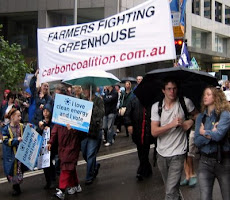
Wednesday, June 13, 2007

"I'm blown away by your energy and commitment. Your excitement is infectious..."

Dear Member,

A couple of days ago we received a cheque through the mail and a letter from a supporter who wrote: "I'm blown away by your energy and commitment. Your excitement is infectious and your research formidable..." It continued, "Thanks for soldiering on, on behalf of us all... You are providing such a wonderful public service in pulling all the carbon stuff together."

I was stunned. All the worrying about money through the drought and the mounting cost of continuing the campaign for recognition of soil carbon had been eroding my confidence. Would we be able to finish what we had begun? We can't continue like this. The bank manager agreed when he visited last week.

The sight of that cheque made me quite emotional. While I take as much off-farm work as I can get, the needs of the Carbon Coalition campaign - the documents, the research, the meetings, the speeches - make earning a conventional living impossible.

Why am I telling you this? It's been my choice. I am driven by the fear of leaving my two young grandsons to cope with climate crisis in a dangerous world. I am driven by the chance we have to bring farm landscapes back from the brink right across Australia. I am driven by the feeling that our community is disintegrating as the local economy declines and with it government services and things city people take for granted, like banking services. And the opportunity for restoring life in agricultural communities, funded by big city polluters via carbon credits.

A thunderclap went off in my head when that cheque fell out of the envelope. I realised that some people might value what we are doing... enough to help us pay for it. So, in the bush tradition, we're passing the hat around.

It's a bit embarrassing to be passing the hat for yourself, but the cause is more important than personal pride. If it comes back empty, that's OK. We'll soldier on anyway.

• You can send a cheque to the Carbon Coalition Against Global Warming C/- MB & AL Kiely, “Uamby”, Uamby Road, GOOLMA NSW 2852

• You can use a credit card via the “Make a Donation” button on this blogsite (http://carboncoalitionoz.blogspot.com) and the website (www.carboncoalition.com.au).

• You can engage the Coalition to provide speakers for seminars or to run workshops about carbon trading and agriculture. Call 02 6374 0329.

• You might know a corporate or philanthropic organisation we could apply to for financial support.

• You can buy Australian Farm Soil Credits from www.adoptafarmer.com.au - a percentage of each sale goes to support the Coalition's work.

Thanks for your help.

Michael Kiely
Convenor

PS.Below we list the ways your support will help.

PPS. Also below is a complete activity report on the Coalition's performance since February 2006.


The Carbon Coalition needs your help!


Soil carbon credits are now on the national agenda. The work of the Coalition is paying off. We have the support of the Federal Opposition. We are knocking on the door of the Federal Government. We finally have the ear of the Australian Greenhouse Office. We can't stop now.

The work of the Carbon Coalition during the past 18 months has been entirely funded by volunteers:

• lobbying,
• outreach,
• speaking engagements,
• website activity,
• blogging,
. publicity,
• research,
• overseas study tour,
• attending conferences,
• appearing before official enquiries…

We believe the mission of the Coalition is too important to wind down at this important point. The challenges we have coming up include:

1. Being fobbed off with Stewardship Payments instead of carbon credits.
2. Missing out on offsets when on-farm emissions are estimated and landholders are required to buy credits to offset CO2, methane, nitrous oxide etc.
3. Put an end to the myths about Australian soils and carbon.
4. Force the hand of the regulators by forming markets.
5. Promote Carbon Farming among business as usual growers.
6. Teaching landholders about the carbon trading markets.


We need your help…


We need your help to achieve the goals of the Coalition:

• Making the family farm more viable
• Strengthening rural communities
• Restoring the ecological health of farmland
• Reducing the extremes of Climate Change

What we need resources for…

• Scientific advice
• Scientific trials
• Website development
• Membership database system
• Publicity
• Management
• Lobbying
• Research
• Conferences
• Subscriptions
• Travel/Acc


NB. YOUR TAX DEDUCTION: While we cannot offer tax deductibility as a CHARITY, we can arrange a deduction for you by the following means: 1. You make your contribution. 2. The Coalition invoices you for CARBON ADVISORY SERVICES and your receipt can be used for deduction.


Carbon Coalition Against Global Warming
Activity Report
February 2006-June 2007


February, 2006 - Launched Carbon Coalition at Central West Conservation Farmers’ Association conference.

Established blog site carboncoalitionoz.blogspot.com – posted 127 reports in 365 days


Established web site – carboncoalition.com.au – collected 600 email contacts in 12 months

April, 2006 - Recruited Coalition Council members as advisory board: David Marsh, Rick Maurice, Col Seis, Angus Maurice.

Reguler press releases to national and rural media. Interviews with media.

April, 2006 - Gain support from Tim Flannery, Author, The Weather Makers

Add extensive “Library” of scientific papers and links to website and blogsite.

26 May, 2006 – Form alliance with Peter Andrews, Natural Sequence Farming

27 May, 2006 - Make presentation at Manning Landcare event, Gloucester NSW
2 June, 2006 - Brief NSW Farmers’ Association, Jock Laurie and David Ayrs, Sydney NSW

Write “Open Letter to Soil Scientists” for Australian Farm Journal

5 July, 2006 – Brief Central West delegation to NSW Farmers’ Association Conference, Wellington NSW

14 July, 2006 – Presentation for CWCMA at Mudgee Small Farm Field Day

19 July, 2006 – Make presentation to Baradine Landcare Group, Baradine, NSW

July, 2006 - Make presentation to Land Management Workshop, Cobar Field Day

15 August, 2006 - Brief National Farmers’ Federation, David Crombie and Dr Vanessa Findlay, Canberra ACT

2 September, 2006 – Make presentation to Gulgong Anglican Church Men’s Meeting, Gulgong NSW

USA 3 week fact finding mission
18/19 September: Washington DC – attend 2006 Global CO2 Cap-And-Trade Forum
21/22 September: Bozeman, Montana - Big Sky Carbon Sequestration Partnership Phase 2 Project Management Plan Workshop
25 September: College Station, Texas - Professor Bruce McCarl, Department of Agricultural Economics, Texas A&M University
27 September: Albuquerque, New Mexico - Peter Holter, Holistic Management International
28 September: Albuquerque, New Mexico - Southwest Carbon Sequestration Partnership Phase 2 Project Management Plan Workshop
29 September: Swanton, Vermont - Address Farmers' gathering organised by Coalition member Abe Collins from Vermont.
1 October: Columbus, Ohio - Professor Rattan Lal (or colleague), Ohio State University
3 October: Chicago, Illinois – Mike Walsh, SVP, Chicago Climate Exchange

Susan Capalbo, Director, Big Sky Carbon Sequestration Partnership.
Pamela Tomski is Associate Director responsible for outreach and education, Big Sky Carbon Sequestration Partnership.
Dave Brown, Technical Lead, Terrestrial Sequestration with Big Sky.
Michael Bowman, Director, 25:25, a movement that aims to have 25% of America's fuel needs supplied by farmers in 25 years.
Ted Dodge, Director, National Carbon Offsets Coalition which brokered the first carbon credits paid to US farmers In Montana and Kansas.
Professor Bruce McCarl of Texas A&M University, climate economist on the Inter-Governmental Panel on Climate Change.
Dr Rattan Lal, author of a small library of books and papers, co-author of many others, Professor of Soil Physics at the School of Natural Resources at Ohio State University, Columbus Ohio.
Dr Klause Lorenz, Senior Research Fellow, the School of Natural Resources at Ohio State University, Columbus Ohio.

Launched Carbon Coalition in USA - Abe Collins, Carbon Farmer and Convenor, Swanton, Vermont.

Attended and addressed 2 day Phase 2 Workshop in Albuqurque, New Mexico of the Southwest Regional Partnership.
Met with Head of Partnership, Dr Brian McPherson, from the New Mexico Institute of Technology in Socorro.
Met with Dr Joel Brown and Dr Jay Angerer, the 'soil carbon sequestration' experts with the Southwest Partnership.
Met with Peter Holter, Holistic Management International.

Secured first order for 25,000 acres Australian soil (till to no till) from CCX.

23 October, 2006 – Make presentation to Kingaroy Carbon Forum, Kingaroy QLD

Submission to Commonwealth Minister for Environment, Sen. Ian Campbell via Parliamentary Secretary Greg Hunt, MP.

Coordinated 8-farm application for CWCMA Round 5 funding for carbon farming soil trials.

4 November, 2006 - Attended the “WALK AGAINST WARMING”, the International Day of Action on Climate Change on Saturday, Sydney NSW

4 November, 2006 - Briefed Federal Shadow Minister for Environment, Anthony Albanese MP


13 November, 2006 – meet with NSW President Soil Science Society re peer reviewed data for CCX and Summit of scientists and Practitioners

25 November, 2006 – Make presentation to Cobar/Nyngan Landcare group

11 December, 2006 – attend National Emissions Trading Summit, Sydney NSW

29 December, 2006 - Submissions (2) to National Emissions Trading Scheme Inquiry, Sydney NSW

Second Submission to Commonwealth Minister for Environment, Sen. Ian Campbell

22/23 November, 2006 - Speak at 2006 National Carbon Forum Canberra ACT

Organising Summit between Soil Scientists and Practitioners (March 2007)

Briefed Tony Windsor, MP, Canberra ACT (subsequently asks PM a question in Parliament)

13 December, 2006 - Briefed NSW Premier’s Advisory Panel on Climate Change, Sydney NSW

19 December, 2006 - Briefed NSW Farmers’ Asociation’s Jock Laurie. Subsequently calls for soil carbon credits.

Briefed NSW National Party MPs responsible for natural resources management election platform, Sydney NSW

Stand for NSW Legislative Council elections for Climate Change Coalition as soil carbon advocate.

Presented at Managing Under Changed Climactic Conditions Conference, Bathurst NSW

9 February, 2007 - Address South Australian No Till Farmers’ Association, Tanunda, SA

13 February, 2007 – Met with Peter Holter and Judy Earl, Holistic Management International

14 February, 2007 - Briefed NSW Department of Primary Industries Farm Management Climate Change Risk Management Steering Committee, Orange NSW

15 February, 2007 - Presentation to CAANZ, Wellington NSW

20 February, 2007 - Brief John Williams, NSW Commissioner Natural Resources, by telephone

5 March, 2007 - Address CWA Agriculture & Environment Seminar, CWA House, Potts Point NSW

6 March, 2007 - Campaigning as candidate for NSW Upper House election for the Climate Change Coalition; Erin Brockavich press event, Sydney NSW

7 March, 2007 - Conduct 4 hour workshop on carbon trading for RCS, Yeppoon, QLD

8 March, 2007 - Address soils gathering, CWCMA Dubbo, NSW


10 March, 2007 - Address landholders' gathering at Collarenabri, NSW

12 March, 2007 - Address Landcare meeting, Mudgee NSW

22 March, 2007 - First Soil Science Summit, meeting between landholders and scientists, Dubbo, NSW

24 March, 2007 - Election day - Campaigning as candidate for NSW Upper House election for the Climate Change Coalition

29/30 March, 2007 - Address Landcare Farming Forum, Grafton, NSW

2 April, 2007 - Teleconference with organisers of second soil science summit.

13 April, 2007 - Meeting with AGL Corporate Affairs Director, Sydney NSW

15 April, 2007 - Campaigning as candidate for Senate election for the Climate Change Coalition

25-27 April, 2007 - Addressing Southern Rivers CMA/Landcare Forum at Merimbula and Eden, NSW

28 April, 2007 - Meeting with representatives of Collarenabri, Mascot NSW

30 April, 2007 - Attend International Agrichar Initiative, Terrigal NSW

3 May, 2007 - Address DPI Climate Change Risk Management Forum, Tamworth NSW
3 May, 2007 - Address Double B Beef Marketing Group, Bingara, NSW

3 May, 2007 - Attend "Green Dollar" Conference, Canberra ACT


4 May, 2007 - Teleconference with organisers of second soil science summit.

9-10 May, 2007 - Business Council For Sustainable Energy Conference, Sydney NSW

15 May, 2007 - Meet with Judi Earl, Holistic Management International, Goolma NSW

17 May, 2007 - Address Landscape and Horticultural Engineers Conference, Sydney NSW

18 May, 2007 - Brief Richardson Properties on opportunities for investment in soil carbon projects, Sydney NSW

5 June, 2007 - Address DPI Climate Change Risk Management Forum, Dubbo NSW

5 June, 2007 - Brief Dr David Ugalde, Head of Agriculture and Greenhouse, Australian Greenhouse Office, Dubbo NSW


7 June, 2007 - Address NSW Farmers' Association Carbon Forum, Tamworth NSW

8 June, 2007 - Meet with Australian Trade Commissioner, Chicago, Tamworth NSW

WHAT CAN YOU DO?

There are many ways you can help:

• You can send a cheque to the Carbon Coalition Against Global Warming C/- MB & AL Kiely, “Uamby”, Uamby Road, GOOLMA NSW 2852

• You will find a “Donate” button on this blogsite (http://carboncoalitionoz.blogspot.com) and the website (www.carboncoalition.com.au).

• You can buy Australian Farm Soil Credits from www.adoptafarmer.com.au

• You can engage the Coalition to provide speakers for seminars or to run workshops about carbon trading and agriculture. Call 02 6374 0329.

• You might know a corporate or philanthropic organisation we could apply to for financial support.

Your contribution is an investment in the greatest opportunity to address Climate Change and solve the problems of declining land health, declining economic health, and declining personal health in agriculture.

Thank you for being part of this historic movement...

Michael Kiely
Convenor

PS. Please pass the hat around...

Monday, June 11, 2007

"Secret" Government Plan for Agriculture revealed

At last we have uncovered the Government's plan for tackling agriculture for greenhouse gas emissions while denying farmers access to the soil carbon they are capturing and storing. The following is an edited version of a paper prepared for the Commonwealth and State Governments. It was released in August 2006 without fanfare and the closing date for responses was 29 September, 2006. It has all the hallmarks of a 'secret report' posing as a consultation process. Note the absence of any reference to soil in the 'sinks' section at the end. The shape of their plan emerges from the fog.

Download the report from

.............


“Reducing Greenhouse Gas Emissions from Australian Agriculture: The Role of Benchmarking in Driving Best Management Practice”

Discussion Paper from The Council of Australian Governments (CoAG), August 2006

The agricultural sector is estimated to account for about 16% of Australia’s total greenhouse emissions (National Greenhouse Gas Inventory 2006) making it the second largest source of greenhouse emissions in the economy. To put this figure into international perspective, it is the second highest proportional contribution to national emissions (New Zealand being the highest), and substantially outweighs corresponding values in the EU (10%) and the USA (5.5%).

The Australian inventory uses accepted methodology of the Intergovernmental Panel on Climate Change (IPCC). This means that the
emissions from energy, transport and land-use change associated with agriculture are reported elsewhere in the inventory. Consequently, when the total spectrum of emissions associated with the agricultural sector is taken into account (especially when viewed within a supply-chain context) the contribution of the agriculture sector to the total national emissions is considerably higher than that shown in the national inventory.


The intensity of greenhouse gas emissions can be reduced in two ways:
• Increasing output per unit of emissions, or
• Lowering emissions per unit of output.

This discussion paper proposes that either option is equally valid.

Benchmarking is a dynamic tool for continuous improvement… an on-going systematic process to search for and attain best practice. It provides a mechanism to move from current practice to best practice, and subsequently from best practice to better than best.

The approach taken in benchmarking is as follows:
1. Identify key performance indicator to be attained,
2. Compare current practice against recognised best practice,
3. Develop shared understanding of the nature and magnitude of the performance gap(s),
4. Design and implementation of changes necessary to move from current practice to best practice standards.
5. Monitoring performance and comparing expected and actual outcomes.

Environmental management systems have potential as a practical way to introduce emissions intensity benchmarking into Australian agriculture.
Environmental management systems are an integrated management system
a business can use to identify and manage its impacts on the environment and
improve production efficiencies. It provide a reliable method of documenting adoption of environmentally-sound practices. As a voluntary, flexible ‘systems approach’ it aims to achieve continual improvement in environmental, business and marketing performance.

Strategic Action Plans from Australian jurisdictions indicate a focus on five main sources of emissions from agriculture:
1. Nitrous oxide from nutrient and soil management of agricultural land
2. Methane from management of livestock
3. Carbon dioxide from energy use on farm
4. Emissions from livestock waste
5. Vegetation as carbon sinks.

Nitrous oxide from nutrient and soil management of agricultural land


Nitrous oxide from agricultural soils represents around 3.5% of Australia’s total emissions. Anywhere between 20% and 80% of nitrogen applied to the soils escapes without being taken up by the plant for growth and production (Peoples et al 2004). Nitrous oxide derives from two separate processes, known as nitrification and denitrification pathways, and the activities of these pathways in soils are highly dependent on soil conditions. In short, nitrous oxide emissions are reduced where waterlogging, compaction and anaerobiosis are reduced. In most cases these practices will be linked to
improvements in soil structure as well as better water infiltration and storage.

Management practice in nutrient and soil management has the potential to reduce emissions through:
1. Better fertiliser management:
• setting realistic yield goals based on the capacity and characteristic of the farm,
• improving the timing of application to maximise nutrient uptake by the plant,
• improving fertiliser application techniques to improve nutrient placement,
• improving water use in relation to fertiliser application.

2. Better soil management:
• ensuring continuous plant cover,
• managing and conserving soil structure,
• implementing practices such as stubble retention.

3. Other strategies
• Using of controlled release fertilisers, urease inhibitors and nitrification inhibitors.

Methane from Livestock


Methane from sheep and cattle is estimated to account for over 12% of Australia’s total greenhouse gas emissions and 70% of agricultural emissions (National Greenhouse Gas Inventory, 2006). It derives as a bi-product of feed digestion in the rumen, primarily breakdown of cellulose, in a process known as enteric fermentation. The emission of methane from livestock represents a direct loss of feed energy - between 7 and 10% of energy ingested by ruminant livestock escapes as methane. Hence, practices that limit methane emissions in most cases provide a boost to animal productivity.

Methane is primarily removed from the rumen through the mouth, while smaller proportions are either absorbed into the blood and released through the lungs, or are passed through the intestinal tract. The amount of methane produced during enteric fermentation is greatly influenced by management of animal nutrition, in particular:

• the level of feed intake (higher levels of intake generally result in the production of more methane),
• the biochemical pathways associated with rumen fermentation, and the composition of the microbial population of the rumen (in turn influenced by diet).

Management practices which have the potential to reduce emissions from livestock are:
• Improving nutrition and feed management by optimising feed intake levels, and the quality and digestibility of feed,
• Managing herds and flocks to reduce the number of unproductive animals,
• Improving animal genotype through targeted breeding,
• Improving animal health management,
• Rumen modification through feed additives,
• Vaccination of livestock to maintain health.

Carbon Dioxide from Energy use on Farm

In estimates to date through Greenhouse Challenge for Agriculture, carbon dioxide from energy and fuel use on farm range from about 10% of total greenhouse gas emissions (broadacre farms) to 45% (intensive irrigated farm with water pumping). Improving energy efficiency and using alternative fuels where possible are effective ways to reduce greenhouse gas emissions
and cut costs associated with electricity and fuel use.

Carbon dioxide emissions from energy and fuel use on farm may be managed across a wide range of farm operations. As an aid to discussion, some possible options are mentioned.

Choice and use of farm machinery and equipment
• Matching machinery and equipment appropriately for the task,
• Identifying the main areas where energy is used, and developing a long-term plan to improve efficiency of equipment,
• Considering energy efficiency as a factor in selecting new equipment,
• Switching to alternative fuels with lower greenhouse emissions,
• Obtaining energy from renewable sources such as solar panels and bioenergy.

Farm design and construction
• Effective farm design and layout, including positioning of paddocks, fencelines, plantations, and road access points,
• Survey and design of paddocks to maximise operational efficiency and to accommodate controlled-traffic systems where appropriate,
• Maximising use of natural light and ventilation in farm buildings,
• Insulating buildings, storage and refrigeration devices, and heating and cooling pipes,
• Installing energy efficient lighting systems,
• Using light coloured, heat reflective paint on roofs and walls where appropriate.

Emissions from Livestock waste

Fifteen percent of all emissions from the livestock sector is attributable to management of livestock waste (National Greenhouse Gas Inventory, 2006). Of this, around 50% is from piggery waste, 30% from beef feedlots, and 20% from dairies. Both methane and nitrous oxide are emitted during the decomposition of organic matter from livestock waste, but when well managed manure and wasted feed are potentially useful inputs to the agricultural production systems. Emissions intensity benchmarking and best practice
guidelines in this area could consider both means to reduce waste, and means for employing better waste management strategies.

There are two types of decomposition of livestock waste, and each has different greenhouse gas consequences.
• Aerobic decomposition occurs in the presence of oxygen and is linked biochemically to microbial respiration. Aerobic conditions exist in actively composted manure stockpiles, dry aerated deep litter and in treatment ponds with light volatile solids loading, and ponds with mechanical aeration.
• Anaerobic decomposition occurs in conditions of low oxygen potentials, and involves breakdown pathways not linked to normal respiration. Anaerobic conditions exist in wet manure, compacted stockpiled manure, saturated deep litter, treatment ponds with heavy volatile solids loading, and anaerobic digesters.

Farm operations
• Developing and following a regular maintenance schedule for machinery and vehicles,
• Adopting minimum till and controlled traffic techniques in cropping operations,
• Improving the efficiency of fertiliser and chemical applications to help save on fuel consumption,
• Installing solar-powered water pumps in place of electric or diesel-powered models if possible,
• Improving the efficiency of irrigation practices


Best management practice to reduce emissions from livestock waste could focus on the following areas:

Feed Management
• Use of decision support tools such as AUSPIG, PIGBAL, DAIRYBAL and BEEFBAL to improve feed efficiency.
• Use of grain treatment processes that maximise digestibility and minimise the amount of organic matter in manure (e.g. steam flaking or grain tempering).
• For dairy cattle, use improved pastures and grain-based supplements to improve the digestibility of rations.

Feed Waste Reduction
• Design of feeding systems to maximise feed usage, and to reduce spillage and spoiling of feed (Feeding system designs for feedlots can be found in ‘Designing better feedlots’ manual, Watts and Tucker, 1994).
• Minimising wastage by monitoring feed areas to ensure feed is not supplied in excess of animal requirements.
• Monitoring weather conditions to avoid feeding immediately before rainfall events, as wet feed is more likely to spoil.
• Removing spoilt feed from the feed system and deposit it in the manure stockpile.

Manure Management
• Applying manure removed from pens or soil onto the surface of vegetated land areas if practical and operational considerations allow,
• Applying of nutrients based on an assessment of crop demands (as above),
• Using active composting instead of stockpiling practices,

Treatment and Storage ponds
• Dewater ponds by irrigation to crops or pastures to avoid overtopping and reduce anaerobic conditions,
• Ensuring solids that accumulate at the bottom of the pond as a by-product of anaerobic digestion are removed, to be stockpiled, actively composted or spread directly onto land.
• Investigating covering of anaerobic ponds for abatement of greenhouse gas emissions orentrapment and subsequent use of biogas for electricity generation.

Vegetation as Carbon sinks

Vegetation establishment and management on farms can provide productivity and environmental benefits. Revegetation and managing remnant vegetation for biodiversity purposes and benefits such as wind breaks and shelter for livestock can contribute to reducing overall on-farm emissions, by sequestering carbon from the atmosphere.

The capacity of vegetation ecosystems to sequester carbon is clearly influenced by management decisions as demonstrated, for instance, by:
• Species selection and site preparation during establishment for optimal survival and growth,
• Replanting in ways to ensure consistent cover,
• Protecting plantings from fire, pests and disease.

Where savannah burning is a necessary management practice, adopting planned approaches to burning and avoiding high intensity fires can optimise vegetation sink capacity.

Sunday, June 10, 2007

Chicago Climate Exchange still not convinced

We travelled to Tamworth on Thursday 7th to meet with Ian Smith, Australian Trade Commissioner to the USA, based in Chicago. He heads up Austrade's Agribusiness business in the USA. We first met Ian when we were on our self-funded soil carbon study tour of the USA last October. He introduced us to the Chicago Climate Exchange (CCX) which placed an order with us for 25,000 acres of till to no-till soil (which is traded on the CCX already). They also trade crop to pasture. The only specification was that we had to provide the CCX's preferred aggregator, the National Carbon Offset Coalition in Montana, with 'peer-reviewed data' which indicated the range of soil carbon scores likely to be achieved under a change from till-to-no-till in Australia. The Americans have a paper by Dr Rattan Lal, specifying a range of soil carbon increases identified in a number of peer-reviewed papers.

Australian farmers are not so fortunate. As reported in our last post, we have found a gap in the data sets used by the Australian Greenhouse Office to formulate policy and advice to governments. The vast majority of sites chosen for measurement, reported in Technical Reports 34 and 43 of the National Carbon Accounting Scheme program, appear to be business-as-usual, carbon-depleting, conventional farming situations. "Regenerative land management" was an alien concept at the time.

The scraps of data we have been able to provide have not satisfied the NCOC. We need data. We need funds to hire a scientist to search the literature for the data. (HELP!)

The night before our meeting with Ian Smith (whose brother Norm farms two properties away from us along the back road to Wellington) Daniel Kiely gave a presentation at a NSW Farmers' Association Carbon Seminar in Tamworth. We touched base with John Williams, Commissioner for Natural Resources who wants to help us to develop our official links with government.

We also heard a passionate speech from the floor by Peter Spencer, a landholder from Shannons Flat, near Cooma NSW. He is chief spokesperson for the farmers group seeking $10.5billion dmaages from the Commonwealth and State Governments for the carbon credits or compensation they should have received for being restrained from clearing "native vegetation" or "woody weeds", depending on who's doing the talking. The PM and his ministers have been claiming Australia will meet its Kyoto committments on the back of that forgone land clearing. As recently as last Wednesday night on ABCTV's 7.30 Report, Treasurer Peter Costello said these words: "This was all designed to stop land clearing and we stopped land clearing, and it's helped us to meet our Kyoto target. If I may say so, Australia actually did something practical... Australia is actually one of those countries that is on track and is on track because it actually did something quite positive, that is, stopped land clearing."

So the Federal Government has "nationalised" the carbon credits that would have been worth $5.5bn if traded on the NSW Greenhouse Gas Abatement Scheme.

Could it happen to us, too? Could the Commonwealth Government ever 'nationalise' the soil carbon Australian landholders are capturing and storing and use it to meet international agreements while at the same time dishonouring them?

Even worse: could we be called upon to pay for emissions (because the official science believes they exist) yet be denied the right to sell our soil carbon increases (because the official science denies they exist)?

While ever the official position is that agriculture is a negative activity for the environment, this will be the possibility. Until we prove agriculture can be regenerative and that high carbon scores correspond with healthy farm ecosystems, agriculture remains in the crosshairs.

PS. Dr Maarten Stapper, who is a great supporter of the cause of soil carbon, believes the reason why many no till croppers score low soil carbon increases is because they use nitrogenous fertilisers which 'burns up' the carbon.

PPS. A big THANK YOU to Jill Moore-Kashima for your message of support and your contribution. "Onwards!"

PPPS. Inspired by our need for funds to keep fighting the good fight for soil carbon credits, we will be passing the hat around soon. Pass it around...
Wednesday, June 06, 2007

AGO: Agriculture is in the crosshairs


The most senior government official with responsibility for agriculture and greenhouse has confirmed the Carbon Coalition's predictions: agriculture will not escape the "cap" side of "cap and trade". We will be held to account for our emissions.

Agriculture is responsible for closer to 40% of Australia's emissions, not the 18% we have been led to believe, according to Dr David Ugalde, Director, Greenhouse and Agriculture, Australian Greenhouse Office. If ag-related emissions from transport and land use change are included, the total emissions footprint for agriculture climbs to between 35% and 38%, he told a DPI regional Greenhouse and Agriculture Forum at Dubbo yesterday (5 June).

Methane (CH4) makes up 13% of Australia's emissions on its own. This puts methane close to the total emissions of the transport industry. (Remember that fact.) Nitrogen emitted from fertiliser makes for another 5% of Australia's emissions. Add that figure to Methane and these two sources combined contribute more than Transport. (Remember that as well.)

But the Prime Minister's Task Force On Emissions Trading has decided to leave Agriculture out of any trading scheme because it is too difficult to measure. (Remember that.)(Sound familiar? That's the official reason we are given why soil carbon can't be traded.) But only for the first round. In the meantime,farmers will be encouraged to meet a Best Practice Benchmarking System which helps them either lower emission per unit of output or increase output per unit of emission. (Remember that, as well.)

The Benchmarking system will rely on self assessment. It is also structured to not affect productivity and profitability, with no increase in regulatory or financial burden. (Remember that, as well.)

Agriculture will continue to stay outside the trading system provided we are moving towards best practice.

Dr Ugalde also mentioned that, besides this system of emissions measurement, there were opportunities for offsets. (Here we sat up and paid attention.) But soils did not rate a mention when he spoke about sinks. However, he promised "research to improve our understanding of practical abatement opportunities."

It was this statement that prompted our question from the floor of the Forum: "The AGO has stated that 'Australian soils are not capable of sequestering significant amounts of carbon', a statement based on research done for the National Carbon Accounting System. Close inspection of Technical Reports 34 and 43 of the NCAS reveals the data sets are incomplete, focusing almost exclusively on conventional rather than regenerative land management techniques. Therefore, will the research to improve our understanding of practical abatement opportunities include studying the carbon sequestration capabilities of agricultural soils under regenerative land management techniques such as conservation farming, biological farming, holistic management, pasture cropping, etc.?"

Which prompted a non-commital answer, based around the assertion that Agriculture must go into this emissions trading system 'with eyes wide open'. In other words, the AGO has not been aware of regenerative farming and its soil carbon storage capacity because no one is. The research hasn't been done. Because no one has been prepared to stump up the money to do it.

Could the world community's secret weapon in the battle against global warming be disabled and unused because no one in authority cared enough to look?

Let's just revisit the brutal facts. Follow the logic:

FACT 1: The world's soils hold more CO2 naturally than all the CO2 in the atmosphere and all the CO2 held in the world's forests and vegetation on earth.

FACT 2: It would take 7 planets covered in forests to soak up the legacy load.

FACT 3: Soils actively farmed for carbon have the capacity (60% of the earth's landmass) to capture and store the entire legacy load.(There is no scientific proof that they can't.)

CONCLUSION: If you believe that climate change can destroy modern society as we know it, wouldn't you want to find out if soils can do what they claim they can do? Yet no government body we have approached wants to invest in the future.

Sunday, June 03, 2007

Should agriculture be worried?


Australian Greenhouse Office, Department of the Environment and Water Resources, March 2007

The NFF and others have begun special pleading for agriculture to avoid inclusion in an emissions measurement and capping.
But how can we expect to be taken seriously as a source of abatement offsets (carbon credits) if we are not also called to account as a source of emissions?

The latest emissions figures from the AGO indicate that Agriculture, while a major emitter, has stabilised its emissions and the Land, Land Use and Forestry has headed back in the other direction. The latter is largely forestry and bans on vegetation clearing activities. (Where this involves forcing farmers to stand by while their productive land is invaded by woody weeds parading as 'native vegetation', with no compensation, it is to be condemned. Dirty coal and dirty energy companies stand to be rewarded with large concessions under the Task Force Report.)

In fact it is direct coal and dirty energy which is the main problem. The numbers speak for themselves.

The PM's Task Force on Emissions Trading recommended that Agriculture be left out of the emissions trading scheme due to "the lack of reliable measurement methodologies at the farm level and the complexity and cost of verifying emissions".

What have the AGO been doing for the past 11 years compiling the National Carbon Accounting Register? The old chestnut that soil carbon is difficult to measure is dead and buried. How can the AGO report the chart above if it can't measure emissions? It defies logic.

The Report continues: "The scope for new cost-effective regulation also appears to be limited. Land clearing – one of the key sources of emissions from the sector – has already been regulated in most states to achieve both improved natural resource management and greenhouse gas mitigation. There are few obvious additional regulatory options available." In other words, the farmers have already been belted. The Government is using the foregone clearing of vegetation as the basis for its boast that it will meet its Kyoto targets. The farmers involved were robbed of $10bn of carbon credits which the Federal Government cashed in. (The class action against the Government is covered extensively in agmates.blogspot.com)

Agriculture will be further protected from divide and rule tactics, the report suggests, by treating different sectors of the industry equally. "Proposals to cover only a subset of agricultural activities with alternative price or regulatory measures (say because practical measurement issues are resolved earlier) need to be carefully considered, given the potential for economic distortions to be introduced between related activities in the sector (for example, between intensive and extensive livestock, or between livestock and cropping). On the other hand, different agricultural activities and products have very different carbon profiles."

Land holders will need to be in control of their sequestration capabilities to use as trade offs when the carbon cops come calling. "There may be capacity for significant abatement in response to policy measures. The agricultural sector should be engaged to develop realistic options," says the Report.

"The main focus for the agricultural sector at this stage in emissions trading is to increase its capacity to achieve low-cost abatement, initially via the provision of offsets. This suggests the research effort should be enhanced to develop greater understanding of practical abatement opportunities for the sector, and to improve enterprise measurement of agricultural emissions." Which could mean anything, but we prefer to read it as research into the carbon sequestering capacities of soils to fill the gaps in the data sets of the existing NCAS reports.

While this sounds good for agriculture, there could be a stong in the tail. "Announcing the intention to include agriculture within the scheme on a defined timetable would provide an important incentive for research and development activities and their piloting at farm level. Early results from such efforts (before application of a price signal) would produce returns to the sector in the form of greater opportunities for the sale of offsets into the sectors covered by an emissions trading scheme."

The incomplete knowledge of the emissions portfolio of agricultural activities is revealing. Note the failure to include the major source of emissions: plowing and burning stubble:

"• Agriculture emissions are methane and nitrous oxide emissions sourced from agricultural soils, manure management, rice cultivation and livestock.

"• Land use, land-use change and forestry emissions are the result of the burning of removed forest cover, the decay of unburnt vegetation, and emissions from soil disturbed in the process of land clearing. (These are offset to some extent by carbon sequestration due to regrowth of vegetation on previously cleared land.)"

On balance, then, agriculture faces what every other sector of the economy faces, sooner or later: not the end of the world, but the end of the world as we know it. Carbon Farming will be the dominant management style for the new Age of Carbon. (See www.carbonfarmersofaustralia.com.au)

Questions for John Howard's Trading Report

These are the questions we believe should be asked of the Prime Minister's Task Force on Emissions Trading Report.

COMMITMENT? Would the Report exist at all if the Government had its way? Was the PM forced to commission the Report by public opinion which has run ahead of the Government on this issue? Is the Report a piece of political theatre, designed to help the Government squeak through at the coming Election? Given his way with words, it would take a wiley politician like Mr Howard less than a minute to find a way to call the whole process off after the election. (Eg. the economic analysis in 2008 finds the damage to the economy would be too great at any level of restraint.) The leisurely pace set by the proposal sees 2008 start on the detailed economic analysis to establish a long-term target, legislation by 2009, trials by 2010 and trading by 2012.

These questions arise:

If there is a sense of urgency, why did the Task Force take 3 months to come to such broad conclusions? Why not start the economic modelling immediately? In the 11 years the Government has been in power, has no modelling been done or has all policy to date been based on best guesses?

Why was the Task Force even considered necessary when there is little difference in most of the technical detail between a 200-page discussion paper on possible designs for a scheme delivered in August 2006 by the National Emissions Trading Taskforce set up by the Labor states and the Task Force's 200-page report released yesterday?

Why was the Task Force asked to repeat the exercise conducted eight years ago in 1999 by the Australian Greenhouse Office when the Howard Government commissioned it to deliver a report on an emissions trading scheme for Australia?

Given the above, can we trust the Government on Climate Change?

EXTREME OUTCOMES MORE LIKELY: The Report commits Australia to a global scenario of more than 2°C increase in average temperatures. In fact, the target is so soft that, were the rest of the world to follow Australia's example, the likely rise is around the cataclysmic 3°C-4°C. The lower level involves the loss of wildlife habitats like the Great Barrier Reef and the Polar Ice Caps. It also invites more cyclones, the relatives of Katrina and Larry. The drying of Australia will resolve a lot of speculation about the future of industires such as rice, cotton and mining. The inland could be depopulated. The upper levels of temperature rises involve large movements of refugees to places like Australia from low lying countries to our north (a scenario first depicted by the Pentagon in 2001) in numbers that our armed forces would find overwhelming. (Hence the Pentagon's scenario study: would the USA use military force against these civilians if Australia asked for help under the terms of the ANZUS Treaty?) Imagine a fleet of Tampas, junks, and fishing boats beaching themselves along our undefended coastline. Would our soldiers fire?

Does the Government prefer that we 'adapt' to these outcomes rather than pay higher prices for electricity and fuel?

ECONOMIC LOSSES GUARANTEED: Could the Report's reluctance to set a serious pace will certainly cause economic loss of the type it seeks to avoid? The insurance companies aren't celebrating the Report the way the coal miners and power companies are, because they are already in the grip of the climate change crisis. Actuaries know: the numbers don't lie like politicians. Major natural disasters have increased 300% in number since the 1960s, and 15-times in terms of insured losses (in real terms, adjusted for inflation). The majority of the worst catastrophes have been climate change related. Claims for storm and flood damages in the UK doubled over the period 1998–2003, compared to the previous five years. The results are rising insurance premiums, and the risk that in some areas insurance will become unaffordable. In the United States, insurance losses have also greatly increased.

The world's two largest insurance companies, Munich Re and Swiss Re, warned in a 2002 study that "the increasing frequency of severe climatic events, coupled with social trends" could cost almost US$150 billion each year in the next decade. These costs will hit voters in the hip pocket. The Stern Review by the former Chief Economist and Senior Vice-President of the World Bank Nicholas Stern predicted in October 2006 that economic growth could be cut by 20% unless drastic action is taken. Failure to invest 1% GDP in mitigaiton efforts could risk a recession whch could destroy up to 20% GDP, according to Stern. Such an even would be worse than the impact of the two world wars and the Great Depression.

THE CLIMATE CHANGE QUESTION: We live in an era which forces each individual to answer the Climate Change Question: "How should I live my life?" It is the ultimate ethical question. Beyond politics and ideology, Climate Change is a matter of morality for people in places of power and influence because they are making decisions that will affect the personal safety and quality of life of millions of people, most of them yet to be born.

"Am I my brother's keeper?" asked Cain. The English Common Law of Torts says I am. The Christian Faith says I am. Simple humanity says I am.

Climate sceptics have a right to their opinion, but do they have a right to equal access to the media, given their miniscule minority status and low level of qualifications compared to mainstream, peer-reviewed scientific opinion?

Polluting industries have a right to debate the issues, but do they have a right to fund the manipulation of public information of the type reported by ABC 4Corners program ("The Greenhouse Mafia"), the documentary "The Denial Machine" and, the recent book SCORCHER by Dr Clive Hamilton.

Governments with strong financial support from high emissions industries have a right to give them a fair hearing, but do they have a right to distort democratic processes to serve their interests? (See above sources. Note: Agriculture is a high emitter, but not a big source of financial support for the Government. It did not get a seat on the Task Force.)

ASK THE ACTUARIES: And for those sceptics who still think this is all a great hoax perpetrated by the environmental lobby to gain control of your lives, don't ask the scientists. Obviously you don't think they can be trusted. Instead, follow the money. Ask the actuaries. Call the chief actuaries at IAG, Swiss Re, Munich Re... Could they also be part of the Climate Change Conspiracy?

CORPORATE LEADERSHIP: Is now the time for companies to stand up and tell the Government that it must take Climate Change seriously? Corporations law makes directors liable to shareholders for losses incurred from events or conditions which were predictable and preventable. Every director of every public company is exposed. Every major corporation of significance - even Exxon Mobil which has been financing the professional sceptics until recent months - has acknowledged the danger and set out on the path towards carbon neutrality.

MEDIA ENGAGEMENT: Would the Government be able to stage this charade if we had an informed media? The outrageous lies ("Australia is at the forefront of this issue") told by the Government are swallowed whole by respected columnists. ("Regional agreements are the answer.") Global warming will not be solved by patchworks of regional agreements. It is a global problem and must be solved globally. The rest of the world has agreed to that. ("We will take the lead towards a new Kyoto.") Australia and America are lucky to be allowed to sit down at the table for Round 2. There is no respect for us there. Our intransigence is being used by China and India to dodge their responsibilities. ("Kyoto was flawed and a failure.") Kyoto 1 was trialling a new global market for a commodity few understood. Growing pains are not a sign of terminal illness.

Should the media always judge the Government's statements on Climate Change as being those made by climate sceptics?

These questions will be answered for us in time. Let's hope it's in time for us to do something about them.

Saturday, June 02, 2007

"Claytons Trading Scheme"

No target.
No price for carbon.
Wait 5 years to start.

The Report of the Prime Minister's Task Force on Emissions Trading is not a useful contribution to the war on global warming. Rather it reflects the wishes of the fossil fuel industries (who dominate the Task Force) and the climate sceptics in Cabinet (who dominate the Government's response on this issue). It also reveals the Government's strategy: Put it off and it might go away.

(We just had the hottest May in history.)

So much for Stern's, NASA's and the IPCC's 10 year window to take serious action. The Task Force wants us to spend 5 years 'getting the policy setting right'.

The PM said the wrong policy on carbon trading 'could do great damage to Australia' and he's right. This is the wrong policy and it will do great damage to Australia. But by 'Australia' the PM means the economy. His macro doesn't extend to the environment which hosts the economy. This 'hosting' relationship he does not understand.

With the exception of Malcolm Turnbull, the present leadership of the nation is unable to comprehend the nature of the challenge they face. British Prime Minister Neville Chamberland thought he had the measure of Hitler when he returned to England in 1938 waving a piece of paper and saying "Peace in our time."

God help us. This Report won't.

Thursday, May 31, 2007

Federal Opposition promises soil carbon trading**

This was broadcast on ABC rural news radio a few hours ago ( I'd have posted it immediately but we had to feed the lambs)

Labor announces carbon plan

Thursday, 31/05/2007
Labor says it will set up a carbon trading scheme by 2010.
Primary Industries spokesman Kerry O'Brien says Labor will offer farmers money for research and the opportunity to sell vegetation and soil carbon offsets.
"In all respects farmers should be confident that Labor will take a sensitive approach to the needs of the farming community in this regard," he said.
"We recognise that they have not been well served to date in the debate because the Government has not initiated or funded the research that is needed to give the farming community the opportunities that it deserves in what will undoubtedly be a set of arrangements to trade carbon under any government of the future," he said.

http://www.abc.net.au/rural/news/content/2006/s1938920.htm

Thanks for your support.

Michael & Louisa Kiely
Convenors

"ONWARDS!!!"

**PPS. We briefed Peter Garrett in Rockhampton Airport in March. We told him Australian soils have been slandered as "too ancient" and "unable to sequester significant amounts of carbon" and stressed the lack of government-funded research into carbon-positive farming vs the amount spent measuring the damage conventional land management has done.
…………..

AGRICULTURE IN THE CROSS HAIRS

The Carbon Coalition acknowledges the downside risk of any trading regime set up to meet the needs of the fossil fuels industry is that agriculture would be dragged in.
We know Origin Energy has been pursuing agriculture for some time. The Carbon Coalition has always held the following opinion: Agriculture should not seek to avoid its responsibilities. Emissions are emissions. But Agriculture has moved past the high emissions phase it was in during 1990 when the baseline industry emissions were measured. (There was a significant amount of land clearing during 1990.) The practices of 'Carbon Farming' are low emission/no emission, further reducing the industry's exposure. And, just as city-based businesses have discovered massive savings when addressing their emissions, the same can be expected for agriculture.
The issue of nitrogenous fertilisers is a case in point - 50% of the nitrogen applied is emitted as NO2, a highly potent greenhouse gas. The desire for profit should drive the fertiliser companies to develop new fertilisers that do not emit greenhouse gases. There are also biological fertilisers available. Composting, compost teas, etc. And many new practices - including advanced grazing management - reduce the need for fertilisers. An efficiency rating of 50% losses on application would normally be cause for concern in any business.
The issue of methane continues to plague the industry, largely because the issue is not understood. Methane (CH4) is 20 times more potent than CO2.The CSIRO and US scientists are working on solutions to beef burping. It seems cattle lose 10% of the nutritional value of what they eat in lost methane. SO there is another saving we can look forward to. No one doubts these issues are challenging. But trying to avoid them by denying climate change or working against the carbon credit opportunity for landholders on the grounds that it cuts both ways (as several industry figures have done) is futile. It was going to cut one way anyway, whether we got credits or not.

Here is today's ABC rural radio report on the PM's Task Force Report:

PM's task group recommends carbon trading
Thursday, 31/05/2007
The Prime Minister's Emissions Task Group today is expected to recommend a carbon trading scheme which would force sectors like power generation to reduce emissions without damaging the economy.
Miners, who dominate the group along with government officials, are calling for all sectors, including agriculture to face the same restrictions.
The National Farmers Federation does not currently believe agriculture can be directly brought into a trading scheme because it is too hard to measure the sector's emissions.
But NFF chief executive Ben Fargher says rising electricity costs and future emissions measurements would affect farmers.
"The way the rules are set up, if the Government does indeed go to introduce a carbon trading scheme, would determine the potential risks and opportunities for agriculture," he said.
"We were not involved in the Prime Minister's task force, which was very, very disappointing for us.
"We must be involved, agriculture that is, in the setting up of any rules around an emission trading scheme."


The PM's Task Group members include (major polluters identified by ***) Please note the number 2 polluter (agriculture) was not invited.

Dr Peter Shergold, (Chair) Secretary, Department of the Prime Minister and Cabinet;
Mr David Borthwick, Secretary, Department of the Environment and Heritage;
Dr Ken Henry, Secretary, The Treasury;
Mr Michael L’Estrange, Secretary, Department of Foreign Affairs and Trade;
Mr Mark Paterson, Secretary, Department of Industry, Tourism and Resources;

Mr Peter Coates, Executive Committee Member, Xstrata***;
Mr Tony Concannon Managing Director, International Power***;
Mr Russell Higgins, Non-Executive Director, Australian Pipeline Trust***;
Ms Margaret Jackson, Chairman, Qantas***;
Mr Chris Lynch, Executive Director, BHP Billiton***;
Mr John Marlay, Chief Executive Officer, Alumina Limited***;

Mr John Stewart, Managing Director, National Australia Bank

The Conspiracy Against Soil Carbon Credits

The Carbon Coalition has been conscious of a deep undercurrent running against us in our attempts to have the issue discussed openly in poublic forums and the media in the 18 months of campaigning. While not naturally believers in conspiracy theories, our reading of the book SCORCHER recently published by Clive Hamilton of the Australia Institute revealed a complex network of anti-climate change forces which was focussed on the "dirty power" industries. We have now been made aware that this network stretched beyond the fossil fuel industries into agriculture, the second largest emitting industry. Senior office holders of a prominent industry association and an indutry research organisation have conducted a spoiling campaign. Four individuals have been identified. Documents have been handed on to the Coalition.
One of these appears below:

EMAIL RECEIVED FROM NSW FARMER EXEC***********************************************

From: NAME REMOVED BY AGMATES
Sent: 18/03/2007 10:02 PM
To: trumanlivestock@bigpond.com
Subject: Barking up the wrong tree


Dear Mr Truman,

Thank you for copying me in on your round robin.

Please have a read of http://www.corporateeurope.org/greenhouse/fraud.html and tell me what you think

My feeling is that agriculture is a net contributor to green house gas emissions so we might be barking up the wrong tree to raise our heads above the parapet and ask to be checked out by the scientists in the hope that we'll get a payout!


They're more likely to ask for some money from us than pay us out anything.


My FEELING is that a native forest is an equal consumer and producer of carbon and is therefore in balance with the world however a wheat field or a beef property are producing more CO2 than they consume.

It would be interesting to hear your views

NAME REMOVED BY AGMATE

........

A MESSAGE TO THE CONSPIRATORS:

We know who you are and what you are doing. But we don't care anymore.

Tuesday, May 22, 2007

Europe finally "gets" SOILS?

The European Commission has admitted it has "big knowledge gaps" about the behaviour of soil under different land uses and climate change. It's admission comes in the following tender announcement:

(Thanks to Tony Lovell for this lead)
.............

Tender: Interrelations between soil and climate change
Date: 2007-05-14

The European Commission's Environment Directorate-General has published a call for tenders for a review of existing information on the interrelations between soil and climate change, which was pre-published as 'interactions between soil protection and climate change'.

Through a very comprehensive literature review and expert judgement, the objective of this contract is to build a robust understanding of the interactions between soil under different land uses (agriculture, forestry, wetlands etc.) and climate change in four major areas where big knowledge gaps have been identified. This will allow, in a second stage, improved exploitation of these interactions in order to protect soil functions and combat climate change.

This implies that the contractor collects and compares the results of existing pan-European and other relevant models dedicated to the interaction between soil and climate change, so as to provide policy-relevant information concerning the long-term effects on the soil carbon pool of the increase in global temperatures, as well as the measures that can be adopted to fight the decline of soil organic matter.


Contact person
For further information, please contact:

European Commission
Directorate-General Environment
Markets Team, F.2 - Finance BU-5 00/169
B-1049 Brussels
Tel. +32 2 296 0008
Fax: +32 2 299 4449
E-mail: Contact

To see the full details of the call, please consult the following web address:
http://ted.europa.eu/udl?uri=TED:NOTICE:111344-2007:TEXT:EN:HTML

On 22.9.2006, the European Commission adopted the Thematic Strategy on the protection of soil. It includes a proposal for a Soil Framework Directive aiming at strengthening, inter alia, the role of soil in climate change mitigation. In the strategy, the Commission has announced that it 'will build a robust approach to address the interaction between soil protection and climate change from the viewpoints of research, economy and rural development so that policies in these areas are mutually supportive.' It is against this background that the Commission, with this contract, intends to assess the actual contribution of the protection of soil to climate change mitigation and the effects of climate change on soil productivity, including the depletion of soil organic matter.
Through a very comprehensive literature review and expert judgement, the objective of this contract is to build a robust understanding of the interactions between soil under different land uses (agriculture, forestry, wetlands etc.) and climate change in 4 major areas where big knowledge gaps have been identified. This will allow, in a second stage, to better exploit these interactions in order to protect soil functions and combat climate change.
This implies that the contractor collects and compares the results of existing pan-European and other relevant models dedicated to the interaction between soil and climate change, so as to provide policy-relevant information concerning the long-term effects on the soil carbon pool of the increase in global temperatures as well as the measures that can be adopted to fight the decline of soil organic matter. As some Community and national policies currently in place may hinder the implementation of appropriate measures to maintain the soil carbon pool and reverse the decline of soil organic matter, the study will include an analysis of such negative incentives. This study does not imply the development of new research projects or the generation of new research data or any actual measurement of organic matter in the soil.

Wednesday, May 16, 2007

Our soil carbon now double "Captain Cook" level


"Australian landscapes now store twice as much carbon in soil and plants as they did under natural conditions." What? Twice as much as when Captain Cook arrived?

No, this is not a statement by a lunatic fringe organisation. It is taken from A summary of the National Land and Water Resources Audit's Australian Agriculture Assessment 2001 (http://audit.ea.gov.au/ANRA/docs/summary_reports/ag_in_aust/_AA_04.html

Given that the Commonwealth Government's Australian Greenhouse Office believes Australian soils are generically incapable of storing much carbon, this assessment rings bells for the Carbon Coalition.

The reason behind the Audit's statement is fertiliser:

"Each year more than 5 million tonnes of fertilisers are added to agricultural soils. Use of nitrogenenous fertilisers has almost doubled since 1990. Fertilisers have boosted plant production and soil nutrient levels."

Given that nitrogenenous fertilisers are as major greenhouse gas emission source, the future of the fertiliser industry (and the carbon levels in the landscape) is questionable.

More political support for soils

The Greens and the Democrats have seen seen the light: (We briefed Sen. Christine Milne last year.)

The Australian Democrats' strategy for 60% greenhouse reduction by 2050 includes the following:

"Reward and support farming communities to encourage low carbon agricultural practices. The agricultural sector will be a large beneficiary of carbon trading schemes through practices that increase soil carbon retention with more organic and low till practices as well as through soil and bio-sequestration, such as tree planting."

http://www.abc.net.au/science/explore/climatechange/politics/democrats/

The Australian Greens have a similar position:

"The Australian Greens will promote ecologically sustainable approaches to land use to reduce greenhouse gas emissions and sequester carbon in soil, and offer incentives for implementation."

http://greens.org.au/about/policy/policy.php?policy_id=9

Tuesday, May 08, 2007

Australian Farmers start their own emission trading scheme

Australia's farmers have stolen a march on the Prime Minister and started their own emissions trading scheme. Carbon Farmers of Australia have started selling "Australian Farm Soil Credits" to Australians wanting to strike a blow against global warming.

"We are a farmer-run enterprise dedicated to giving farm families a new revenue stream out of the biggest commodity market in history: the carbon market," says Michael Kiely of Carbon Farmers.

"Sales have started already, with no promotion. The demand is there," says Mr Kiely. "We already have 20 farmers on our books sequestering soil carbon to meet demand. We're not waiting for governments. Markets don't need government approval."

The trade is entirely online, with sales being made on www.adoptafarmer.com.au and farmers recruited on www.carbonfarmersofaustralia.com.au.

Carbon Farmers of Australia is selling carbon credits for $25/tonne, most of which goes to the farmer. "Buyers will know where their tonne is and who grew it. They can even come out and visit it."

Carbon Farmers of Australia is the trading arm of the CArbon Coalition Against Global Warming, a farmers' movement which has campaigned since 2005 for soil carbon credit trading.

"In 2003 Treasury advised the Treasurer Peter Costello to introduce an emissions trading scheme. Here in 2007, we have a task force looking into it. With gross emissions rocketing higher than in 2003 and running away, the Australian Government finally admits it has failed on Climate Change by rushing through a range of kneejerk reactions such as lightbulb replacement and rainforest projects in Asia. How can anyone say they are serious about Climate Change?"

Sunday, May 06, 2007

Invitation to join Carbon Farmers of Australia

Colleagues,

"There is a tide in the affairs of men,*
Which, taken at the flood, leads on to fortune;
Omitted, all the voyage of their life
Is bound in shallows and in miseries."

*And women.

The time has come to act on our beliefs. With no promotion, we have made 2 sales of soil carbon in a test marketing exercise. These are the only transactions in which money has changed hands for soil carbon credits in Australia to date. They prove that soil carbon can be traded and that a market exists for it.

In the absence of a standard methodology for direct measurement of soil C sequestration, but in the expectation that one will emerge within the next 3 years, we have developed "Provisional Carbon Credits" which rely on proxies and imputations to indicate carbon sequestration. The simple offering we make is 2 tonne CO2 per hectare (0.6t C) per year in soil where there has been a change in land management since 1990 (the Kyoto cut off date). The change in land management can be till to no till, crop to pasture or set stocking to grazing management. We are basing the amounts very conservatively on the attached indicative data, sourced from AGO and peer-reviewed sources. One of the authors of the AGO's Technical Report 43, a very prominent government scientist whose permission I do not have to name, for obvious reasons, is satisfied with the 'realistic' nature of our offering.

These "farm soil credits" are called 'provisional' because that is what they are: provisional until a direct measurement/full value methodology is available to us. When this happens, we would expect that the much higher figure for soil C sequestered would be revealed in the hectares already 'sold'. The space originally allocated would then be scaled back to represent 2 tonnes CO2 and the balance of the space released so that the soil C it contains can be traded. In this way neither the original buyer nor the landholder are disadvantaged. But it allows trading to start - which is important for the mission of the Carbon Coalition: achieving trade in soil C and engaging as many hectares as possible in the C sequestration that the planet needs urgently.


We have been working with soil authorities on a visual audit regime which they can administer. It is a simple five dimensional score card, covering groundcover, ploughing, controlled traffic, perenniality and biodiversity. A weighting factor is applied by region (plains, slopes and tablelands) to make allowances for temperature and rainfall. It is still being refined and will be presented at our next summit meeting between soil scientists and growers, to be held on 14 June at Orange, at the University. You are invited.

WE have packaged the CO2 for the 'Voluntary Carbon Market' - the retail market that exists outside the regulatory framework that is required for policing the need to reach mandatory abatement targets. Buyers in the voluntary market are volunteering to contribute towards the effort to redeem the planet in its climate crisis and care about where the carbon offsets come from. They look for a bundled offering: CO2 + cause + good works. In the trade it is called "gourmet carbon". The 'feel good' factor is critical. Brand X credits are not attractive to this market. Companies buy voluntarily to make a contribution and to make a statement about themselves. (Our first sale was a subscription for 2 tonnes/month from Pancake Parlor, a chain in Victoria. They are promoting the soil C story in their restaurants. See the Coalition blog.) People attracted to the soil story, people who want to encourage farmers and rural communities, and those interested in promoting regenerative farm practices will be attracted to our offering.

The core target audience we have selected is 'baby boomer grandparents' who a quietly desperate about climate change, can see no leadership or reassurance in the political sphere, and who fret that they won't be there to protect their grandchildren when things get out of hand. We are anticipating that they will welcome an opportunity to make a real impact on CO2 levels now by investing in healthy soil's powerful capacity to sequester. (There will be many other markets we haven't anticipated.) We will be relying on publicity to drive traffic to our website.

The amounts we are charging are based on the standard market voluntary one-off purchase price of $30/tonne CO2. We are charging $59/2tonnes CO2 and $46/2tonnes/month as a subscription (2 tonnes being the estimated emissions by an individual per month). The price of CO2 on the European market was 0.5 euros (80¢) when I looked just now, and US$3.75 on the Chicago Climate Exchange, or AUD$4.56. That's the commodity market, which serves the mandatory, 'grudge purchase' buyer. (The CCX takes 30% out of that price for soil credits traded for admin and auditing.) Long term predictions have the price up near €20.

We are bundling into our offering a contribution to the work of the Carbon Coalition to finance the unpaid activities - research, conferences, lobbying, presentations, travel, administration - that is required to achieve our goals. Now is not the time to take the foot off the accelerator. While success seems closer, and there are several groups trialling direct measurement methodologies, none are guaranteed of acceptance by the AGO and IPART (the weights and measures authorities). If the past is a guide, every obstacle will be placed in their way. Simply demonstrating soil C sequestration may not be enough. Public pressure must be applied, and a flourishing voluntary market is the best sort of pressure to apply.

The final "split" will be negotiated once we know audit and admin costs. But be assured, maximum return to the landholder is our basic principle.

We are inviting growers to register their interest at www.carbonfarmersofaustralia.com.au.

What does all this commit you to? Nothing. You can decide when you will be involved. You are not expected to put all your hectares up for 'sale' in one lot. Best to be flexible. For one reason, the prices could fluctuate wildly. For another, a new model could be approved which delivers higher prices immediately. We can envisage growers being involved in a number of schemes simultaneously. We are recommending 5 year contracts to give maximum flexibility... because 2012 is the beginning of Kyoto 2, which will most likely have emissions from agriculture as a category for capping. (We believe this will largely affect traditional tillers, those applying nitrogenous fertilizers, and those overgrazing. Methane is problematic - apparently termites emit more methane than livestock. But we'll see.)

You will find the website we intend to promote at http://adoptafarmerfightinggreenhouse.blogspot.com. The eventual address will be www.adoptafarmer.com.au - following on from our successful adoptasheep exercise. Although it is a personal appeal to the reader in the introduction, it is delivered on behalf of "Carbon Farmers".

If you have any advice or observations, please make them.

Onwards!

Michael

PS. We are still tinkering with the sites.

Tuesday, May 01, 2007

Carbon Farmers of Australia makes historic first soil credit sale


The first money changed hands for soil carbon in Australia on the 6th of March, 2007. Samantha Meadmore-Jewel, Organic Food Research and Development Executive for The Lovely Pancakes Restaurant Group, made the first ever purchase of Australian soil credits on the 6th of March when she bought Australian Farm Soil Credits from Carbon Farmers of Australia.

We have since made other sales, but we especially celebrate this first - through our online site http://carbonfarmers.blogspot.com - because it made history. It proved the naysayers wrong. It started the ball rolling towards soil sequestration and struck a blow against global warming... And it has shaken up the market. It has been since the 6th of March that the momentum has been building.


The Pancake Parlour’s plans to use the involvement with soil sequestration have expanded to form a campaign on the subject involving an educational program via the tables of the 10 The Pancake Parlour outlets in Victoria. For parents with small children, colouring sheets with comic strip format explanations for parents on the flip side, feature simple explanations and diagrams introducing difficult topics such as global warming and photosynthesis… they are brilliantly designed.


For the customer who is interested there are web links listed to follow via The Pancake Parlour website if they should wish to also sponsor the Carbon Coalition and a 3 page leaflet of extensive information taken from Dr. Christine Jones’, soil ecology notes with her web address to further get all the information they want. There will be a poster and eventually table cards will be positioned for a short time to further direct the less child oriented customers. This will surely impact the weekly 25,000 customers that visit The Pancake Parlours and spread the word about soil C and Climate Change.

Congratulations Lovely Pancakes. A true leader. Lovely!


Monday, April 30, 2007

The markets for soil carbon

There have emerged 2 distinct markets for soil carbon in Australia:

1. The Mandatory Corporate Market - companies purchase to offset their emissions in order to meet a mandatory cap, such as is imposed by the Kyoto Protocol or a scheme such as the Greenhouse Gas Abatement Scheme in NSW. As a commodity market, it doesn't matter to the purchaser where the offsets originate.
2. The Voluntary Market - individuals, governments, NGOs and corporations who purchase for reasons other than meeting mandatory targets, such as combating climate change, encouraging environmentally-friendly behaviour, assisting third world communities, etc. The action is defined as voluntary so long as the credits will not be used to meet a regulatory target. They are purchasing a branded product, packaged and bundled with more attributes than simply being a commodity carbon credit. The action is defined as voluntary so long as the credits will not be used to meet a regulatory target.

There are two more dimensions in the market:

1. The wholesale market:large volumes of offsets made available by operators who can demonstrate that they have prevented emissions by developing renewable energy projects or who can demonstrate that they have 'sequestered' CO2.
2. The retail market: companies and organisations that invest in offset projects and then sell off portions of the emission reductions in relatively small quantities with a mark-up.

Mandatory purchasers can choose a particular type of wholesale offsets (eg. foregone vegetation clearing) for image reasons. Eg. coal miners and power generation companies are known to favour environmental projects.

The image/"meaning behind the source"/emotional content of an offset - such as a solar energy project in a underdeveloped country - can add make it more valuable to the buyer. By 'bundling' benefits into the offset package, promoters can create what is called 'gourmet' carbon. Naturally these offsets can command a higher price.

The retail market is currently quite small, but is growing rapidly. Several service providers have reported a doubling of sales each year for the past two years.

Standards, protocols, and verification methods used to regulate mainstream carbon
offsets include:

1. CDM/JI Standard – set by international regulatory authorities
2. The Gold Standard – created by consortium of NGOs for energy projects
3. The Climate, Community, and Biodiversity (CCB) Standards – created by
consortium of NGOs and private sector for land-based sinks projects
4. Self developed standards – created by individual providers

The majority of retail providers adopt self developed standards and
verification procedures, rather than following the CDM and Gold Standard guidelines.
Voluntary markets are largely unregulated. 'Voluntary markets can maintain environmental integrity without the precise quantification, unambiguous ownership requirements, and in-depth M&V protocols required of compliance markets," says Dr. Mark Trexler whom we met in Washington last October. "The voluntary market has the flexibility to encourage innovation. It may be able to provide the most benefit to small-scale projects and technologies that the regulatory market tends to overlook (either because the projects fail to meet a required threshold or because they are too small to bear the high transaction costs often associated with regulatory offsets)," he says. Dr Trexler is the president of Trexler Climate + Energy Services, Inc., an energy and environmental policy consulting firm based in Portland, Oregon.


Prices vary enormously, from US$5 - US$35 or more per tCO2e. Brokers generally charge a 7.5% commission. Websites generally have a carbon calculator, where individuals can calculate emissions from flying, driving their cars, or their total yearly emissions.

"Sustainable development benefits of projects on offer from retail providers vary from projects with little benefits to local communities, to projects in which communities are key participants, to projects that address biodiversity and communities," says Nadaa Taiyab of the International Institute for Environment and Development. The majority of retailers appear to focus on forestry projects.
"Buyers if voluntary offsets are not buying a ‘product’ so much as they are giving to a cause. The calculation of carbon emissions is simply a way of defining the size of their contribution," she says. They are paying for a service: not just the offset, but also access, convenience, and quality assurance.

Carbon Farmers of Australia is operating firmly in the voluntary market, selling gourmet carbon.

FACTS ABOUT VOLUNTARY CARBON MARKETS

√ The first voluntary transaction occurred in 1989 when US power company AES Corp. invested in agroforestry projects in Guatemala.
√ The start-up capital needed to register a project for the mandatory compliance carbon market can be beyond many projects. Voluntary projects avoid these bottlenecks.
√ The market for voluntary offsets is estimated to have doubled between 2006 and 2007 to 100 million tonnes.

(See Bayon, R., Hawn, A., Hamilton, K., "Voluntary Carbon Markets", Earthscan, 2007)

Friday, April 06, 2007

NFF comes up trumps on trading


The National Farmers' Federation has come out against a carbon tax and in favour of soil carbon credits.

In a submission to the Prime Minister's taskforce on emissions trading, president David Crombie said the NFF favoured a national emissions trading scheme. Farming had the potential to sequester emissions, he said. Carbon sequestration could be done through management of livestock, fertilisers, vegetation and soil.
Mr Crombie also opposed a carbon tax. Any additional impost on farm inputs and outputs would increase production costs and make agriculture less competitive in overseas markets, he said.

Mr Crombie pinged the Prime Minister for his boasting claim that Australia would meet its Kyoto obligations.** The NFF said farmers' efforts in curbing land clearing had enabled Australia to largely meet its commitments under the Kyoto Protocol. He said that these emission cuts were valued at $500 million* but the cost had been borne by farmers — an "enormous inequity", he said. Farmers also planted 20 million trees each year. Any policy should provide "full recognition of this annual contribution by the farm sector", he said.

The NFF also took aim at 'forests' or tree plantations. Mr Crombie said limits should be placed on carbon offsets for large-scale tree plantations in high rainfall areas. Any developments should be subject to full planning consent, including water impacts, he said.


*Carbon trading industry sources have valued the foregone clearing at $1.8billion.

**This is not true. Demand for energy has pushed Australia well past its target emission limit which itself was set very favourably by the Kyoto negotiators seeking to get Australia to support the scheme.

Sunday, April 01, 2007

Carrying the flame to Grafton far away

Louisa and I got back late yesterday after travelling 10hours by road (with an hour stop in Armidale to watch the Autumn Festival Parade and an hour in Tamworth to buy groceries). We had attended the most invigorating Landcare Farming Forum, put on by the Northern Rivers Catchment Management Authority and Landcare. We spoke on the topic "Future trading in soil carbon" and attracted a fair crowd, given there were 3 other streams going on, one of them featuring Allan Yeomans whose book Priority One is os justly famous. The highlight of the event was the key note speaker Dr John Williams, Commissioner of Natural Resources in NSW. He spelled out in simple terms the links between man and nature, and at one stage I heard him say the words, that setting the planet to rights is a journey that starts in the hearts and minds of the each one of us. Profound words.
John WIlliams, Commissioner for Natural Resources met Coalition member Craig Carter who had delivered a paper on Natural Sequence Farming. Craig's weirs leak.Dr Williams was chief of CSIRO Land and Water until 2004. Later that day, during a panel session, he said that my contention that soil carbon is hard to measure was not right. It is easy to measure for trading. I should have added the words "economically". But it was heartening to hear the Commissioner make an empassioned plea for farmers to be rewarded for storing soil carbon. Another highlight was hearing Gary Zimmer, a biological farmer from Winsconsin, USA. Gary is an educator and consultant and farmer. He says he doesn't expect you to remember much of what he has to say. He just wants to "spark" you up to want to learn more, and this he does. Gary speaks at the speed of sound - some of his words leave his mouth so quickly they reach you ears well before words he said before them do... if you get my drift. He is full bottle on soil chemistry, and how. Gary Zimmer has the gift of the gab and great information to go with it.

But he's not just all left brain. He has that special right brain intuition that few others have - Christine Jones is one - of just feeling that a farm is in synch or not, no matter how good or bad it appears. His was a special session and he is a special man. Other highlights for me were Cam McKellar's presentation on his biological farm near SPring Ridge. (I've asked Cam for one of his photos.) And Dr Lukas van Zweiten who prefaced his presentation on biochar with the immortal pronouncement that Australian soils are too buggered (my words, not his) to store much carbon (hence we must buy char) which raised my hackles, but we chatted later and he promised to send me some information. The New England looks a picture and we yearn for it still (we met in Armidale and lived there for several years). There's plenty of soils carbon growing under the pastures northeast of Armidale, I'll bet.
It was great to see Sally Wright in action. Every CMA should be trying to poach her.