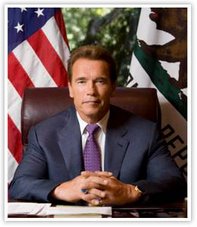
MICHAEL KIELY
CANDIDATE PARKES
CLIMATE CHANGE COALITION
Michael Kiely, the Climate Change Coalition candidate for the seat of Parkes in next Saturday’s election, is sending up a flare for help. He has only this week to campaign and needs to recruit polling place helpers.
“I’ve been too busy fighting Climate Change to run a conventional campaign,” says Michael Kiely, organiser of the Carbon Farming Expo & Conference last Friday and Saturday in Mudgee. It attracted close to 400 delegates from every state of Australia and New Zealand. Scientists and ‘carbon farmers’ told the audience that soil can play a dramatic part in the battle to stop rising world temperatures.
“There are 5.5 billion hectares of soil controlled by farmers around the globe. If they were able to sequester an average of one tonne of carbon per hectare, they could soak up the entire annual emissions of the world,” says Mr Kiely.
The Kiely Family have been campaigning for more than 2 years to have farmers rewarded for growing soil carbon. Michael is standing for the Climate Change Coalition to put the issue at the top of the agenda.
“I couldn’t have run the world’s first carbon farming conference to bring the top scientists and farmers together while pushing a political barrow. It would have risked disrupting the conference,” says Mr Kiely.
“As it was, we invited my chief opponent Mark Coulton of the Nationals to address the conference to prove we weren’t a political front. And I did not announce my candidature until the end of the conference. This puts me and the Climate Change Coalition party at a disadvantage. But the conference was a great success.””
The Conference heard of three programs for trading soil carbon credits and two programs for selling “carboncredited” wool and other produce.
The delegates voted unanimously for the Government to provide $10 million for more research in soil carbon and for every farmer to have their soil carbon tests done for free to encourage them to join the ‘carbon farming’ movement and start absorbing more CO2.
The Climate Change Coalition was founded by Patrice Newell who is a candidate for the Senate in NSW.
For more information, call 02 6374 0329
Vote1climate.blogspot.com
www.climatechangecoalition.com.au
Monday, November 19, 2007


ABC Country Hour Conference Coverage on Podcast
 ABC RURAL RADIO'S MICHAEL CONDON INTERVIEWS CARBON COCKY GUS NAME AT THE CONFERENCE.
 DR BRIAN MURPHY TALKS TO COUNTRYWIDE'S ALISON MANNING
You can hear the New South Wales Country Hour's extensive coverage of the Conference by going to http://www.abc.net.au/rural/nsw/today.htm
There you will find a Real AUdio file of the show. (If you haven't got Real Audio, Google it and download it. It's free.)
Friday, November 16, 2007
Country Hour at Mudgee Carbon Farming field day
Report: David Claughton/Michael Condon
The Country Hour broadcast from the world first Carbon Farming Expo and Conference held today.
Around 400 farmers from every state in Australia as well as New Zealand have converged on Mudgee in Central Western New South Wales to meet with scientists to hear about the latest advances in farming with a view to storing carbon. The topics for discussion include what price might be paid by for carbon stored in the soil or in grasses or crops that farmers grow.
Conference Organiser Michael Kiely has appealed for 10 million dollars in federal government money to continue research and prove what many scientists and farmers believe is true about soil carbon. He says the science is now showing that you can store carbon, measure and quantify it and that it helps farm production and the environment, while the multi-national companies responsible for polluting the environment are keen customers of carbon credits, but the Federal Government is not interested.
He also says the market for carbon credits is "exploding" in Chicago. 55-60 polluters are involved in the trade as a way of balancing their carbon producing activities.
Michael Kiely, conference organiser
Storing carbon in the soil
Report: Alison Manning
Senior soil scientist with Dept of Environment and Climate Change Brian Murphy says soil carbon can be measured in the field by taking soil samples and measuring the bulk density and the carbon level in the laboratory. It's time consuming and not always accurate.
Another way is to look at land management practices to estimate soil carbon levels.
Carbon contracts run for about 5 years but storing carbon in the soil can vary with things like drought which reduces the ground cover.
In this report: Brian Murphy, senior soil scientist, Dept of Environment and Climate Change
Carbon Cocky award
Report: Michael Condon
Tonight the Carbon Cocky of the year will be announced. Col Seis, who lives 20 kms north of Gulgong, and Gus Hinkman from Cowra are both finalists.
Judges are looking for farmers using best practice and that includes maintaining a lot of ground cover to build carbon in the soil and farming differently with perennial grasses. Broadly described as conservation farming, the techniques results in better use of water and nutrients and dramatic improvements in the health of the soil. The farmers say they are looking after the landscape with a view to improving the productivity of the land and earning some carbon credits down the track. They believe they are heading in the right direction, with some big carbon levels increasing from 1.8 to 4 per cent.
Other farmers at the event are also committed to conservation farming. Richard Maykem from Gyra is working in a cold, wet intensive farming operation. He has tried to manage his farm holistically and says "I got interested in the Landcare movement first, then heard about rotational grazing systems coming out of Africa".
Richard Langley runs a cropping property with some livestock. He's been continuously cropping for 20 years using a stubble retention program, in line with Conservation farming principles. "We haven't burnt for 20 years...when you start you're on your own. People will shake their heads, but you'll have a gut feeling you're doing the right thing, and later others will make the change."
Soil Scientists
Report: Michael Condon
Some of the progressive farmers are way ahead of scientists, we're here to hear about what they're doing and why it's working. We are working with the landholders to outline five golden rules for building the carbon levels in the soil. They include maintaining ground cover, avoiding compaction of the soil, using perennial plants.
There are a number of incentives for farmers to take up conservation farming which include some developed by the Catchment Management Authority and payments to farmers from carbon trading for taking carbon out of the air.
In this report: John Lawrie and Ian Packer, Catchment Management Authority
Carbon Cockies of the Year

From Left to Right: Robert & Maree Goodear of Merewa won Carbon Cocky for the Hunter, Anne and Ray Williams of Magomadine" Coonamble won Carbon Cocky of the Plains (sponsored by Landmark), Martin Royd of Braidwood won Carbon Cocky East of the Divide, Col Seis of Winona, Gulgong won Carbon Cocky of the Slopes (sponsored by Country Energy) and
Michael Inwood of "Toulon" Bathurst won Carbon Cocky of the Tablelands (Sponsored by Holistic Management Australia). Each case study will be written up and posted on the Carbon Farmer site with other materials (http://carbonfarmer.blogspot.com)
Saturday, November 10, 2007
Numbers limited to 450 for "Carbon Farming Conference"
"YOU MUST PRE-REGISTER FOR THE 'CARBON FARMING' CONFERENCE," say the organisers. The building has a safety limit of 450 attendees. Already more than 200 have registered and the last week is usually when a rush of registrations come in, according to many experienced event organisers
"We will try to cater for everyone who turns up, but we can't guarantee that latecomers won't be observing proceedings in a marquee on a screen," says Louisa Kiely, who is managing the registrations.
Registrations can be made by calling 02 6374 0329, by EFTPOS, credit card, money order or cheque.
"We will try to cater for everyone who turns up, but we can't guarantee that latecomers won't be observing proceedings in a marquee on a screen," says Louisa Kiely, who is managing the registrations.
Registrations can be made by calling 02 6374 0329, by EFTPOS, credit card, money order or cheque.
Ex-Head CSIRO Climate Science says "Yes" to soil carbon trading

When the Coalition spoke to Dr Graeme Pearman at a DPI climate change seminar in Orange 6 months ago, he poured cold water on the concept of soil carbon trading, saying the amounts that could be captured and stored were too small and the measurment issues to great to overcome. He was following the "AGO Line".
What a difference 6 months makes. In The Land, (8/11/07), he says he can see the day when 'carbon trading will become so important that methodologies will be obtained so that landholders who can accumulate carbon in their soils will be compensated for it." He urged 'carbon farmers' to engage quickly with the issue or face the same losses the landholders forced to stop clearing native vegetation made because they were not signed up to a trading market.
Dr Pearman is the former head of the CSIRO's Climate Science unit. He is now based at Monash University. ABC 4Corners reports that Dr Pearman was silenced on 6 occasions by CSIRO management when he tried to talk publicly about the need to reduce emmissions an the need for a market in carbon. He was eventually told he had no future with the CSIRO. (Many of our national institutions has been politicised by the Howard Government, according to many independent reports, including the Buerau of Meteorology and the Australian Bureau of Agriculture and Resource Economics. The Bush Administration has also subverted the US Environment Protection Authority and other bodies.
Guests of Honour for Carbon Farming Expo & Conference
Special Guests of the Carbon Farmers of Australia are individuals whose work has championed the positive role primary producers can play in restoring farmland ecologies to health. Agriculture is mankind's greatest interface with nature. Rather than abandon this relationship, these champions place the landholder in the driver's seat for regenerating Australia's natural resource base. CHRISTINE JONES has risked all in the cause of soil carbon. She inspired the formation of the Carbon Coalition Against Global Warming and has in train the most comprehensiive soil carbon trials across Australia, under the banner of the Australian Soil Carbon Accreditation Scheme.
 PETER ANDREWS also sacrificed all for his vision of a restored landscape based on managed hydrology, now known as Natural Sequence Farming.
 MICHAEL MOBBS, who wrote Sustainable House, is an environmental lawyer who promotes the concept of carbon farming and importance of the relationship between city and country, based on sustainable living.
 CHRISTINE JONES has risked all in the cause of soil carbon. She inspired the formation of the Carbon Coalition Against Global Warming and has in train the most comprehensiive soil carbon trials across Australia, under the banner of the Australian Soil Carbon Accreditation Scheme.
 PETER ANDREWS also sacrificed all for his vision of a restored landscape based on managed hydrology, now known as Natural Sequence Farming.
 MICHAEL MOBBS, who wrote Sustainable House, is an environmental lawyer who promotes the concept of carbon farming and importance of the relationship between city and country, based on sustainable living.
Latest Program: Carbon Farming Expo & Conference 16th-17th Novermber, 2007
DAY ONE. Friday 16TH November., 2007
8.00am to 9.00am Registration
9.00am to 9.15am Chairman’s Introduction: Climate Change Challenges & Opportunities - Gary Allan, Project Leader, Climate Risk Management, NSW Department of Primary Industries (DPI)
9.15am to 9.45am Carbon Farming: The Big Picture From Soil Carbon Capture to On Farm Emissions - Michael Kiely, “Uamby” Goolma, Convenor, Carbon Coalition Against Global Warming
9.45am-10.15am Soil Carbon Trading: Opportunities for Australian Farmers - Mike Walsh, Senior Vice President, Chicago Climate Exchange
10.15am-10.45am Techniques and Costs of Measuring Soil Carbon – Dr Brian Murphy, Senior Soil Scientist, Department of Environment and Climate Change
10.45am-11.15am Monitoring Soil Carbon Statewide (incl. On Farm Soil Watch Kit) – Greg Chapman, Scientist, NSW Department of Primary Industries (DPI)
11.15am– 11.45am MORNING TEA.
11.45am-12.15pm Combinations That Move The Carbon Needle: Grazing Management, Pasture Cropping, and Biological Farming - Col Seis, “Winona” Gulgong
12.15am-12.45pm Biological Farming In Action - Cam McKellar, “Inveraray Downs”, Spring Ridge
12.45-1..45pm LUNCH.
1.45pm- 2.15pm Biochar’s Promise - Adriana Downie, Scientist, Best Energies
2.15pm – 2.45pm Growing Soil Carbon by Rehydrating the Landscape - Craig Carter, “Tallawang”, Willow Tree
2.45pm – 3.15pm A Carbon Farmer in Parliament?– Mark Coulton, Candidate for Parkes, National Party of Austrlalia
3.15pm- 4.00pm. AFTERNOON TEA
4.00pm- 4.30pm Day One: Bringing It All Together - Ian Packer, Soils Officer, Lachlan Catchment Management Authority
4.30pm – 5.00pm Question Time. All speakers to be available.
5.00pm – Drinks: Inaugural “CARBON COCKY OF THE YEAR” award presentation. Sponsored by Landmark, Country Energy, and Holistic Management International/Australia
DAY TWO. 17TH NOVEMBER, 2007
9.00am- 9.15am Introduction to Day 2 - Gary Allan, Project Leader, Climate Risk Management, NSW Department of Primary Industries (DPI)
9.15am-10.15am Soil Carbon Calculators – Dr Jeff Baldock, Senior Research Scientist, CSIRO
10.15am – 11.00am Soils, Animals, Crops and Emissions – John Friend, Scientist, NSW Department of Primary Industries.
11.00 – 11.30am MORNING TEA.
11.30 –12.15pm Treading Lightly on the Land (On Farm Efficiencies) - David Marsh, “Allendale” Boorowa
12.15 – 12.45pm Emissions Reductions and Trading Opportunities:
CarbonCredited™ Produce. - Louisa Kiely, “Uamby” Goolma, Carbon Farmers of Australia
12.45– 1.45pm LUNCH.
1.45am – 2.15am CMA Visual Audit Protocols For Voluntary Soil Carbon Trading - John Lawrie, Co-ordinator - Slopes, Central West Catchment Management Authority
2.15 – 3.15pm A Guide to Soil Carbon Trading Systems: Carbon Farmers of Australia, RCS CarbonLink, Australian Soil Carbon Accreditation Scheme, The Fourth System. (Michael Kiely, Carbon Farmers of Australia; Rod Rush, RCS CarbonLink,)
3.15 – 3.45pm Where Do We Go From Here? – Michael Kiely, Convenor, Carbon Coalition Against Global Warming
3.45 -4.15pm Question Time.
4.15 Close.
*Please note: This program is subject to change at any time.
THANK YOU
The Organisers thank all the Speakers for their valuable contribution, all the Delegates who travelled from all States of Australia, the Exhibitors who supported this event, and the Sponsors who made it possible. A special word of appreciation to the many CMAs who supported the Conference. And to the small band of committed individuals who are always there when there’s work to be done: Thank you.
Wednesday, October 31, 2007
The Farm Institute moving on soil carbon?
The Farm Institute - a soil carbon sceptic which has promoted the views of hardline antisoilC AGO scientist John Carter - might just be melting in the heat of the emerging soil carbon legitimacy.
In its most recent "Insights', the Institute questions the methane rationale of the AGO (fewer beasts is good).
"The view that by reducing ruminant livestock production, global greenhouse gas emissions will be reduced, ignores ... the realities of the carbon cycle.
"Most greenhouse gas removals from the atmosphere by agriculture are not counted." Does the Institute mean, by 'realities of the carbon cycle" and "gas removals from the atmosphere by agriculture" that SOILS might be involved?
The Institute then goes on to ruminate that fewer animales being eaten and more grain, means more cropping than grazing and quesitons whether this would means more or less emissions. Well, we can tell you: it means more emissions. Pasture (perennial) well managed can sequester large amounts of carbon whereas most cropping regimes emit greenhouse gases.
“Slash herd and flock numbers” says AGO
Dynamite Greenhouse Report Delayed For Election?
“Slash herd and flock numbers” says AGO
“What?” says The National Party.
The Australian Greenhouse Office is delaying the release of a report that recommends Australian graziers slash flock and herd numbers to reduce methane emissions.
“While we haven’t seen the document – which was due out a month ago and is apparently ‘delayed at the printer’ (wink) – we know the position of the scientists leading the methane team,” says Climate Change Coalition candidate for Parkes, Michael Kiely. “The document will say, first and foremost, we must run fewer animals.” (See Dr Richard Eckard reference below)
“Let’s hear what the National Party has got to say about that.”
“I’d like to know if the economics of these recommendations been analysed.” (See reference below)
“Will the Greenhouse Police come onto your place to count the numbers in your herd? Or will they use satellite photography to spy on your operation?” says Mr Kiely. “Probably both.”
The IPCC (the International Panel on Climate Change) has made matters worse by recalculating agriculture’s contribution to global warming to include its ‘transport footprint’. This is a departure from the Kyoto Protocol principles and will enabling extremists to claim that Australia agriculture emits more GHG than the stationery energy industry.
“This policy is insane. Taking animals off could lead to a decline of native grasslands. It would certainly increase soil degradation and desertification,” says Mr Kiely. “The only way to meet the Methane threat and retain stock numbers lies in SOIL CARBON volumes. This can offset the new high levels of CH4 and retain animal impact.”
Many techniques for capturing and storing soil carbon will be on show at the world’s first Carbon Farming Expo & Conference will be held in Mudgee on 16th-17th November, 2007 – a week before the election.
Scientists have found that native perennial pastures, properly managed, can sequester as much carbon per hectare as plantation forests and native vegetation.
Australia’s sustainable farmers are getting the most rapid C increases using combinations of grazing management, pasture cropping and biological farming. “But the dominant paradigm - that Australian soils are too old and depleted to retain soil C (though no credible data supports this conclusion) -- remains the official position,” says Mr Kiely.
And the madness piles on madness: reducing herds will cause LESS carbon to be stored in the soil!
“The Climate Change Coalition seeks to rally the grazing management community to challenge the "stock is bad, de-stock is good” argument. We recommend Council of Crisis involving HM, RCS, the CMAs and prominent practitioners to educate the AGO in the immense potential of agricultural sequestration. Good grazing management should be central to its BEST PRACTICE regime.
“I am standing in the seat of Parkes for the Climate Change Coalition to alert the electorate to the threats to regenerative agriculture and the soil carbon opportunity to radically transform rural landscapes.”
.............................
REFERENCES
http://www.greenhouse.unimelb.edu.au/
http://www.greenhouse.unimelb.edu.au/BMPsSummary.pdf
GIA Summary May 2006 1
Reducing uncertainty and best management practices for minimising
greenhouse gas emissions from agriculture
A summary of the research currently being conducted by the Greenhouse in Agriculture
program, under the CRC for Greenhouse Accounting.
(Adapted from a paper by Dr Richard Eckard, Program Manager Greenhouse in Agriculture.
CRC for Greenhouse Accounting, The University of Melbourne and Victorian Dept Primary
Industries. Presented at ABARE National OUTLOOK Conference 2006.)
Animal numbers
"An obvious management practice would be to run fewer animals, but to manage each animal to be more productive. By improving genetic and nutritional management, production can be maintained from a smaller herd. Associated with producing more per head on pasture -based systems is an increase in the emission/head, but this is more than compensated for by less animals. ….
"• Animal stocking rate - The higher the stocking rate the higher the volume of nitrogen deposited in dung and urine per unit area. Dung and especially urine are very inefficiently recycled in the soil plant system, with up to 60% of the nitrogen in a
urine patch being lost to the environment. Higher stocking rate systems demand a higher nitrogen input regime (either fertiliser or imported feed) and thus result in ahigher nitrogen content excreted in urine. A urine patch from dairy cow commonly contains between 800 and 1400 kg N/ha effective application rate with the patch. A higher stocking rate also leads to greater pugging (hoof compaction) of the soil; pugged soils tend to be more anaerobic due to hoof compaction leading to higher nitrous oxide losses...
"These options will all need to be economically assessed prior to being communicated to the agricultural community to ensure a positive driver for adoption. The adoption of greenhouse specific management practice is not likely to be a high priority for the farming community, and there are currently no policy drivers or market incentives for adoption of these practices. Researchers and policy makers would therefore be unwise to publish greenhouse -specific best management practice manuals, but should rather aim to seamlessly integrate greenhouse best practice into existing industry adoption pathways and mechanisms. This also ensures that these greenhouse best management practices are consistent with other industry best management practices, thus improving the adoption and the opportunity for a win-win outcome; this is the approach taken by the Greenhouse in Agriculture program team."
FREE Carbon Baseline for every property!
Australia’s Farmers want all political parties contesting the 2007 Federal Election to declare their hand on the trade in soil carbon credits.
The Carbon Farmers of Australia* – a farmers’ group dedicated to the right to trade soil credits – has thrown down the challenge to the major parties to tell the farm community where they stand.
“The CSIRO said recently that there is now no scientific or technical barrier to trading in soil carbon,” says Carbon Farmers’ Michael Kiely. Dr Jeff Baldock, Senior Soil Scientist from CSIRO and the Australian Greenhouse Office, told ABC Rural Radio listeners the only barrier was the current price of carbon and that in the foreseeable future primary producers could be making more from carbon farming than their traditional produce.
The Coalition has 4 fundamental demands:
1. Proper funding of scientific research to enable the emergence of a soil carbon trading scheme.
2. Remove all bureaucratic barriers to the trade in soil carbon credits.
3. Fund the soil carbon baseline measurement for every broadacre landholding in Australia so that every farmer knows their carbon score.
4. Make access to Federal Government funding programs and taxation concessions dependent on the direction of the soil carbon level of the individual land holding.
The world’s first Carbon Farming Expo & Conference will be held in Mudgee NSW on 16th-17th November, 2007. Leading government scientists and innovative ‘carbon farmers’ will reveal the range of methods and technologies for Carbon Farming that have been developed here in Australia.
See www.carbonfarming.net.au
www.carbonfarmersofaustralia.com.au
www.carboncoalition.com.au
Michael Kiely 02 6374 0329
*Carbon Farmers of Australia (CFA) is a non-profit company serving the interests of landholders wishing to trade the carbon they have grown in their soils. CFA is the trading arm of the Carbon Coalition Against Global Warming, the advocacy group formed in early 2006.
All farmers are sceptics. 100%.
It’s been a good week for the image of our industry. First we have Nationals Leader Mark Vaile saying the science of global warming is not yet decided. Next we have NSW Farmers Association (NFA) executive councillors Howard Crozier and Ian McClintock being applauded by 60 fellow NFA councillors at their bi-annual meeting in Sydney today for declaring that they have better advice on Climate Change than the United Nations and the IPCC. And that advice is this: man-made emissions are 100% not responsible for global warming. It’s a natural process.
And they announced that most farmers agree with them.
AAP says they rely on what they say is an emerging and eminent alternative school of climate change research which says global warming is almost entirely a natural occurrence.
Mr Crozier, a broadacre farmer near Canberra, declared that: "There is no possible link between this drought and man-made climate change.” Crop and sheep farmer Mr McClintock, from the Cootamundra area, says: "Farmers by and large are far more sceptical about the claims being made that climate change is almost 100 per cent man-induced, simply because we work the land and we know what goes on.”
“Otherwise, the broad spectrum of the scientific evidence is indicating that almost certainly the major component of the climate change we are experiencing is natural climate change."
There is a gap between city and country. Do all farmers believe this new theory? DO you?
Monday, October 29, 2007
Soil carbon calculators emerging
The scientific community is working hard to make the soil carbon opportunity real. Soil carbon calculators put knowledge intothe hands of the land manager. We will cover as many as we find.
C-Calc is a calculator that compares the amount of carbon added to the soil from management practices. It calculates carbon input based on paddock yields. The benefits of different rotations over a decade or longer can be revealed so that practices that improve soil structure are selected.
DPI principal research scientist Peter Fisher, who headed the project, says the project was driven by landholder concern over soil degradation. UC-Calc lets growers select paddocks vulnerable to soil problems and choose rotations to build up soil carbon.
"Growers can start to understand how much carbon they're applying, what difference that will make in the long term and how they can change it," he says in Ground Cover. The amount of carbon being added to the soil, as this is the key controllable factor.
Dr Fisher says soil with a carbon level below 2% will degrade. "A level of two per cent or above prevents soil degradation on most soils, and if you're above that threshold you get other benefits, such as increased nutrients, soil resilience and water-holding capacity - the value of soil carbon can explain about 60 per cent of the variation in soil structure."
Dr Fisher found most high-organic-matter paddocks outperformed their paired site over a number of seasons across 14 irrigated wheat, canola, rice and maize paired sites in northern Victoria and southern NSW.
The researchers found that increasing organic matter by 2t/Ha/year for 10 years, organic carbon levels will be 0.4% higher than if the extra organic matter had not been added.
Dr Fisher says perennial pasture maintained the highest carbon levels. Maintaining stubbles, increasing pasture in rotations, growing higher-yielding crops or plants with larger, more active root systems boost organic matter and carbon levels.
The project was funded by the Victorian Department of Primary Industries (DPI) and the GRDC.
More information: Peter Fisher, 03 5833 5341, peter.fisher@dpi.vic.gov.au
Thursday, October 25, 2007
Phil Koperberg's $750,000 won't go far
When the Coalition briefed NSW Minister for the Environment, Climate Change and Water, we were confident that he 'got it'. We asked for $3million for substantial research into methods to establish the trade in soil carbon. Reward the farmers for growing soil carbon and the open warfare between the Minister and farmers in the western division would resolve itself. Instead he is reduced to police raids on farms.
To our request for $3million, he wrote to tell us that the NSW Government was spending $750,000 with the DPI and a bunch of other agencies (sound familiar?) who are looking into land management and soil sequestration. Due to report in 2009. And his Government will continue to work with the Commonwealth Government to develop a comprehensive carbon trading market. This will start in 2012.
This leaves us 4 years of Stern's 10 in which we can put soils to work to absorb the legacy load of CO2 that is not absorbable in any other way. That is, of course, unless the science isn't favourable. In that case, we really are in trouble.
Soil carbon gets a sniff, but only a sniff
“Soil carbon” got a few spots in the latest splash of spending by the Federal Government. The projects include:
• $300,000 to ABARE “to examine the economic opportunities for agriculture and forestry associated with the emerging carbon offsets market in Australia… [including] issues in soil carbon management in forestry and agriculture.”
• $200,000 to the National Farmers’ Federation to “develop background briefing on soil carbon and engage with stakeholders to clearly identify their information issues and opportunities to build understanding of soil carbon sequestration”
• $85,000 to the Bureau of Rural Science to “develop a briefing to inform decision makers on soil carbon, its function and role in carbon cycling and the potential for its inclusion in emissions trading schemes for agriculture and forestry”
Nineteen projects aimed at helping farmers to better manage the effects of climate change will receive $5 million under the Australian Government’s National Agriculture & Climate Change Action Plan.
It is a pittance, given the size of the crisis. The Federal Government's disconnected, piecemeal approach - a series of token efforts - reveals that it is interested in political theatre more than practical outcomes. The Ministers (McGauran and Turnbull) are both clearly hostile to long term solutions such as soil carbon. Despite several approaches, neither have granted us a hearing.
The alternative government will not have the resources to continue this scattergun approach, because the cupboard will be bare after the bribe vs bribe election campaign.
The Carbon Coalition calls upon the new Government - whichever - to rationalise and consolidate scientific research to ensure that the key projects are funded sufficiently well to ensure the findings are sound. (The gaps in the AGO's soil data sets were due to lack of commitment to properly funding the exercise.)
Friday, October 19, 2007
Soil Carbon Market coming, says CSIRO

Australian farmers can grow carbon levels in their soils, and advances in science are making a market in credits more likely, says senior CSIRO soil scientist Jeff Baldock.
Dr Baldock, who will be presenting a soil carbon calculator at the world’s first “Carbon Farming” Expo & Conference in November at Mudgee, says a fully-functioning market in soil carbon could make it ‘more economic to farm for carbon than to farm for yield.’
Speaking on ABC Rural Radio, said the CSIRO is discovering more about the dynamics of carbon in the soil, seeking ways to predict the influence of agricultural practices on soil carbon levels. The only barrier to a healthy market at present is the price of carbon, he said.
“I could go most places in the country and institute some sort of agricultural practice that will build soil carbon,” he said. But at current low prices he says it is difficult to justify building carbon for carbon’s sake.
Dr Baldock believes that there are many other reasons to build soil carbon. “Carbon fulfils a whole bunch of roles in soils: it holds nutrients, it helps water-holding capacity, it buffers pH change, it provides energy for soil microbes. It has a lot of spin-offs for enhancing the productivity of soil.”
Leading scientists and innovative farmers will discuss a wide range of carbon farming techniques at the Carbon Farming Expo & Conference on 16th-17th November, 2007 in Mudgee. The world’s most eminent soil carbon scientist, Dr Rattan Lal (President of the American Soil Science Society) described the conference as ‘an historic event of international importance”.
The Conference is being organised by the Central West Catchment Management Authority, the Australian Soil Science Society, and the Carbon Coalition. It is being supported by the Department of Primary Industries, STIPA, and the Central West Conservation Farmers’ Association.
For more information visit www.carbonfarming.net.au or call 02 6374 0329
Wednesday, October 10, 2007
www.carbonfarming.net.au
The world's first carbon farming expo and conference has its own site on the net: www.carbonfarming.net.au
This site will be updated throughout the lead up to the event itself as well as during and afterwards.
This site will be updated throughout the lead up to the event itself as well as during and afterwards.
Three cheers for Carbon Farming Conference Sponsors
The following deserve your support - because they are supporting you and the cause of carbon farming. They are the SPONSORS of the Carbon Farming Expo & Conference 16th-17th November, 2007 at AREC, Mudgee.
This event is presented by the Central West Catchment Management Authority, the Lachlan Catchment Management Authority, the Department of Primary Industries, the Australian Soil Science Society, Carbon Farmers of Australia (Carbon Coalition), AREC, the Central West Conservation Farmers’ Association, and STIPA.
Sponsors who have committed so far are Lowe Family Wines, YLAD, The Merino Company, and Landmark.


But where's the water coming from?

Coalition member, farmer and engineer Rod Zemanec makes a case for a strong link between soil carbon credits and access to water. (His comments about CarbonLink apply to any soil carbon credit scheme.)
…………
I have read the recent articles relating to Q&A on the Rush – Carbon Link trading scheme. I searched these documents for the mention of “WATER” – NOT ONE COMMENT! To fix carbon in soil or any other bio-sink you need water! Continuously for the life of the fix that is 70 years or more!
There are three key players in the carbon solution
1.The sun to provide the energy – fortunately still free issue from space
2. The land – sufficient area and depth and composition to form the substrate for the biological systems which become the carbon sink – farmers and landholders currently have this in stock and are ready to play
3. Water to enable the biota to survive capture the carbon through photosynthesis and maintain the carbon in a biological form in soil.
These three are critical for carbon capture. The Rush Carbon Link scheme is only a facilitator and not a fundamental element of the solution. It is desirable as an agent to sell the deals collect the cash and regulate payments and rewards it is not a critical component. The scheme will attempt to offset its risk by selling or insuring the risk like a sub prime deal neither broker or farmer could guarantee the results.
The water is a critical element and must be delivered reliably to the largest area as possible to enable these areas to act as carbon collectors and hence sinks. The water infrastructure must be addressed and is properly in the realm of the Government who has the money and the ability to collect cash through taxes, setup incentives and regulate the ongoing business.
A dry desert cannot hold biological carbon it simply seeps away through oxidation by any termite, bug, UV or anything that passes by even the seed bank eventually is consumed. A dry desert can be moistened progressively in blocks and encouraged to store carbon and keep it in store provided the process is maintained – sun, land and MOISTURE. I cannot understand how any rational carbon capture using biological methods can succeed without addressing the third critical element – WATER in continuing supply.
At present we cannot rely on rainfall patterns unless we reduce the carbon in the atmosphere and this required water management and distribution NOW! This problem requires new national solutions by government with the capital to collect, manage, distribute and regulate the water. Just imagine the value of a block whose water was government guaranteed for 100 years at a constant rate provided it was used to collect carbon as well as for agricultural purposes. Agricultural productivity would increase water loss through evaporation would reduce.
We simply need the infrastructure to collect distribute and regulate the water a new efficient model which supercedes the current water allocation and overcomes the waste, evaporation etc.
The infrastructure expenditure by government in water systems would be paid for in world wide carbon credits and the spin off benefits in sustainable agriculture would earn continuing export credits from food and fiber and ensure a distribution of population and wealth across the country
Regards
Rod Zemanek
(Rod Zemanek, the Managing Director of Sydney and China–based Predict International, is an international specialists in the field of hygienic handling of liquids to ensure they are fit for human consumption. In recent times he has made his name designing and constructing breweries in both Australia and China.)
Tuesday, October 09, 2007
We welcome new soil trading systems
Biodiversity makes for resilience and choice makes for healthy markets. The members of the Carbon Coalition that have contacted the Convenors since the recent launch of Carbon Link have had many questions, but are united on one position: that they welcome new trading systems and encourage anyone willing to have a go.
Every initiative stirs up the market, puts the issue on the front page, and puts pressure on the 'carbon trading sceptics' to justify their opposition with facts.
The Kyoto principle of "Transparency" requires that all parties be able to see the structure of the abatement and the offsets involved. All new trading systems should be subject to the same scrutiny, if only because bad publicity arising from a poorly-structured program.
For this reason, the Carbon Farmers of Australia system will be explained on this site soon.
Carbon Link answers the questions
Rod Rush again explains the Carbon Link system through a response to the questions submitted to the Coalition by a member.:
......
Our answers to your most recent questions are below.
I trust that you will publish any other questions and answers as they arise that you might receive on other trading systems.
Q: “There is usually a financial play lurking in the shadows.”
Of course there is. CarbonLink intends to build a profitable business.
Q: “What large emitter pays retail for big volumes? Rio did the Qld trees deal at well under $5 per tonne. Projections based on $25 (and in fact $40 is used in year 10 for the sale of the back-up 25% with no reason given for the jump in price ) when the current market is sub-$5 are "generous" - redo the numbers on $10 per tonne and ??
While nothing is certain in life Carbon Link is comfortable with the price projections in its business model. Several experts at a recent industry conference also expressed similar views on future prices.
Q: “Also using "constant values" is pretty unprofessional as it artificially boosts perceived benefits ($5 in 50 years time is not the same as $5 today)”
We agree that receiving $5 today is not the same as receiving it in 50 years time. Most farmers these days, especially those who have completed the RCS and Holistic Management courses are well aware of the time value of money. For the sake of simplicity and to allow farmers to track the calculations constant values were used.
Q: “At a sub-$10 price do CarbonLink still do their verification for 20% - i.e. $2.”
Yes.
Q: “Methinks the impact on values for land may be real - maybe not in the desired direction however. All the real money flows out to the owner of the land in years 1 thru 10. But for Years 11 thru 70 using the example the annual income to the landowner is $4,599 on 1000 hectares - just $4.60 per hectare - what restrictions/obligations are placed on the owner during this period - and do these restrictions/obligations act to limit his/her options to a value perceived to be much more than $4.60 per hectare. (I have not even discounted the $4.60 for inflation - do any sort of DCF and the income for years 25 on is negligible in todays terms - $4.60 in 25 years time using a 5% inflation rate is just $1.28, in 50 years just 35 cents). If you were buying a property in 10 years that had "done its dash" with soil carbon, and you were lumbered with a meagre annual return for some hefty obligations (any penalties??) what way would you want to see the price adjusted? Carbonlink website has the following note - Contracts with the land holder will have a “put-and-take” clause which means they will get paid for carbon sequestered but they or subsequent owners will have to buy credits back if carbon is released within the lifespan of the project. This is my most serious concern - even using their numbers you are selling at $25, but your buy-back obligation in year 10 is at $40 - this could be ruinous.”
One must understand the productivity benefits of sequestering carbon in the soil. Who would want to release the carbon and forego the productivity and environmental benefits?
Anyone sequestering carbon in their soils just for a quick buck is doing it for the wrong reasons and will probably fail anyway. They need to be convinced of the ‘sustainability’ benefits first otherwise the management will be reactive and not proactive.
The other part of the answer is below.
Q: “The money to actually pay the $4599 comes from what is described as "Income Retained for future payment Pool" - using the example in their info by year 10 there will be somewhat more than $194,400 in this pool - this capital sum has been seeded by the farmer out of his income - let this sum earn even just 5% interest and you have $9720 - pay out the $4599 and there is a $5121 surplus - what happens to this?? How is this retained money treated - is it the farmers money held in trust by CarbonLink - or is it another "fee" paid by the farmer - there are some serious tax and fiduciary issues depending on the answers.
This is a very rough view and does not allow for taxation but their numbers make a "constant value" assumption so lets go with equally rough here - if you want to capitalise the say 5% interest earned each year on the $19,440 retention and allow it to build up you start off with more than $194,400 - close to $250,000 in fact - who gets this extra? At $250,000 and using 5% interest earned you have $12500 interest income less the payment to the landowner of $4599 - so the starting difference in year 1 is not $5121 - it is now $7901. This seems to be a standard "funds under management" type of deal with money for the bankers.”
To get a soil carbon project verified you need to be very conservative in both the calculation of the carbon sequestered and in paying out all of the funds up front. This is the principle that Carbon Link started with.
The funds will accumulate to quite sizeable amounts over time. These funds remain the property of the farmer. Carbon Link is not a funds manager and has no intention of becoming one. Therefore, discussions are being held with funds managers about how best to achieve the goals of safety and return on investment.
Q: “If the farmer must guarantee the carbon for 70 years what guarantee is there that the money in the income retained pool will be there for 70 years?”
See answer above.
Q: “Looked at over the 70 year time period this is a VERY front-ended deal with a long long tail loaded with a sting. The “smart” move for any landowner entering into such a deal would be to bleed the dollars out in years 1 thru 7 or 8 – then sell the 60 year liability and potential need to buy back credits to some other mug.”
We are talking about saving the planet! The restrictions on landholders are currently annoying (e.g. invasive scrub) but our bet is that when soil’s potential as a carbon sink is recognized there will be some very strong legislation put in place to protect the sink.
Our bet is that it will take more than 10 years to fill the sink – probably more like 20 to 30 years depending on the location.
Again why would someone want to destroy the productivity benefits of the accumulated soil carbon? If someone really wants to plough the farm then he will have to calculate the cost of doing so (loss of carbon income; loss of productivity; cost of covering the emissions; plus almost certain government penalties) versus his estimate of the income from doing so.
Most close to the industry are well aware of the productivity benefits that the best regenerative graziers are getting from their land. The drivers of the Carbon Link business are the several thousand farmers and graziers who have been trained by RCS. Certainly these families are interested in the dollars but they are more interested in handing on a very healthy landscape to those who follow them.
Q: “The only real solid thing CarbonLink have said is that you can book in for a baselining at $20 per hectare - what is this baselining good for - not needed for CCX, not good enough for Kyoto or Greenhouse Friendly - only real use is for a CarbonLink trading scheme that doesn't even exist yet. The cynic in me questions just why this was announced so prematurely.”
Please see previous answers on the projected cost. The Carbon Link business model uses a local business as its preferred registry and exchange. Also, as we have told you before, Carbon Link also intends to make its rules as close as possible to those likely under any mandated scheme.
The reasons Carbon Link was launched when it was are very obvious and have been relayed to all serious enquirers. These are that we capitalised on the launch of the Financial and Energy Exchange (FEX) by the former U.S. Vice President Al Gore, and that we provided evidence of commitment to our early stage investors and the several thousand RCS clients who have been demanding such a service for sometime. The FEX exchange has been extremely supportive and is very committed to a long term relationship with Carbon Link.
I look forward to seeing you in Mudgee at the conference.
Best wishes,
Rod Rush
CEO, Carbon Link Pty Ltd
More Carbon Link Questions
Carbon Link has sure stirred up nest of activity. Its system is intricately designed, with many elements and implications. A Coalition member asks these questions:
..........
Agreed it appears to be good news at first - but the sceptical accountant in me has some niggling questions. There is usually a financial play lurking in the shadows.
1. What large emitter pays retail for big volumes? Rio did the Qld trees deal at well under $5 per tonne.
2. Projections based on $25 (and in fact $40 is used in year 10 for the sale of the back-up 25% with no reason given for the jump in price) when the current market is sub-$5 are "generous" - redo the numbers on $10 per tonne and ?? Also using "constant values" ... artificially boosts perceived benefits ($5 in 50 years time is not the same as $5 today)
3. At a sub-$10 price do CarbonLink still do their verification for 20% - ie $2
4. The impact on values for land may be real - maybe not in the desired direction however. All the real money flows out to the owner of the land in years 1 thru 10. But for Years 11 thru 70 using the example the annual income to the landowner is $4,599 on 1000 hectares - just $4.60 per hectare - what restrictions/obligations are placed on the owner during this period - and do these restrictions/obligations act to limit his/her options to a value perceived to be much more than $4.60 per hectare. (I have not even discounted the $4.60 for inflation - do any sort of DCF and the income for years 25 on is negligible in todays terms - $4.60 in 25 years time using a 5% inflation rate is just $1.28, in 50 years just 35 cents). If you were buying a property in 10 years that had "done its dash" with soil carbon, and you were lumbered with a meagre annual return for some hefty obligations (any penalties??) what way would you want to see the price adjusted? Carbonlink website has the following note - Contracts with the land holder will have a “put-and-take” clause which means they will get paid for carbon sequestered but they or subsequent owners will have to buy credits back if carbon is released within the lifespan of the project. This is my most serious concern - even using their numbers you are selling at $25, but your buy-back obligation in year 10 is at $40 - this could be ruinous.
5. The money to actually pay the $4599 comes from what is described as "Income Retained for future payment Pool" - using the example in their info by year 10 there will be somewhat more than $194,400 in this pool - this capital sum has been seeded by the farmer out of his income - let this sum earn even just 5% interest and you have $9720 - pay out the $4599 and there is a $5121 surplus - what happens to this?? How is this retained money treated - is it the farmers money held in trust by CarbonLink - or is it another "fee" paid by the farmer - there are some serious tax and fiduciary issues depending on the answers.
This is a very rough view and does not allow for taxation but their numbers make a "constant value" assumption so lets go with equally rough here - if you want to capitalise the say 5% interest earned each year on the $19,440 retention and allow it to build up you start off with more than $194,400 - close to $250,000 in fact - who gets this extra? At $250,000 and using 5% interest earned you have $12500 interest income less the payment to the landowner of $4599 - so the starting difference in year 1 is not $5121 - it is now $7901. This seems to be a standard "funds under management" type of deal with money for the bankers.
6. If the farmer must guarantee the carbon for 70 years what guarantee is there that the money in the income retained pool will be there for 70 years?
7. Looked at over the 70 year time period this is a VERY front-ended deal with a long long tail loaded with a sting. The “smart” move for any landowner entering into such a deal would be to bleed the dollars out in years 1 thru 7 or 8 – then sell the 60 year liability and potential need to buy back credits to some other mug.
8. The only real solid thing CarbonLink have said is that you can book in for a baselining at $20 per hectare. But what is this baselining good for? It's not needed for CCX, not good enough for Kyoto or Greenhouse Friendly. It's only real use is for a CarbonLink trading scheme that doesn't exist yet.
Carbon Link Opens the Account
Our answers to your questions follow:
1. Baselining
Q. “Baselining: How can you afford to map and core sample at $20/Ha?”
The $20 per ha amount quoted is an indicative figure only and the rate will be further tested during the next round of surveys. We expect to have these surveys completed by the end of the year.
However, we have developed a very detailed financial model to model among other factors the cost of sampling and future monitoring. For example, our initial estimate was $11.50 per ha but it was increased after the first round of sampling was completed. That is, we are now in possession of much better data on various aspects of a survey e.g. staff requirements (scientists, technicians, etc) coring, sub-sampling, packaging, lab tests required and their procedures, GPS logging, traveling between sites, accessing regional landscape and soils data.
We also include under this heading sampling to determine pre 2007 vintage carbon. As you will appreciate this is a much more difficult exercise than baselining and only properties that are deemed to have an excellent chance of finding verifiable carbon will be considered.
2. Verification
Q. “Verification: who is the independent 3rd party?”
We are not at liberty at this stage to identify the verifier since no verification agreement has been executed. However, the party we are dealing with is an internationally recognized verifier in both mandatory and voluntary markets.
Although not mentioned in your question, verifiers, or, at least the one we are dealing with, require farm emissions to be accounted for as well. This is almost certain to be a requirement of any future mandated market in Australia. We are progressing well with this issue but are not prepared to comment further on it at this stage.
Also not mentioned is the scope of the verification. Projects will be verified. This is standard international approach. Projects include a number of farms in a defined area.
3. Government Regulator
Q. “Which Government regulator do you have to satisfy? (In NSW it is the Independent Pricing and Regulatory Tribunal of NSW (IPART) in its role as Compliance Regulator.)”
We believe you have misunderstood the statement about government agencies.
It is Board policy to involve all possible government agencies as Carbon Link goes through the verification process. This makes business sense in that Carbon Link’s products need to be as close as possible to all present and future regulations e.g. when the mooted mandated markets begin in the future.
At present in NSW no Carbon Link product has yet received IPART approval.
Since the market for Carbon Link product is currently largely the voluntary market pricing will be determined by the market.
4. Commission
Q. “The 20% commission. Is it enough to cover verification costs? The CXX/NCAC system charges 30% and it is a visual verification system.”
The financial modeling indicates that the commission rate of 20% is sufficient to cover the verification and other costs. We are also of the view that competitive forces will create pressure on all aggregators to reduce this rate as the market matures. The better capitalized players will survive in this situation.
However, in a free and open market nothing is set in stone on either the revenue or cost size of the business.
We have made no attempt to analyze the CXX’s or anyone else’s cost structures.
5. Modelling
Q. “Carbon Link will then determine via a model and experience how much carbon you can sequester.” Which model? Century? Roth C? C-Lock?
Whose experience?
As you know no model is yet calibrated for Australian soils. However, Carbon Link has pledged to supply its data to the AGO to assist it in developing the Roth C model or local conditions and our needs. It is in Carbon Link’s interest to do this. The AGO has indicated to us that they expect their updated model to be operating by the end of the 2007 calendar year. We doubt that this will occur.
We expect that any model will continue to be refined over time.
The reference to experience was probably made in relation to answering a farmer’s query about how much we thought he might be able to sequester in his soils in a particular climatic area based on results from others in the region.
6. Sequestration Period
Q. “Is the 70 years acceptable when Kyoto has a 100 year rule for forests?”
Our discussions with our intended verifier and the registry indicate that 70 years will be acceptable.
7. Lien on Title
Q. “Will landholders allow a lien on their title that effectively reduces any future owner’s flexibility? (Landcare’s Carbon Smart is having trouble getting involvement because of the 100 year rule.) We are campaigning for a 30 year rule for soil.”
You are right to campaign for a 30 year rule for soil since it represents the planet’s best option to substantially reverse the atmospheric carbon excess. If soils haven’t achieved that within 30 years then the planet’s prospects are grim.
However, we can think of no reason why a farmer would want to release stored carbon into the atmosphere after 30 years given the environmental and productivity benefits associated with the stored carbon.
Unfortunately, many farmers associate trees with woody weed invasions. We suspect that this is why Carbon Smart is having difficulties. In time this should change but we reason that tree plantations will not be favoured on good agricultural lands. Strategic tree plantings as currently carried out do have a place as we all know in good landscape management practice and farmers will now be rewarded for this in the Carbon Link model. That is, Carbon Link has no intention of being a one product business.
Price will determine farmers’ attitude to tying up their land for long periods. There will naturally be a cost associated with converting land to a future destructive use e.g. housing development and someone should have to pay to cover the carbon loss. It is also possible to grow crops including vegetables without destroying the carbon stored provided the correct practices are used. An actively traded soil carbon market will ensure that the incentive is there to encourage such practices.
8. Buffer to Cover Contingencies
Q. “On what basis was the 10% buffer considered sufficient to cover contingencies? Did you consider insurance? Given the likelihood that we are going into another drought and groundcover will be strained.”
Q. “If 25% of the 90% is to be kept in reserve "until its existence is proved by testing”? What of the 75% of the 90%? Is it not verified by testing?”
10% is not the only buffer, although the initial 10% buffer approximates the labile pool of organic carbon which is the portion most likely to affected by short term events.. As you point out in the next question there is a further 25% of the remaining 90% that we will not allow a farmer to sell for a further 10 years and then only if it is existence is verified. This is a risk management strategy based on the assumption that verification in the early years will not be as exact a science as it is likely to be in 10 years time. However, we may well be able to release the carbon for sale earlier than this with the verifier’s approval.
Note also that only 80% of the sale proceeds of the 75% will be paid in the year of the sale. Payment for the remaining 20% will not begin for 10 years and then will be spread evenly over the remaining life of the sequestration period i.e. over 60 years. The funds will be placed in a trust structure and managed by a licensed funds manager with the income after management fees belonging to the current landholder. This is a further risk management strategy. For example, the aggregator will be able to draw on these funds to cover non compliance events e.g. failure to pay for future sampling costs; loss of carbon.
Verification is not easily achieved. Verifiers require a high degree of assurance and the more conservative any aggregator can be until the science becomes more accurate the more likely verification will be received.
9. Period of Sequestration
Q. “Re “Period of sequestration is 10 years”? How does this align with the 70 years?”
This relates to the way carbon will be sold. That is, an amount of carbon that we estimate that the parcel of land will sequester over a forward ten year period, will be contracted to the aggregator, Carbon Link. This is similar to what happens with trees. The carbon will then be sold according to the rules briefly discussed in Q. 8 above.
The expected amount of carbon has to be established for each property, region, climatic zone etc. This is the subject of on-going research and why a well calibrated AGO’s model is so urgently needed to reduce sampling costs. The verifier will, of course, need to agree with the estimate and further supports the need for a very conservative set of trading rules.
10. Tradeable Area
Q. “What is the smallest area a landholder can trade from under your system?”
This is still to be determined but will relate to the efficient utilization of the sampling equipment and staff resources. However, given that every part of the business will be accurately costed smaller areas are likely to be charged at a higher rate than smaller areas.
The Carbon Link model is based on tones of CO2e, rather than area. Verification costs will decide minimum areas.
11. Bulk Density
Q. “Does the system assumed soil bulk density or is this measured?”
In all sampling done to date and those scheduled for the next 3 months bulk density has been and will be measured. Any relaxation of this procedure would depend on Carbon Link being able to justify the change to the verifier.
12. Pre 2007 Vintage Carbon
Q. “Are the payments retrospective for Carbon Farmers who have been
doing this for years? We are often asked this question.”
Please see No.1.
13. Price Assumptions
Q. “There has been a drastic decline in domestic price of CO2e to $5/ t. Does the model work at that price?”
If we thought a price of $5 per tonne was going to be the norm for several years we would not have launched the business. If the price stays at $5 per tonne long term the prospects for the planet are also grim.
This is part of the reason why we need to have the business well capitalized to withstand short term price fluctuations. An undercapitalized business that fails soon after launch would cause a crisis of confidence in this fledgling industry not to mention the fight to reduce the current greenhouse gas emissions in the earth’s atmosphere.
14. Insurance
Q. “Is there provision for insurance?”
We are not aware of any insurance provider being prepared to insure the identified risks. However, we are aware that several insurance companies are looking at the issue.
15. Competition
While not specifically asked for we thought we would make a comment on competition in the industry.
Since this is a very new industry, market awareness of soil carbon is low and having several players working towards legitimizing it will only increase that awareness to everyone’s advantage.
We expect several new players to enter the market very soon, including your own Carbon Farmers. While market collusion will not be tolerated by authorities there are probably several ways in which all players can collaborate to the benefit of the industry and its stakeholders. These might include, for example, eventually moving towards a common soil carbon measurement and monitoring system; use of a common registry e.g. FEX; use of a common trading platform and terminology (e.g. a Christine Jones Standard Unit) etc.
We trust that Carbon Link’s openness to review like that being addressed here will be seen for what it is. That is, an attempt to foster the best interests of the fledgling industry.
Best wishes with your launch in November.
Rod Rush
CEO, Carbon Link Ltd
Wednesday, October 03, 2007
World's First Carbon Farming Expo & Conference (Draft Program)
CARBON FARMING EXPO & CONFERENCE
Agricultural Rural & Education Centre, Mudgee
9.00am – 5.00pm, 16th – 17th November, 2007
“An historical event of international importance.”
- Professor Rattan Lal, Director, Carbon Management and Sequestration Center, Ohio State University, President, Soil Science Society of America.
The farm plan that incorporates both carbon capture and emission reduction is called CARBON FARMING.
Speakers and topics:
DAY ONE: CARBON OPPORTUNITIES
8.00am to 9.00am Registration
9.00am to 9.15am Chairman’s Introduction: Climate Change Challenges & Opportunities - Gary Allan Project Leader, Climate Risk Management, NSW Department of Primary Industries (DPI)
9.15am to 9.45am Carbon Farming: Soil Carbon, Methane & More - Michael Kiely, Convenor, Carbon Coalition Against Global Warming
9.45am-10.15am Agriculture’s Critical Role in Climate Change - Senator Kerry O’Brien, Federal Shadow Minister for Agriculture
10.15am-10.35am Soil Carbon Trading: Opportunities for Australian Farmers On The Global Market - Mike Walsh, Senior Vice President, Chicago Climate Exchange
10.35am-11.15am New Techniques For Lower Costs of Measuring Soil Carbon - Brian Murphy, Senior Soil Scientist, Department of Environment and Climate Change
11.15am– 11.45am MORNING TEA.
11.45am- 12.30pm Soil Carbon Calculators – Jeff Baldock, Senior Research Scientist, CSIRO
12.30am-1.15pm Moving The Carbon Needle: Grazing Management, Pasture Cropping, and Biological Farming.- Col Seis, “Winona” Gulgong
1.15pm – 2.00pm LUNCH.
2.00pm- 2.30pm Growing Soil Carbon by Rehydrating the Landscape - Craig Carter, “Tallawang”, Willow Tree
2.30pm – 3.00pm Biochar’s Promising Trials - Dr Adriana Downie, Best Energies
3.00pm – 3.30pm Biodynamics and Biological Farming In Action - Cam McKellar, “Inveraray Downs”, Spring Ridge
3.30pm- 4.00pm. AFTERNOON TEA
4.00pm- 4.30pm Day One: Bringing It All Together - Ian Packer, Soils Officer, Lachlan Catchment Management Authority
4.30pm – 5.00pm Question Time. All speakers to be available.
5.00pm – Drinks: Inaugural “Carbon Cocky of the Year” award presentation.
DAY TWO: THE REAL WORLD
9.00am- 9.15am Introduction to Day 2 - Gary Allan, Project Leader, Climate Risk Management, NSW Department of Primary Industries (DPI)
9.15am-9.45am Australia's First Soil Carbon Trading Program: Carbon Farmers of Australia - Michael Kiely, Carbon Farmers of Australia*.
9.45am–10.15am CMA Visual Audit Protocols For Voluntary Soil Carbon Trading - John Lawrie, Soils Officer, Central West Catchment Management Authority
10.15am – 11.15am Soils, Animals, Crops and Emissions – Australian Greenhouse Office Best Practice Program – Dr Bill Slattery, Australian Greenhouse Office
11.15am – 11.45am MORNING TEA.
EMISSIONS REDUCTIONS.
11.45 –12.30pm A Farmer’s Footprint: Treading Lightly on the Land – David Marsh, “Allendale”, Boroowa
12.30am–1.15pm The Rewards of A Emissions Reduction program: CarbonCredited™ Produce - Louisa Kiely, Carbon Farmers of Australia
1.15pm – 2pm LUNCH.
CALCULATORS
2.00pm – 3.00pm Whole Farm Greenhouse Calculators: How Do They Work And When Will They Be Available? John Lawrie, Soils Officer, Central West Catchment Management Authority & Michael Kiely, Convenor, Carbon Coalition Against Global Warming
3.00pm -3.30pm Day Two: Bringing It All Together - Ian Packer, Soils Officer, Lachlan Catchment Management Authority
3.30- 4.00pm Question Time.
4.00 Close.
FOR MORE INFORMATION AND REGISTRATION DETAILS
See www.carbonfarming.net.au
CALL (612) 6374 0329
SPONSORSHIP AND EXHIVITION STANDS: (612) 6374 0329
*(Not for profit trading arm of the Carbon Coalition.)
Democrats back soil carbon trading
The Australian Democrats have released a soil carbon policy for the Federal Election.
While they are not likely to farm government, the Democrat's Action Plan for Land, Agriculture & Soil Carbon adds to the momentum as we come closer to our goal.
The main points of the Action Plan are:
“Deliver tax incentives to protect, promote, manage, rehabilitate, revegetate
and enhance habitat and natural resources.
“Set up carbon sequestration trading by including agriculture and land
management in environment markets such as emissions trading.
“Address salinity, land and water degradation, by progressing the National
Farmers Federation and the Australian Conservation Foundation
recommendations.
“Reinstate the CRC for Greenhouse Accounting
“Fund research into; methodologies to value soil carbon for trading purposes;
agricultural practices that use less fertiliser and restore soil carbon, and; the
impact of climate change on different regions and types of farming activity
Coordinate, align and integrate nationally all climate change, natural
resources, resource security, environmental sustainability and farm
management systems policies
“Promote and reward sustainable practices and innovation which enhance
productivity and economic returns to farmers.
“Establish education and extension programs to support farmers to better
manage for sustainability.
“Pay land owners to manage and protect areas of environmental significance
on private land
“Continue and expand Landcare, improve its effectiveness through good
science-based strategies and better assist volunteers with training and
coordination support."
We are still waiting for the Government's soil carbon policy - neither Environment Minister Turnbull nor Agriculture Minister McGauran have ever responded to our approaches and requests for meetings.
Saturday, September 22, 2007
Terry’s river of cash: will it flow?
“A river of cash is set to flow through the bush, with agriculture’s long quest to be part of a carbon trading market to be realised by year’s end,” says Country Life, a Queensland farm journal. “It has come about, not through lobby groups or government frameworks, but through rural Queensland entrepreneur Terry McCosker.”
Mr McCosker is not holding back. “We’re talking megabucks. This will change the face of agriculture within the next five years.” He said the area of land and volumes of carbon potentially available could together massively change he economy of rural Queensland – from land use to farm cash flows to property values – for decades to come.
When the Carbon Coalition briefed Terry on the soil carbon market opportunity exactly 12 months ago, we should have expected that RCS would act quickly to capitalise. Can Terry do it with his CarbonLink system?
If there is to be trouble with any system, it is always likely to be found in the methodology for MMV – measurement monitoring and verification. The methodology used by RCS to measure and verify tonnages of soil carbon was revealed yesterday in Country Life. The “paired fenceline samples” system is the technique used by the AGO. (But the AGO used the technique for estimating soil carbon losses across Australia over time, as part of a National Carbon Accounting System, not for quantifying soil carbon sequestered for sale as abatements.) On properties that have been managed using ‘cell grazing’, soil samples are “taken in both a paddock that has been subject to improved management practices and from a neighbouring paddock that has been grazed with conventional continuous methods.” This means taking samples from a neighbour’s paddocks. These paired samples provide “an indication of the impact of what changes to soil carbon have happened since the changes in management for those paddocks and an indication of what will happen in the future,” says the report. This means the system is ‘indicative’, relying on estimations rather than ‘direct measurement’. The actual amount of sequestered carbon in the paddock is not calculated by measuring the same soil over time. The difference between an indicative or estimated offering and a direct measurement offering is the amount of money per hectare the grower can earn. The difference can be dramatic. The RCS system appears to be a hybrid of the proxy system run by the CCX and a direct measurement system such as Christine Jones’s Australian Soil Carbon Acreditation Scheme.
“An indication” is not an accurate measurement for the purposes of trading – which is the barrier the Carbon Coalition has been campaigning to break through. At no stage is there an exact, strict verification of soil carbon amounts in the RCS system, despite it being touted as ‘strictly verified’. There is a baseline survey costing $20/Ha, with comparisons made over the fenceline and an estimation. This price indicates a level of testing that may not be sufficiently robust for trading. The next measurement takes place at year 5 and year 10 “to verify that the promised volume of carbon is actually sequestered. This is of vital importance to both the value of carbon and the credibility of the CarbonLink program.” Does this mean the soil carbon is sold before it is sequestered. Ie., not on delivery but on a promise?
The Country Life report also indicates that there will be some modelling done: “From the thousands of samples taken, an average difference in soil carbon levels can then be calculated, giving an indication of how much new carbon is being sequestered”. Even if RCS was able to recruit all 4000 landholders it has trained over the years, their combined data would not be sufficient to populate a calculator that could be relied upon for predicting soil carbon in every location.
A major snare for the RCI system could be found in the Kyoto principle of “Additionality”. If the carbon is sequestered as a result of ‘business as usual’, ie. the land management decisions were taken for reasons other than sequestering soil carbon, it does not qualify as a legitimate offset. The RCS system aims to sell ‘carbon vintages’ going back as far as 1990. As this was before most people had heard of carbon credits, RCS may have a solution to additionality that is unknown to us.
The RCS system is complex. Only 90% of “net carbon in the soil” will be offered for sale, with 10% held back for a margin of error. Then a further 25% of the carbon is not sold until after the 5 and 10 year tests ‘as insurance against a shortfall’. [Does this mean 75% of the 90% to be offered will be sold before it is sequestered?] A further 20% of the value of the contract is held in trust until after the 10 year period of the contract. Then RCS takes 20% in commission, when the contract is exchanged. This complexity is not good for dealing with farmers.
RCS has tests on five properties in QLD and NSW. It expects to be able to sell 100,000 tonnes of CO2e by Christmas. This doesn’t sound like many farmers, but CO2, the main forestry carbon abatement operator has only signed contracts with 15 farmers so far in more than 3 years of operation.
Despite the questions, we welcome the entry of RCS, and say “Good Luck, Terry”.
Wednesday, September 19, 2007
Now there are two!
The arrival of CarbonLink, the RCS scheme to sell soil carbon, to join Christine Jones's soil carbon accreditation scheme is good news for everyone. It means we are closer to the day when soil carbon takes its rightful place alongside forests as a tradeable commodity.
In both cases there are still a lot of questions about the engine room of any soil trading scheme: measurement, monitoring and verification. If anything, attitudes to this aspect of carbon trading are hardening.
The Carbon Coalition favours Transparency - one of the foundation principles of Carbon Trading.
Our advice to all landholders considering trading in soil carbon remains the same:
1. Not all of your property is likely to be ideal for sequestration. Flatter,more even areas are ideal.
2. Baseline measure those parts of your property. But don't commit all your appropriate land to a single scheme. Different schemes are likely to have different conditions and requirements. You need to build flexibility into your arrangements.
3. Risk management: you are making yourself liable for requests to reimburse should carbon sequestered subsequently be lost. Be sure you have insurance, escape clauses, recovery provisions, make good arrangements that suit you.
4. 100 years or 70 years is a long time to manage land to maintain a level of carbon. How realistic are your expectations?
Your best defence is knowledge.
Questions for CarbonLink
The Carbon Coalition has submitted the following questions to CarbonLink Rod Rush and Chairman Terry McCosker after the embargo was lifted. Some information will be commenrcial in cofidence. However we believe transparency is the best policy in carbon markets.
QUESTIONS:
1. Baselining: How can you afford to map and core sample at $20/Ha?
2. Verification: who is the independent 3rd party?
3. Which Government regulator do you have to satisfy? (In NSW it is the Independent Pricing and Regulatory Tribunal of NSW (IPART) in its role as Compliance Regulator.)
4. The 20% commission. Is it enough to cover verification costs? The CXX/NCAC system charges 30% and it is a visual verification system.
5. “Carbon Link will then determine via a model and experience how much carbon you can sequester.” Which model? Century? Roth C? C-Lock? Whose experience?
6. Is the 70 years acceptable when Kyoto has a 100 year rule for forests?
7. Will landholders allow a lien on their title that effectively reduces any future owner’s flexibility? (Landcare’s Carbon Smart is having trouble getting involvement because of the 100 year rule.) We are campaigning for a 30 year rule for soil.
8. On what basis was 10% buffer considered sufficient to cover contingencies? Did you consider insurance? Given the likelihood that we are going into another drought and groundcover will be strained.
10. If 25% of the 90% is to be kept in reserve "until its existence is proved by testing”? What of the 75% of the 90%? Is it not verified by testing?
11. Re “Period of sequestration is 10 years”? How does this align with the 70 years?
12. What is the smallest area a landholder can trade from under your system?
13. Does the system assumed soil bulk density or is this measured?
14. Are the payments retrospective for Carbon Farmers who have been doing this for years? We are often asked this question.
15. There has been a drastic decline in domestic price of CO2e. To $5/t. Does the model work at that price?
16. Is there provision for insurance?
GOOD NEWS: Second full value/direct measurement soil C trading scheme launched
The Carbon Coalition congratulates Coalition member Rod Rush for his part in the launch of soil carbon trading company CarbonLink Pty Ltd. “Carbon Link is in the process of verifying its first packages of soil carbon from several properties in eastern Australia. This carbon is expected to be available for trading in the coming months,” according to the company’s press release.
“We are still verifying our processes, but CarbonLink plans to aggregate carbon sequestered by groups of producers who commit to grazing management practises that over the subsequent 10 years will sequester and maintain the resource. For example, a 1 percent increase in organic matter over a 10-year period may capture about 50 tonnes of CO2 that is worth about $1000/ha gross before costs at current retail prices.
“There will be a proving period for each producer about how much CO2/hectare is being sequestered, with soils analysed in the first year of a commitment and then measured again in, for example, the 5th and 10th years to calculate any gains. Modelling may eventually be used as the science develops to support it.”
Terry McCosker, chairman of Resource Consulting Services (RCS), is the CarbonLink chairman. CarbonLink Pty Ltd is a foundation accumulator and broker on the Financial and Energy Exchange (FEX), which was officially opened on 19 September by Al Gore.
CarbonLink says it will be a foundation accumulator and broker on the FEX exchange, and be able to trade on international exchanges such as the Chicago Climate Exchange, the European Climate Exchange and the New Zealand Carbon Exchange.
Carbon Link Producer Information Pack
CarbonLink made the following information available to the Carbon Coalition some time before the launch and requested that we keep it confidential until the launch:
1. WHAT does Carbon Link do?
Carbon Link fulfils the following functions in the Carbon market
• Carbon Link will provide baseline soil carbon levels on you property. This is done through an extensive soil sampling programme, under a strict protocol determined by external bodies. Soils will be mapped by a soil scientist and the soil carbon determined by an independent laboratory. This level of sampling is required to get verified carbon.
• Carbon Link will arrange for and fund the verification of your soil carbon. Verification is a rigorous process of review by an independent third party, which certifies to a buyer, that the carbon being offered, actually exists. Verification is essential to be able to list the carbon with the exchange and registry. It will also make a difference to the price paid. Unverified carbon will not be purchased by the large emitters and will be discounted by the retail offsetters.
• Carbon Link will list your carbon with the Registry and the exchange. Carbon Link is the only soil carbon aggregator accredited by the FEX Registry. This means that it is Carbon Link’s role to put together many properties capable of selling soil carbon credits and aggregate large quantities of carbon offsets for the large emitters.
• Carbon Link can handle the sale of your carbon on the exchange. Carbon Link is a foundation broker with the FEX Exchange. As such we can advise on selling your carbon in relation to time and expected price. Selling decisions can be in your hands.
• In short, Carbon Link is a one stop shop for measuring, verifying, listing and selling your soil carbon sequestration.
2. HOW will Carbon Link fulfil the above roles?
Carbon Link will assist you as follows:
• You can book in to have your soils base lined for current carbon levels. This will be done in the order of the bookings, adjusted for regional considerations and weather eg some soils will need to be moist to do the sampling. The indicative cost for this service is $20/ha, however this may be adjusted for complexity or simplicity of the task eg flat even country will be less cost that hilly or uneven soils.
• We will produce a soil map of the area to be included in the sequestration. The sample locations will be recorded with sub metre accuracy with a differential GPS.
• Carbon Link will then determine via a model and experience, how much carbon you can sequester.
• Carbon Link will arrange for a visit from the verifier to inspect the site.
• Carbon Link will charge you a commission of 20% on the sale of credits. This commission covers the cost of modelling, verification, registry charges, brokerage costs and legals associated with the transaction.
3. WHAT are my obligations to Carbon Link?
The landholders obligations to Carbon Link include:
• Allowing the soil sampling team to visit the property.
• Allowing the verifier access to the site.
• Sequestering the carbon at or better than the rate agreed with Carbon Link.
• Implementing and maintaining a grazing management system which will give the plants and soil the capacity to sequester the agreed carbon level.
• Agreeing that the carbon sequestered, will remain sequestered for a minimum of 70 years, by who ever owns the land. The contract will state that any future owner of the land has the continuing obligation to maintain the sequestered carbon. You or any subsequent land owner will however receive annual payments to incentivise this arrangement.
• Signing a contract with Carbon Link which confirms the agreement.
4. HOW MUCH is carbon sequestration likely to be worth to me?
The following generalised assumptions are used to illustrate the potential of soil carbon sequestration. Depending on environmental conditions prevailing, soil type and management skill, the actual results will be up or down from the following assumptions.
General Assumptions
• It is possible to sequester 1% Organic Matter (OM) over 10 years (ie average increase of 0.1% per annum) in the top 10 cm and a further 0.63% in the next 20 cm of a soil profile.
• Soil Organic Carbon (SOC) is 58% of Organic Matter (OM)
• 58% SOC at a soil bulk density of 1.2g/cm3 = 16t SOC /ha
• 16t SOC /ha = 58t CO2e/ha (CO2e is Carbon Dioxide Equivalent, which is the trading unit).
• We assume the price is $25 /tonne CO2e (retail) for this example but it will vary with vintage and market (a vintage refers to the year in which the carbon is sequestered).
• We exclude 10% of the estimated SOC permanently from sale as a risk management strategy.
• Of the remaining 90%, 25% is excluded from sale until it is proven by soil testing, as an additional risk management strategy. We conservatively assume that this will not occur for 10 years.
• 10% of the remaining estimated SOC sequestered can be sold annually.
• The contract period is 70 years (which is based on the Australian Greenhouse Office “Greenhouse Friendly” Guidelines).
• Assume the Property area is 1,000ha.
• CO2e on 1,000ha is 58,000t
• 10% (5,800t) is permanently excluded.
• 25 % of the remaining 52,200t CO2e is kept in reserve (i.e. 13,050t CO2e is not for sale until its existence is proven by soil sampling).
• The remaining 39,150t CO2e has a market value of $978,750 (based on a constant price).
• Period of sequestration is 10 years
Value Calculation
The following Income is calculated using the above assumptions
CARBON SALE MODEL
Expected increase in Organic Matter 1.00%
Organic Carbon as a percent of Organic Matter 58%
Organic Carbon 0.58%
Soil Bulk Density 1.2
Soil Organic Carbon 16 tonnes per ha
CO2e Sequestered 57.6 tonnes per ha
Property Area (ha) 1,000 ha
Total Tonnes of CO2e produced 57,600
Permanently excluded from sale 5,760 10%
Saleable Sequestration (Gross) 51,840 tonnes
Reserved for sale 12,960 25%
Saleable Sequestration (Nett) 38,880 tonnes CO2e
Period of Sequestration 10 years
Saleable Vintage Quantities 3,888 tonnes CO2e
Average Price per Tonne CO2e $25.00 /tonne CO2e
Average Price received per vintage $97,200
Carbon Link Commission $19,440 20%
Income Retained for future payment Pool $19,440 20%
Nett Annual Income received by Landholder $58,320 per annum for 10 years
For 11 to 70 Years
Annual income from year 11 to year 70 $4,599 per annum
After 10 Years
Payout of 25% paddock reserve 12,960 tonnes CO2e
Price $40.00 /tonne CO2e
Commission 10.00%
Nett Received $466,560
TOTAL RECEIPTS ON AREA $1,325,700
TOTAL RECEIPTS per HA $1,325.70 per ha
TOTAL RECEIPTS per HA in 11 years $1,049,760
TOTAL RECEIPTS per HA in 11 years $1,049.76 per ha
Tuesday, August 28, 2007
"Carbon Credited" Produce launched

The first "Carbon Credited" produce has hit the market. Wool grown on "Uamby" has been branded "Carbon Credited" as an awareness-raising exercise while sufficient woolgrowers are being recruited to give the program the critical mass needed to meet the demand from Europe. A specialist wool broker, experienced in the organic wool market, has been engaged to help build supply. Growers qualify for "Carbon Credited" status when they embark on an emissions reduction program. The Carbon Coalition has applied to join the Australian Greenhouse Office's Greenhouse Challenge as an association. This allows members to get involved in the process. Emissions reduction starts with calculation of your enterprise's carbon footprint, via an "Audit". This stage is followed by an "Assessment" stage where available means of reduction are identified. Initially the third stage - 'Abatement', which means creating or buying offsets - is not required by the AGO's Greenhouse Challenge. But it will be eventually. This is where soil carbon credits become critical to the farm 'greenhouse economy'. And this is a further reason why the Carbon Coalition must continue to seek the right of landholders to the value they can produce in soil carbon. The process of becoming carbon neutral is not immediate. It is a process of stages or milestones on the way to neutrality. Interested woolgrowers and producers in other markets can contact Carbon Credited™ Producers on 02 6374 0329 or email louisa@carboncoalition.com.au
Subscribe to:
Posts (Atom)